
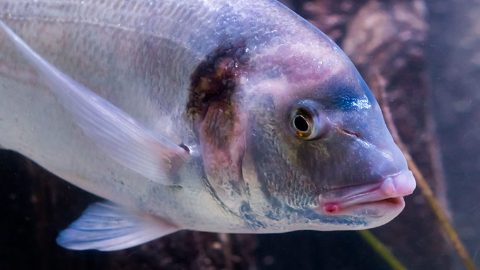
A study conducted by scientists at the Instituto de Acuicultura Torre de la Sal (IATS-CSIC) and the University of Valencia has revealed significant findings about the monogenean ectoparasite Sparicotyle chrysophrii, which infects gilthead seabream (Sparus aurata).
This parasite is among the most concerning for aquaculture producers operating floating cages, due to its considerable impact on fish health and the severe financial losses it causes.
The findings have been published in Proceedings of the Royal Society B, where the parasite’s feeding mechanism is detailed. It attaches itself to the gills and has developed structural adaptations enabling it to extract blood efficiently—a process that facilitates its growth and reproduction.
In their research, scientists also identified haemoglobin and iron deposits within the parasite’s digestive system. Additionally, they observed that the parasite doesn’t consume whole blood cells; instead, it breaks them down to absorb only the contents.
In general, the presence of the parasite in aquaculture farms leads to anaemia and general weakening of the fish, increasing mortality rates and the need for therapeutic treatments. However, the effect on gilthead seabream varies depending on the fish’s size.
In juvenile fish weighing around 30 grams, high parasite loads can cause a daily loss of up to 30% of the fish’s total blood volume, which “represents a serious health risk”. In commercially-sized seabream, around 350 grams, blood loss is reduced to about 3%, allowing them to act “as asymptomatic reservoirs of the parasite.”
With this new knowledge, scientists can enhance their understanding of the parasite’s transmission dynamics in aquaculture settings, supporting the development of more effective management strategies that consider both environmental conditions and the parasite’s life cycle, previously established in earlier studies.
For example, monitoring the maturation stage of parasites can help aquaculture producers schedule the stocking of juveniles during periods when the fish are less vulnerable to infection.
Additionally, basic management strategies can be adopted to reduce infection impact, such as preventing different fish generations from cohabiting, which can prevent the transmission of parasites from larger fish to juveniles.
The reduction of iron and haemoglobin in infected fish also indicates a need to adjust iron supplementation in their diets.
This study, funded by the ThinkinAzul programme in the Valencian Community, offers a scientifically informed approach that not only supports the profitability of aquaculture production but also contributes to environmental sustainability and the sector’s biosecurity.
Reference:
Riera-Ferrer, E., Estensoro, I., López-Gurillo, B., Del Pozo, R., Montero, F. E., Sitjà-Bobadilla, A., & Palenzuela, O. (2024). Hooked on fish blood: the reliance of a gill parasite on haematophagy. Proceedings of the Royal Society B, 291(20241611).

Related

Latest In-depth
-
Clams more resistant to heat and Perkinsus: research paves the way for selective breeding
Padua, Italy, 16/10/2026 | University of Padua researchers explain to misPeces the findings presented at Aquaculture Europe 2026 and the steps needed to transfer them to hatcheries. Initial applications could emerge within the next two or three years, although the relationship between resistance, growth and other production traits still need to be assessed