
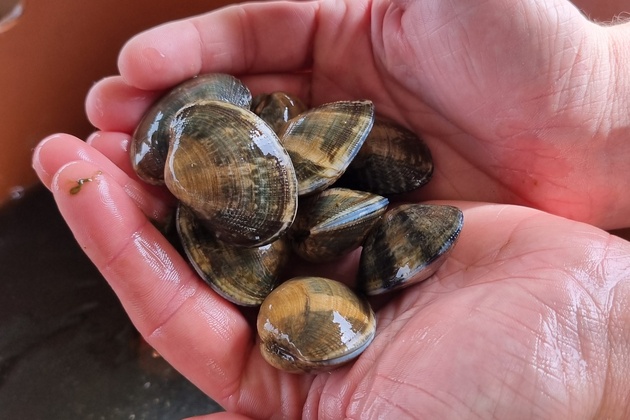
Researchers at the University of Aveiro have developed a technique based on the elemental “fingerprint” of shells that allows the geographic origin of Manila clams (Ruditapes phillipinarum) to be identified and fraudulent trade practices to be detected.
The method relies on analysing the chemical composition of clam shells, which incorporate elements present in the surrounding water during the animal’s growth. This combination of elements forms a geochemical signature that reflects the environmental conditions where the clams developed and can therefore be used to trace their origin.
According to the research team, this elemental fingerprint acts as a “natural barcode” that cannot be falsified through incorrect documentation or relabelling.
The development of this tool responds to a growing problem of illegal harvesting and fraud in Manila clam trade. On Christmas Day 2025 alone, Portuguese authorities seized nearly five tonnes of live clams that had been illegally collected in several estuaries across the country.
A significant share of these catches originates from the Tagus estuary, where the sale of live clams is prohibited due to high levels of metal contamination. Identifying the real origin of these products is therefore essential to protect public health and strengthen market controls.
Researchers are now working on portable solutions capable of analysing the elemental composition of shells in real time, which could support authorities during inspections in markets and landing points.
The study also showed that in roughly two thirds of the analysed cases it is possible to determine the harvesting season from the elemental fingerprint, a feature that could be particularly useful for frozen products sold with shells.
Over the past decade, the University of Aveiro team has validated this approach for several bivalve species, including cockles, grooved carpet shell clams and Manila clams, as well as other marine resources such as octopus, goose barnacles and sardines.
Researchers believe that this technology could become an important tool to reinforce seafood traceability and help combat illegal, unreported and unregulated fishing, as well as other fraudulent practices in seafood supply chains.
Related


EVENTS
-
21AprTue, 21 Apr - Fri, 24 AprGran Via - Fira Barcelona - Barcelona