
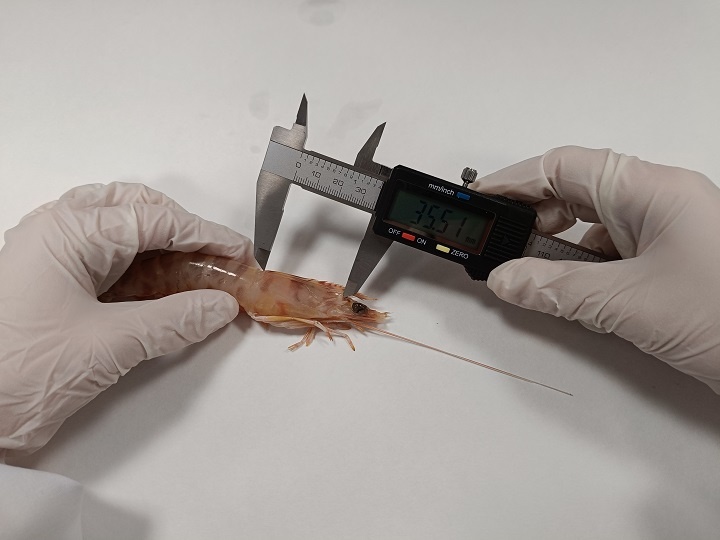
A team at the University of Alicante in Spain is working on the captive rearing of Mediterranean shrimp, Penaeus kerathurus, using Recirculating Aquaculture System (RAS) combined with Integrated Mutil-Trophic Aquaculture (IMTA), within projects supported by Spain’s Pleamar programme and the European Maritime, Fisheries and Aquaculture Fund (EMFAF).
This approach, increasingly referred to academic circles as IMRAS, seeks not only to advance reproduction and grow-out of a native, high-value species, but to do so under a circular production model in which extractive organisms such as the amphipod Elasmopus rapax and the polychaete Platynereis dumerilli help reduce organic load and improve overall system efficiency, following 18 months of controlled experimental trials during which maintenance protocols and stocking conditions were optimised, although no detailed technical figures have been disclosed.
The move is strategically significant. At present, the Mediterranean shrimp largely depends on wild fisheries, limiting scalability and exposing the resource to fishing pressure. If the full cycle could be reliably closed in captivity with regular production of viable juveniles, Spain could diversify farmed species, reduce reliance on tropical shrimp imports and offer a locally produced product with stronger environmental traceability, in line with broader European efforts to strengthen aquaculture autonomy.
However, the project remains at a pre-industrial stage. No production data comparable to tropical penaeids have been made public in terms of stabilised larval survival, intensive stocking densities or cost per kilogram, nor have hatch rates, biomass outputs or quantified bioremediation performance been released.
The main bottleneck is still biological: achieving consistent and predictable reproduction in captivity. Economic viability against lower-cost imported shrimp also remains uncertain, particularly given competition from established tropical supply chains.
With this line of work continuing in collaboration with the University of Murcia and the Murcia Institute for Agricultural and Environmental Research and Development (IMIDA), through the BIOKERAS project crustacean domestication in multitrophic RAS system.
The next step is no longer conceptual but operational: demonstrating that the model can deliver technical stability and economic competitiveness beyond the laboratory.
Related


EVENTS
-
21AprTue, 21 Apr - Fri, 24 AprGran Via - Fira Barcelona - Barcelona