
Italy is one of Europe’s largest markets for farmed fish consumption. Yet domestic production has not kept pace with demand. According to Associazione Piscicoltori Italiani (API), this imbalance is not due to technical constraints, but to structural and regulatory bottlenecks.
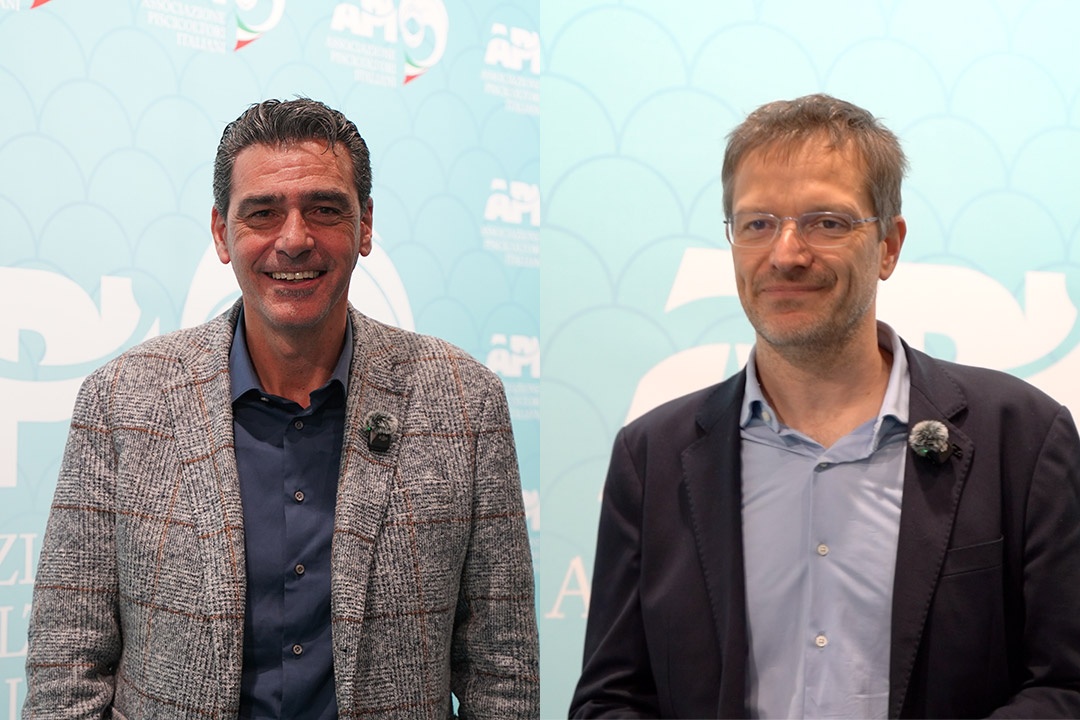
Speaking at AquaFarm 2026, API President Matteo Leonardi and Marine Vice-president Claudio Pedroni outlined two strategic priorities for the sector: unlocking maritime procedures and improving transparency in the HORECA channel.
While Italian consumers increasingly rely on farmed European seabass, gilthead seabream and other species, national production remains constrained. Pedroni pointed to the stagnation of maritime state concessions as a key obstacle preventing investment in offshore farming sites.
Over the past decade, domestic demand has grown significantly, yet supply gaps have been filled by imports from Turkey, Greece and North Africa. “Italy cannot become the playing field for third countries,” Pedroni warned, stressing the need for stable regulatory conditions to support local production.
For the association, aquaculture represents a strategic opportunity for economic growth and employment within the primary sector – provided that political commitment translates into concrete reforms.
Labelling as a strategic lever
Beyond production constraints, API identifies market transparency as a decisive factor.
Around half of fish consumption in Italy occurs through the HORECA channel. However, restaurants menus do not always clearly indicate the origin of farmed products. According to Pedroni, this limits consumers’ ability ot make informed choices.
Clear identification – whether Italian, Turkish or Greek – should be standard practice. Furthermore, certifications such as “sustain farmed”, legally aligned with organic production standards, are rarely communicated ot end consumers.
Leonardi emphasised that transparent labelling could also strengthen social acceptance of aquaculture. Consumer awareness reduces misconceptions and fosters trust in production standards.
Leonardi noted a more open institutional channel compared with previous years, with increased public-private dialogue. The challenge now is to convert this improved dialogue into administrative simplification and regulatory clarity.
Italy has demand, expertise and production capacity. For API, the missing link remains regulatory alignment and clearer communication – essential conditions for unlocking sustainable growth.
Related



EVENTS
-
21AprTue, 21 Apr - Fri, 24 AprGran Via - Fira Barcelona - Barcelona