

The development of global aquaculture is approaching a structural limit that no longer lies in water availability of technology, but in feed. According to the World Bank’s Harnessing the Waters report, the sector’s projected growth to 2050 will depend directly on its ability to scale up new protein sources for aquafeed, in a context where feed accounts for between 50% and 70% of total operating costs.
Over recent decades, the industry has demonstrated a strong capacity to adapt. The gradual replacement of fishmeal and fish oil with alternative ingredients has significantly reduced pressure on marine resources. In the case of salmon, the share of marine ingredients in feed declined from 89.4% in 1990 to 22.4% in 2020, driven by the incorporation of plant-based proteins and other emerging sources.
However, this progress will not be sufficient to sustain future growth. The World Bank warns that, even if current levels of marine ingredient use are maintained, the production of alternative feed sources will need to double under a moderate growth scenario and triple under a more accelerated aquaculture expansion scenario.
This imbalance between supply and demand for feed ingredients creates a critical bottleneck for the sector. As aquaculture continues to expand to meet rising global demand for protein, the availability of raw materials for feed is becoming the main limiting factor in the production system.
In this context, the report highlights a multiplier effect in demand for alternative ingredients that could reshape the entire value chain. Solutions such as insect meal, microalgae and single-cell proteins are emerging as key candidates, not only from a technical perspective but also as a new investment opportunity within the aquaculture ecosystem.
For Europe, the challenge takes on an additional strategy dimension. The region’s high dependence on imported protein and rising production costs places the sector in a particularly vulnerable position in the face of volatility in global commodity ecosystem.

Related

Latest In-depth
-
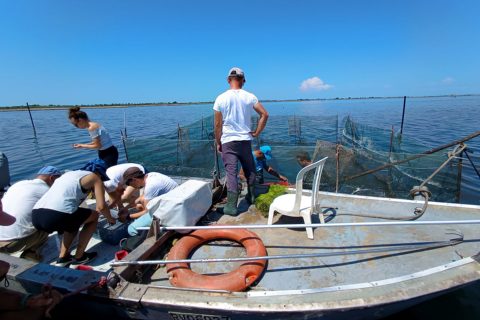
Clams more resistant to heat and Perkinsus: research paves the way for selective breeding
Padua, Italy, 16/10/2026 | University of Padua researchers explain to misPeces the findings presented at Aquaculture Europe 2026 and the steps needed to transfer them to hatcheries. Initial applications could emerge within the next two or three years, although the relationship between resistance, growth and other production traits still need to be assessed