
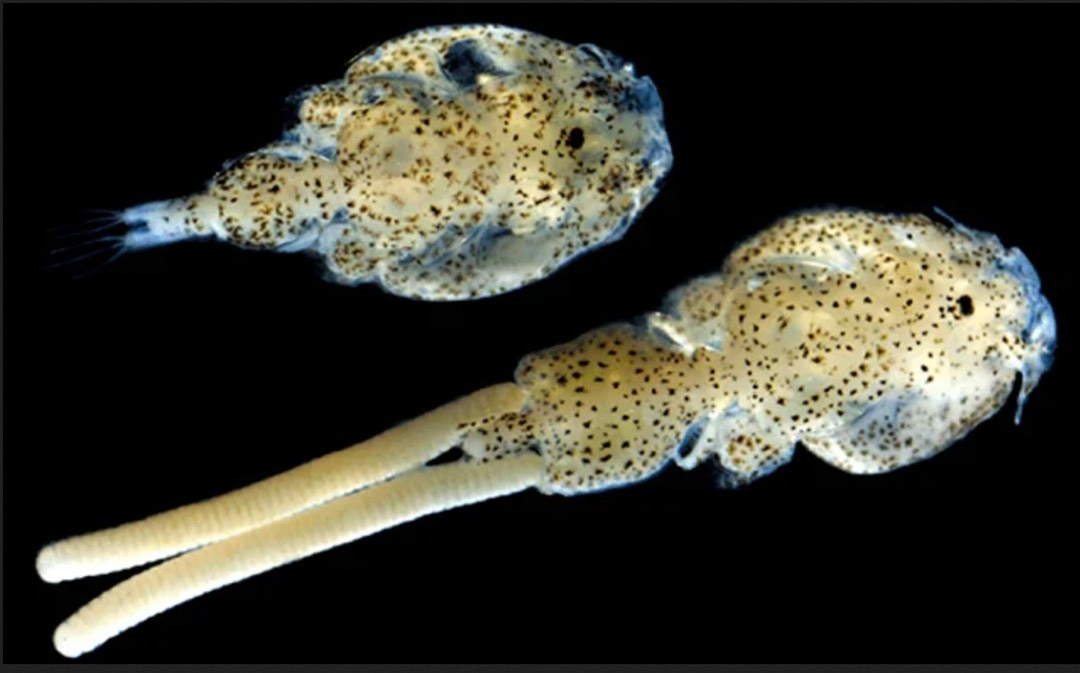
Sea lice control remains one of the most significant sanitary and economic challenges facing salmon farming, particularly in countries such as Chile and Norway. Against this backdrop, a new research project led by the Centro INCAR² is exploring a less conventional angle: the molecular mechanisms that determine the sex of the parasite and their potential influence on its reproductive capacity.
The project, known as EPISex and funded through a FONDECYT Regular grant, will run over the next three years and focuses on the epitranscriptomics of the sea lice Caligus rogercresseyi. Specifically, it aims to understand how chemical modifications of RNA influence sexual differentiation in this ectoparasite.
Preliminary results reported by the research team indicate consistent differences between males and females in RNA methylation levels. These modifications appear to effect genes that play a key role in sex determination, suggesting that so-called “epigenetic marks” may act as molecular switches, activating or silencing specific developmental pathways.
While these findings are still far from any practical application, they contribute new insights into the basic biology of one of the salmon industry’s most problematic parasites.
Building on these initial observations, EPISex has set out four main objectives: to confirm the sex chromosome system in sea lice, to map RNA modifications, and to analyse the role of non-coding RNAs in the regulation of sex-related genes.
The project involves collaboration with researchers from the University of Washington (United States) and the Univesité des Caen-Normandie (France), and will combine molecular and bioinformatic tools to address these questions.
From an applied perspective, a better understanding of sex determination mechanisms could, in the future, open the door to new biotechnological approaches to sea lice control, such as altering sex ratios or silencing genes involves in reproduction.
However, the researchers themselves stress that this is still early-stage research. Any industrial application would first require robust validation of the underlying mechanism, followed by careful consideration of regulatory, environmental and ethical issues associated with the use of tools such as gene editing in non-target organisms.
At a time when resistance to conventional treatments is increasing and regulatory pressure on antiparasitic use continues to grow, studies like EPISex do not offer immediate solutions. Instead, their value lies in expanding the scienfitic knowledge base needed to diversify sea lice control strategies over the medium to long term.
For the sector, the relevance of this type of research is less about short-term promises and more about its potential to generate new lines of action in a problem that remains far from resolved.
Related


EVENTS
-
21AprTue, 21 Apr - Fri, 24 AprGran Via - Fira Barcelona - Barcelona