
Aquatic animal health is not static. Pathogens evolve, production systems change and, if control strategies are not updated accordingly, they lose effectiveness. Against this backdrop, a recent study led by the diagnostic laboratory Exopol, in collaboration with the University of Zaragoza, in Spain, and the feed company BioMar Iberia, published in the journal Animals, provides new insights into Lactococcosis in fish in the Mediterranean region.
The work offers a solid basis for improving diagnostics, refining vaccination strategies and optimising the use of antimicrobials, thereby strengthening the health resilience of key species such as European seabass, gilthead seabream and rainbow trout. It helps explain why some existing health tools are beginning to show their limits and, crucially, what the sector can do to anticipate change and adapt more effectively.
One critical factor highlighted by the study is the environment. The disease shows a clear seasonal pattern, with risk increasing sharply when water temperatures rise above 16ºC – a key threshold that allows farm managers to anticipate and adjust their surveillance and prevention protocols.
An evolving epidemiological picture: the international connection
Lactococcosis has been a well-known disease in European aquaculture for decades. However, the study confirms that the epimediological landscape is no longer exactly the same.
In freshwater systems, particularly in trout farming, researchers identify a gradual shift in the dominant species, with Lactococcus petauri increasingly detected and partially replacing Lactococcus garvieae.
In marine environments, by contrast, Lactococcus garvieae remains the main causative agent, but it is associated with a highly homogeneous genetic lineage (ST95). This lineage does not represent a local mutation; rather, it corresponds to the same emerging clone (serotype III) responsible for severe outbreaks in Seriola species in Japan in 2021. This finding suggests introduction through international trade and highlights the need to strengthen biosecurity measures related to imports.
The Mediterranean, moreover, is not merely a recipient of pathogenic strains. The study describes, for the first time, two new genetic variants (ST157 and ST158), confirming that the region is actively acting as a hotspot for pathogen diversification.
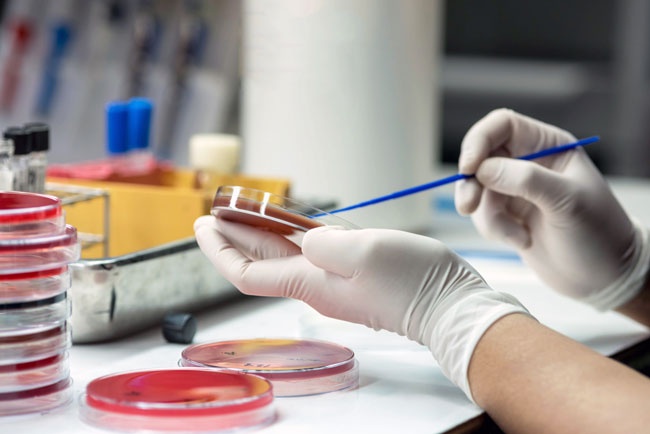
One of the most constructive messages of the study concerns the need for more precise diagnostics. Conventional methods can detect lactococci, but they do not always reliably distinguish between species or lineages with different epidemiological bahviour. The use of targeted molecular tools, such as specific PCR assays, allows accurate identification of the pathogen involved.
The study does not question the value of vaccines against lactococcosis, but it reinforces a well-established principle in other areas of animal health: when the pathogen changes, vaccines must be reviewed and updated. Identifying new dominant variants opens the door to improved selection of vaccine strains, stronger cross-protection and better alignment of preventive strategies with real production conditions.
The research also provides valuable information on the antimicrobial susceptibility of the isolates analysed. Some treatments that have traditionally been used now show limited effectiveness, while others retain good in vitro activity.
Here, a regulatory paradox emerges that complicates veterinary management. Amoxicillin proved to be the most effective option (with very low minimum inhibitory concentration, MIC 2 µg/mL), yet no fish-specific authorised formulations are available in countries such as Spain. By contrast, licensed products such as flumequine were shown to be ineffective in laboratory tests.
Such data help avoid unnecessary or ineffective treatments, reduce the risk of antimicrobial resistance and support a more rational, evidence-based use of antimicrobials.
Overall, the study does not describe a crisis, but rather a period of sanitary transition that requires control strategies and regulatory frameworks to evolve in line with a changing biological reality.
Reference
González-Martín, D.; Ubieto, M.; del Caso, S.; Planas, E.; Ruiz-Zarzuela, I.; Sanz, C.; Arnal, J.L. Comparative Molecular and Antimicrobial Analysis of Lactococcus garvieae and Lactococcus petauri from Marine and Freshwater Fish Farms in the Mediterranean. Animals 2026, 16, 277. https://doi.org/10.3390/ani16020277
Related


EVENTS
-
21AprTue, 21 Apr - Fri, 24 AprGran Via - Fira Barcelona - Barcelona