
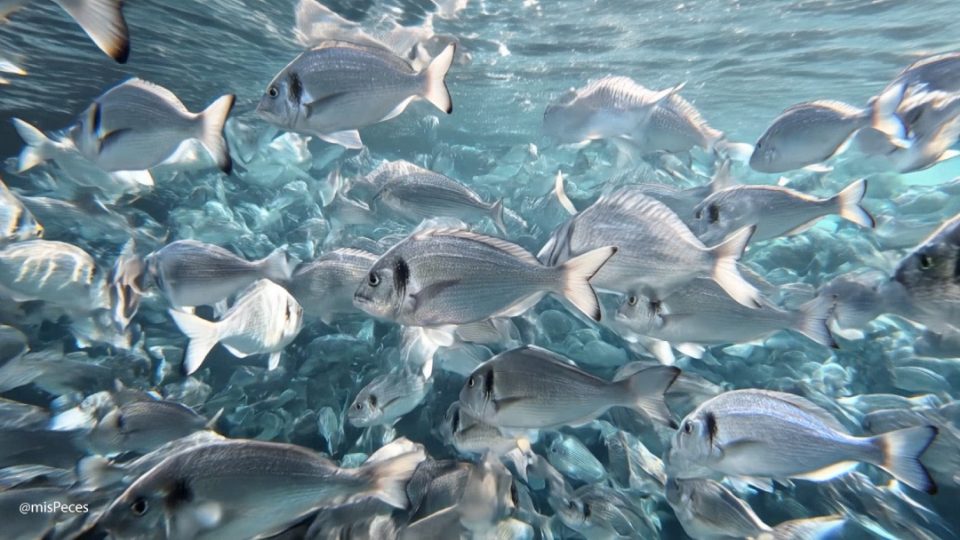
Monitoring genetic diversity in broodstock remains a persistent challenge across much of Mediterranean aquaculture. A recent study published in Aquaculture proposes a shift in approach: using environmental DNA (eDNA) combined with whole-genome sequencing to estimate inbreeding in gilthead seabream (Sparus aurata) without handling the fish.
The work, led by the University of Bologna and Italy’s CREA, demonstrates for the first time that eDNA can capture population-scale genomic information comparable to that obtained from tissue samples, validating its potential as a genetic monitoring tool.
The experiment, conducted in a RAS system with 245 broodstock distributed across four tanks, directly compared whole-genome sequencing from tissue and water samples. The results show strong concordance: after adjusting for sequencing depth, differences in heterozygosity were minimal (ΔFIS ≤ 0.01) and genetic differentiation between tanks was virtually zero, indicating that eDNA reliably reproduces the genetic structure of the stock.
The study also identifies filtration as a key factor for this application. Filters with a 5 μm pore size captured more seabream DNA by retaining cells and cellular debris, while finer filters concentrated bacterial DNA, directly affecting data quality.
Beyond accuracy, the approach offers clear advantages: it is non-invasive, reduces operational workload and provides additional insight into the biological environment of the system. However, it remains far from commercial deployment due to the cost of whole-genome sequencing, the need for advanced bioinformatics and validation limited to controlled conditions.
The findings mark a conceptual turning point. eDNA is no longer just an ecological tool but is emerging as a potential instrument for production management, with the capacity to transform genetic monitoring in aquaculture.
Reference:
Bertolini, F., Taurisano, V., Bovo, S., Vegni, J., Napolitano, R., Martinoli, M., Capoccioni, F., & Fontanesi, L. (2026).
Application of whole-eDNA sequencing for monitoring broodstock genetic diversity in breeding groups of gilthead seabream (Sparus aurata). Aquaculture, 621, 743980. https://doi.org/10.1016/j.aquaculture.2026.743980

Related

Latest In-depth
-
Clams more resistant to heat and Perkinsus: research paves the way for selective breeding
Padua, Italy, 16/10/2026 | University of Padua researchers explain to misPeces the findings presented at Aquaculture Europe 2026 and the steps needed to transfer them to hatcheries. Initial applications could emerge within the next two or three years, although the relationship between resistance, growth and other production traits still need to be assessed