
Recirculating aquaculture systems depend on biofilter stability to transform the ammonium generated by fish into less problematic nitrogen compounds. However, even in mature facilities, changes in feeding, temperature, biomass or biofilter performance can generate residual ammonium concentrations that compromise system safety.
A study published in Scientific Reports by researchers form Mashhad University of Medical Sciences in Iran now proposes the use of coarse plant-based biochar as a complementary post-nitrification polishing stage in RAS.
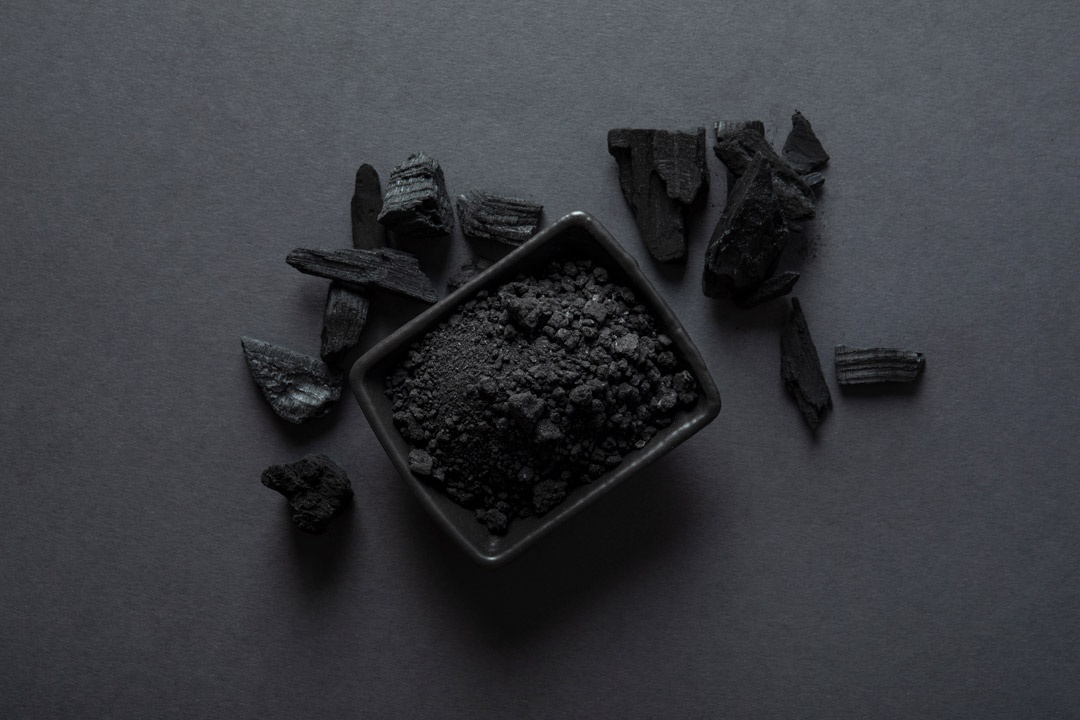
Biochar is a carbon-rich material obtained through the pyrolysis of plant biomass, meaning heating in the absence, or near absence, of oxygen. In this case, the researchers used Prunus spinosa wood and selected a coarse fraction made up of particles between 2 and 4 millimetres.
What coarse biochar can contribute as a support filter in RAS
| Aspect evaluated | Study result | Reading for a RAS farm |
|---|---|---|
| Type of material | Prunus spinosa biochar in coarse particles of 2 to 4 mm. | It is not a fine laboratory powder, but a material that is easier to retain and handle in fixed-bed filters. |
| Main function | Post-nitrification polishing to reduce residual ammonium. | It can act as a safety barrier when the biofilter is unable to fully absorb changes in load. |
| Selectivity | Up to 53% ammonium removal, compared with less than 13% for nitrite and nitrate. | It acts on the most critical compound without significantly altering the balance of nitrification. |
| Adsorption capacity | Between 3.24 and 3.57 mg of ammonium per gram of biochar. | Moderate capacity, but sufficient for a support role against fluctuations, not for removing large nitrogen loads. |
| Hydraulic behaviour | No observable signs of clogging, compaction, flow channelling or particle washout. | The coarse particle size improves its potential fit in columns or fixed-bed filters within a RAS. |
| Regeneration | It retained 96.1% of its efficiency after five cycles with a 0.1 M NaCl solution. | It points to a reusable medium, with simple and potentially low-cost regeneration. |
| Maturity level | Promising laboratory results and initial continuous-flow tests. | Commercial use will require long-term trials with real water, biofouling, salinity and accumulated regeneration cycles. |
This is relevant because the material is not a fine laboratory powder, but a medium that is easier to retain, handle and use in columns or fixed-bed filters, with a lower risk of particle washout, compaction or head loss.
The research does not propose replacing biological nitrification or turning this material into a primary nitrogen removal technology. Its interest lies in a more specific function: acting as a support barrier to buffer residual ammonium fluctuations when the biofilter is unable to fully absorb changes in load.
In trials carried out at near-neutral pH and temperatures between 15 and 35 ºC, the biochar showed a clearly higher affinity for ammonium than for nitrite and nitrate.
Ammonium removal reached up to 53%, while nitrite and nitrate removal remained below 13%. This selectivity is relevant because it targets the most critical compound from a toxicity perspective without significantly interfering with the nitrification process.
One of the most interesting aspects of the study is the decision to prioritise operational feasibility over maximum adsorption capacity under laboratory conditions. By using coarse particles, the maximum capacity of the material was between 3.24 and 3.57 milligrams per gram, but key variables for real farm use improved, including mechanical stability, ease of recovery and compatibility with fixed beds. In continuous-flow tests, the material showed partial ammonium removal during the early stages of operation and stable hydraulic behaviour, with no observable signs of clogging, bed compaction, flow channelling or particle washout. In addition, after five adsorption and regeneration cycles using a 0.1 M sodium chloride solution, the biochar retained 96.1% of its initial efficiency.
For RAS producers, the main takeaway is that this type of biochar should not be understood as a solution for removing large nitrogen loads, but as a tool for operational resilience.
Its potential role would be to add a simple, regenerable and low-cost stage that helps stabilise the system in response to minor biofilter imbalances, increases in feeding, temperature variations, start-up phases or ageing of the nitrifying biomass.
The study estimates a preliminary treatment cost of around USD 0.30 per cubic metre, although it warns that long-term trials in real aquaculture water will be needed before industrial application, including the presence of organic matter, fine solids, biofouling, salinity, accumulated regeneration cycles and variable hydraulic conditions.
For Mediterranean RAS, the work opens an interesting line of development: plant-based filter media designed not to maximise academic results, but to be integrated as safety filters in real systems where technical stability and cost control are decisive.

Latest news
-
A plant-based biochar opens a low-cost route to buffer ammonium peaks in RAS
Iran, 20 May 2026 | A evaluates the use of coarse Prunus spinosa biochar as a post-nitrification polishing medium, with selective ammonium removal, hydraulic stability and regeneration capacity using a mild saline solution
-
FAO position the flathead grey mullet as a candidate species for sustainable aquaculture diversification
Rome, 19 May 2026 | The new technical manual compiles protocols for reproduction, hatchery production, nursery and grow-out to reduce dependence on wild-caught juveniles support the commercial production of a low-trophic marine species
-
Atlantic-origin gilthead seabream shows trend towards better growth and feed conversion than Mediterranean lines
Türkiye, 19 May 2026 | A 15-month sea cage trial points to the potential of genetic origin as a strategic factor in breeding programmes, although the results should be interpreted with caution