Aquaculture faces the strategic challenge of securing the global supply of long-chain omega-3 fatty acids in a context of rising nutritional demand and limited marine resources.
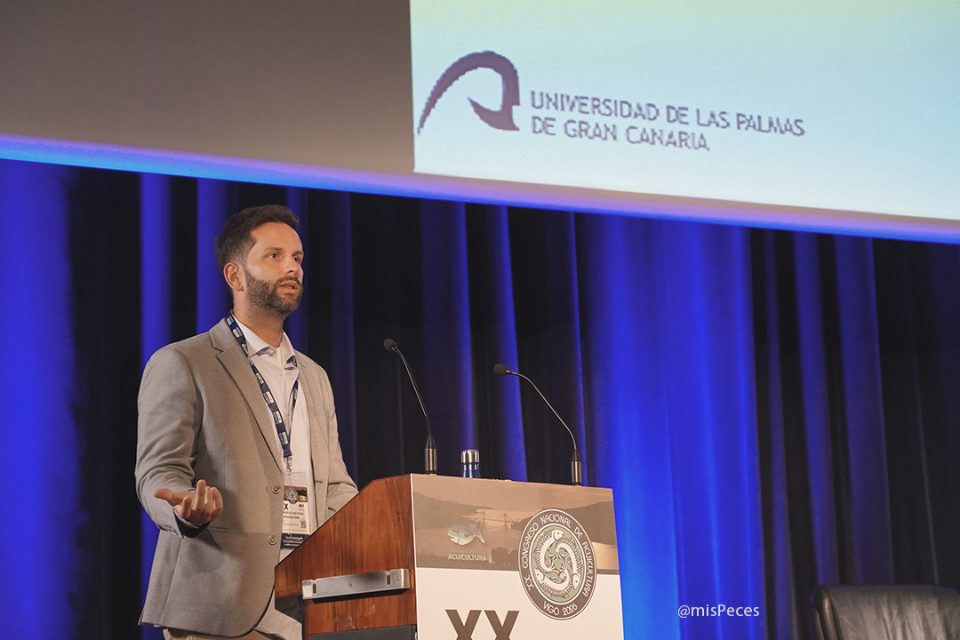
That was one of the key messages of the presentation “Can aquaculture produce the Omega-3 the world needs?”, delivered at the XX National Congress of Aquaculture by David Domínguez, from the University of Las Palmas de Gran Canaria.
Aquaculture must no longer only produce fish: it must also help guarantee the global supply of omega-3.
The presentation provided an overview of the importance of EPA and DHA fatty acids both for human health and fish physiology, with specific references to Atlantic salmon and gilthead seabream. It also addressed the global omega-3 deficit across different life stages, population groups and consumer sectors.
More than a debate about feed ingredients, the presentation framed omega-3 production as an issue of global food security, public health and nutritional sovereignty. The challenge is no longer limited to feed formulation, but to ensuring future access to these essential nutrients in a scenario where traditional fisheries are unable to meet international nutritional recommendations.
The challenge is no longer limited to feed formulation, but to ensuring future access to essential nutrients for human health.
Domínguez stressed that omega-3 fatty acids are essential for fish growth and health, play a fundamental role in preventing human diseases and require new large-scale production strategies.
Among the proposed solutions were new omega-3 sources such as microalgae, alternative marine biomass — including krill — microbial fermentation and vegetable oils produced through biotechnology in terrestrial crops.
One of the most innovative aspects of the presentation was its focus on the biological and metabolic adaptation of aquaculture species.
Current EPA and DHA production is insufficient to meet international nutritional recommendations.
The efficiency of EPA and DHA utilisation could be improved through genetic selection, nutritional programming and epigenetic mechanisms capable of enhancing omega-3 synthesis and retention in farmed fish.
The genetic modification of plants to produce marine omega-3 was also presented as a strategic pathway to partially reduce aquaculture’s historical dependence on fish oil.
The message fits with one of the clearest structural shifts seen at the XX CNA: the convergence of functional nutrition, genetics, physiology and biotechnology as pillars of next-generation aquaculture.

Related

Latest In-depth
-
Clams more resistant to heat and Perkinsus: research paves the way for selective breeding
Padua, Italy, 16/10/2026 | University of Padua researchers explain to misPeces the findings presented at Aquaculture Europe 2026 and the steps needed to transfer them to hatcheries. Initial applications could emerge within the next two or three years, although the relationship between resistance, growth and other production traits still need to be assessed