
Feed manufacturers strengthen their role through specialised technical support in aquaculture
Aquaculture nutrition is evolving towards a model in which products are no longer assessed solely on their composition, but on the range of services that accompany them. In this new landscape, specialised technical support is emerging as one of the key differentiating factors between suppliers.
However, this evolution is not uniform across the sector, and there are significant differences in the actual capacity of manufacturers to deliver technical support that can genuinely impact production performance.
This is no coincidence. As production, health and environmental requirements continue to increase, producers — particularly medium and large-scale operations — are demanding increasingly complex solutions that go beyond feed supply.
Optimising performance, managing disease risks and adapting feeding programmes require an integrated approach, supported by teams capable of addressing these challenges in a comprehensive way.
In this context, some manufacturers have strengthened their technical structures through multidisciplinary teams that integrate veterinarians, fish health specialists and experts in formulation and feeding management. This capability enables the design of tailored strategies for each production system and supports producers in making key decisions throughout the production cycle.
However, not all models meet this level of specialisation. In some cases, technical support remains limited to commercial functions or basic follow-up, making it difficult to translate into real improvements in on-farm performance and raising questions about its ability to deliver value beyond the product itself.
This shift goes beyond the incorporation of traditional profiles. The increasing complexity of the sector is driving the emergence of new specialisations linked to production data analysis, sustainability and functional fish health. Profiles such as performance analysts, microbiota and immunonutrition specialists, or experts in life cycle assessment (LCA), are beginning to form part of more advanced technical structures, expanding the scope of support offered to producers.
The shift in focus from the product to its application in the field marks a turning point. It is no longer just about improving formulation, but about maximising performance under real farming conditions. Indicators such as feed conversion ratio (FCR), disease response and growth stability increasingly depend on the correct implementation of feeding programmes and continuous technical monitoring.
For producers, this evolution redefines their relationship with suppliers. But it also raises a key question: not all suppliers offering technical support are in a position to generate measurable results on farm.
This approach is particularly relevant at a time when pressure on animal health and fish welfare continues to intensify. The emergence of new disease challenges and the need to optimise the use of treatments reinforce the role of nutrition as a preventive tool — provided it is supported by robust and operational technical expertise.
In this context, the concept of value in aquaculture nutrition continues to evolve. Beyond price per tonne, competitive differentiation no longer lies in offering technical support, but in its ability to deliver measurable impact on production performance.

Related

Latest In-depth
-
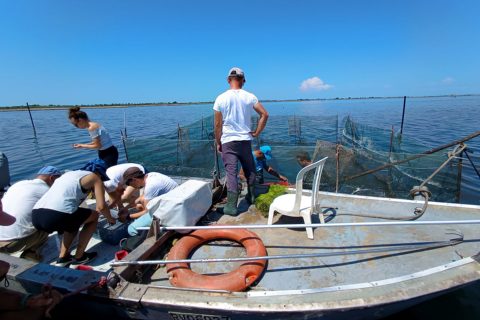
Clams more resistant to heat and Perkinsus: research paves the way for selective breeding
Padua, Italy, 16/10/2026 | University of Padua researchers explain to misPeces the findings presented at Aquaculture Europe 2026 and the steps needed to transfer them to hatcheries. Initial applications could emerge within the next two or three years, although the relationship between resistance, growth and other production traits still need to be assessed