
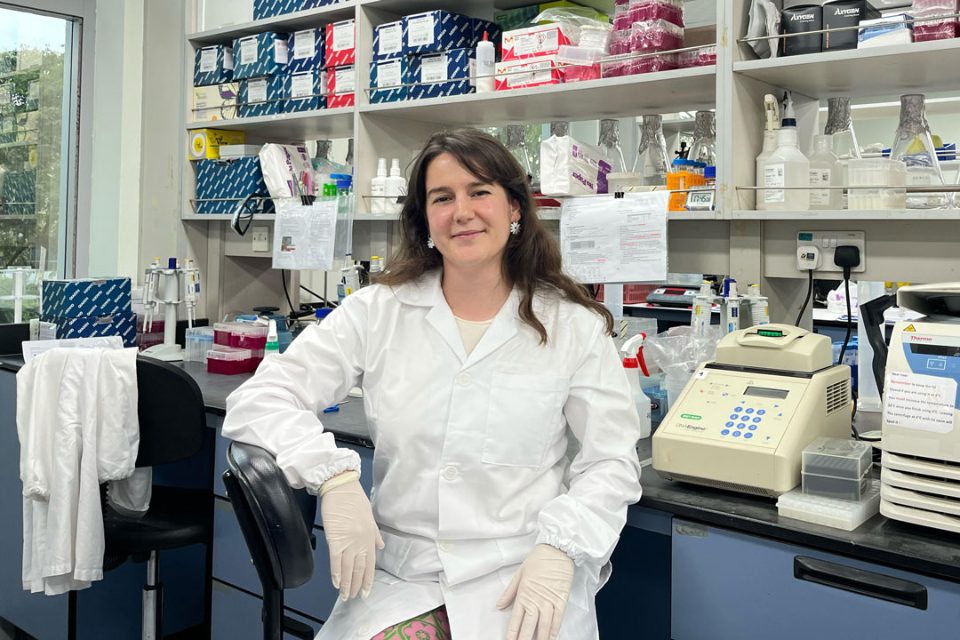
The Spanish Aquaculture Society (SEA) has awarded the doctoral thesis of Dr Isabel García Pérez for a study that introduces a still underexplored approach in Mediterranean spices: using exercise as a tool to improve nutritional efficiency in gilthead seabream (Sparus aurata) and European seabass (Dicentrarchus labrax).
At a time when feed costs continue to define farm profitability, Garcia’s work proposes a relevant shift in perspective. It is not only about reformulating diets, but about optimising how fish utilise those nutrients.
Traditionally, the sector’s strategy has focused on improving growth through feed formulation. However, this research shows that physical activity can significantly modify the metabolic utilisation of the diet.
As the researcher explained to misPeces, the study compares a standard high-protein diet with another containing higher levels of carbohydrates, reaching 25% gelatinised starch – above the levels typically recommended for the species. Both diets were tested under voluntary swimming and sustained exercise conditions.
The observed pattern is clear. Under normal conditions, higher-carbohydrate diets tend to increase fat accumulation, both in muscle and visceral tissues. However, when continuous exercise is introduced, this accumulation is reduced, growth improves, and energy utilisation becomes more efficient.
Direct impact on costs
In practical terms, exercise acts as a metabolic modulation of the diet. This has a direct implication for producers. If seabream can make better use of carbohydrates without compromising growth or fillet quality. It opens the door to reducing the protein content of feed – the most expensive component – with a direct impact on profitability.
Although the differences in growth observed in this study are not dramatic – partly because the diets used were already of high quality – the economic potential lies in system optimisation rather than in abrupt performance gains.
For this reason, the study does not present an immediately scalable industrial solution. Clear limitations remain, including the limited development of exercise systems for Mediterranean species and the need to adapt facility design.
Even so, scenarios are identified where application could be viable, particularly in tank-based systems, where generating water flow is technically straightforward, or during juvenile stages, where long-term effects could be significant.
Beyond growth: welfare and quality
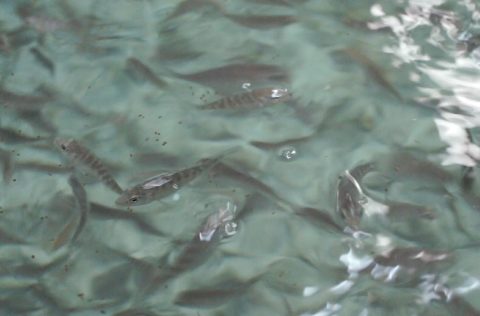
Exercise does not only improve metabolic efficiency. In juvenile seabream, continuous swimming reduces stress, decreases aggressive behaviour and limits cannibalism – factors that are particularly relevant in early production stages.
It also contributes to reducing fat accumulation, a key factor in species where fillet quality is critical.
From a scientific perspective, the thesis also provides advances with strategic value. These include the development of the first primary muscle cell culture in seabass, enabling the testing of ingredients or additives before validation in whole fish.
In addition, it identifies molecular regulators of muscle growth, including microRNAs and long non-coding RNAs, with potential as biomarkers to assess muscle condition under different farming conditions.
The main value of the work does not lie in a single result, but in the shift in approach it proposes. The industry has optimised feed for decades. The next step will be to optimise how fish utilise it.
The combination of diet and exercise introduces a new variable into the production equation, with direct implications of costs, efficiency and sustainability. While further work is needed before full industrial application, the concepts is now clearly defined.
During the interview, Dr Isabel García Pérez expressed her gratitude to the SEA for the recognition, describing it as “a great honour” after years of work, and highlighting the key role of her supervisors, collaborators and research team in the development of the thesis.
Related

Latest news
-
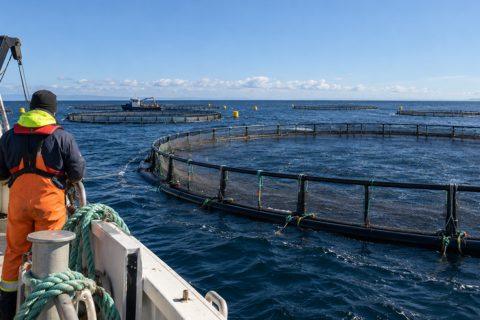
Financial model projects a 19.4% internal rate of return for an offshore European seabass farm off France
France, 23 October 2026 | The hypothetical operation would require nearly $40 million investment and produce 5,220 tonnes a year at full capacity. The projected return depends on assumptions that have yet to be tested at commercial scale
-
FEAP calls for binding fish farming production targets in EU's Vision 2040
Brussels, 22/10/2026 | European fish farmers welcome the Commission's plans to simplify aquaculture licensing but call for measurable growth targets, national commitments and a regulatory framework that supports investment
-
A rapid test for tilapia lake virus moves closer to on-farm diagnosis
Thailand, 22 October 2026 | A lateral flow test correctly identifies 60 out of 61 tilapia samples, offering a potential tool for preliminary virus detection, although further validation is needed to establish its ability to identify early-stage infections