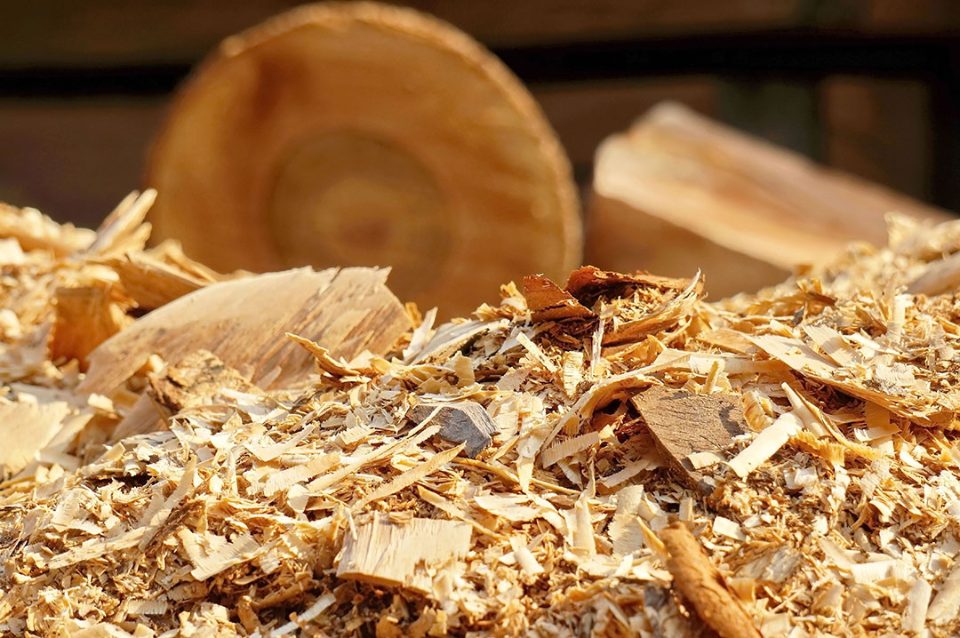
Europe is beginning to turn its attention to a largely underutilised resource to feed its fish: forest residues. A recent study shows that biomass derived from forestry by-products can be converted, through fermentation, into protein suitable for aquafeeds, opening a new pathway in the search for sustainable alternatives to fishmeal.
The study, led by the University of Bologna, in Italy, and the Norwegian University of Life Science (NMBU), focuses on gilthead seabream (Sparus aurata) and evaluates the use of single-cell protein (SCP) derived from the fungus Paecilomyces variotii, cultivated on hydrolysates obtained from forest residues such as branches and thinning materials.
The production of this protein is based on a potentially scalable fermentation process, in which the fungus grows on sugars derived from lignocellulosic biomass. The result is an ingredient with a protein content of around 46%, which can be incorporated into commercial feed formulations without altering key production parameters.
In the trial, the inclusion of up to 10% of this protein allowed for the partial replacement of fishmeal without affecting growth performance, feed intake or feed conversion efficiency.
Beyond its role as a protein source, the ingredient shows relevant functional properties. The findings point to the activation of mechanisms associated with nutrient absorption, as well as a modulation of the gut microbiota, with an increased presence of potentially beneficial bacteria.
In addition, fish fed these diets displayed an improved physiological response to stress conditions, as evidenced by a reduction in biomarkers associated with tissue damage following a high-density challenge.
This type of response reinforces a growing trend in aquafeed nutrition, where the value of an ingredient is no longer assessed solely in terms of growth, but also in its ability to enhance animal robustness under real farming conditions.
The strategic relevance of this approach is clear within the European context. Unlike other protein sources, this pathway does not compete with crops intended for human consumption, reduces dependence on imported raw materials, and enables the valorisation of abundant biomass streams available across the region.
However, industrial scalability remains the key unknown. The study does not address critical variables such as production cost, large-scale availability, or competitiveness against conventional ingredients, all of which will ultimately determine its adoption by the industry.
Rather than being just another alternative ingredient, this model points towards the development of a new value chain linking forestry and aquaculture through biotechnology.
In a context shaped by resource constraints and increasing sustainability demands, the conversion of forest residues into aquaculture protein could emerge as one of the most relevant development pathways for the sector in Europe.
Reference:
Busti, S., Kortner, T.M., Valen, E.C., Benini, E., Bonaldo, A., Xiros, C., Brambilla, F., Scicchitano, D., Palladino, G., Candela, M., Berrettini, M., Dondi, F., Ferrari, M.G., Gatta, P.P., Parma, L. (2026).
Dietary Paecilomyces variotii single-cell protein supports growth and intestinal health in gilthead sea bream.
Aquaculture, 616, 743729. https://doi.org/10.1016/j.aquaculture.2026.743729

Related

Latest In-depth
-
Clams more resistant to heat and Perkinsus: research paves the way for selective breeding
Padua, Italy, 16/10/2026 | University of Padua researchers explain to misPeces the findings presented at Aquaculture Europe 2026 and the steps needed to transfer them to hatcheries. Initial applications could emerge within the next two or three years, although the relationship between resistance, growth and other production traits still need to be assessed