
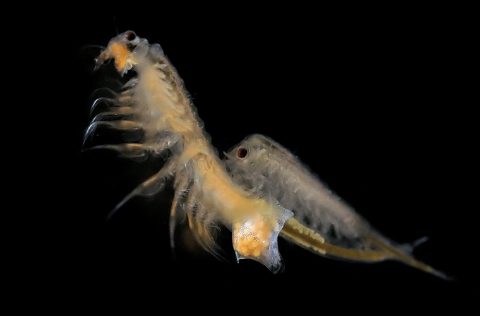
The handling of Artemia in marine hatcheries may have a much greater impact on larval nutrition than traditionally assumed. A new study published in Biology Bulletin concludes that both Artemia size and storage and starvation conditions significantly modify its biochemical composition and proteolytic activity, two key factors for the digestive development of marine fish larvae.
At industrial level, the findings highlight that Artemia should be used in larviculture as a live feed while taking into account factors such as size, enrichment, storage temperature and the waiting time before delivery to the larvae. All of these factors can make a significant difference to larval performance and hatchery efficiency.
| Hatchery factor | Recommended condition based on the study | Expected benefit |
|---|---|---|
| Artemia size | 430 μm | Higher protein content and alkaline protease activity |
| Enrichment | Use enriched Artemia before feeding | Greater digestive enzyme contribution |
| Storage temperature | 4 °C | Lower nutritional degradation |
| Waiting/storage time | Minimise holding time before feeding | Reduced protein and lipid losses |
| Room temperature holding | Avoid prolonged periods | Limits biochemical deterioration |
| Feeding strategy | Deliver Artemia shortly after enrichment | Maximises functional live feed value |
The research, conducted by Mehmet Naz from Iskenderun Technical University (Türkiye), evaluated three commercial SEP-Art Artamia groups of 430, 480 and 500 μm under different incubation conditions: enrichment, starvation and storage at 4ºC.
The results showed that the 430 μm Artemia group presented the highest protein level and the greatest alkaline protease activities, considered especially important during the early stages of larval feeding. In contrast, the 500 μm Artemia group showed higher lipid levels but lower proteolytic activities.
One of the most relevant findings of the work is that it confirms prolonged storage and starvation lead to progressive nutritional losses. Both protein and lipid levels decreased during the waiting periods before delivery to the larvae, particularly when Artemia remained at room temperature. Storage at 4ºC partially reduced these losses.
The study also highlights a common practice in many hatcheries that keep enriched Artemia for hours before distribution to larval tanks. According to the researcher, this period may reduce not only the nutritional value of the live feed, but also its enzymatic contribution to the still immature digestive system of the larvae.
The research further analysed the importance of proteases present in Artemia. Marine larvae depend heavily on external enzymes during their early developmental states, as their digestive system is not yet fully nutritional. In this context, alkaline proteases become particularly relevant.
The expert notes that enriched Artemia showed the highest proteolytic activities, although these decreased over storage time. In addition, the combined alkaline and neutral activities were higher than acid protease activities in all groups analysed.
The study concludes that Artemia incubation and handling conditions should be considered a strategic part of larval feeding protocols rather than merely a logistical stage before feed delivery.

Related

Latest In-depth
-
Clams more resistant to heat and Perkinsus: research paves the way for selective breeding
Padua, Italy, 16/10/2026 | University of Padua researchers explain to misPeces the findings presented at Aquaculture Europe 2026 and the steps needed to transfer them to hatcheries. Initial applications could emerge within the next two or three years, although the relationship between resistance, growth and other production traits still need to be assessed