
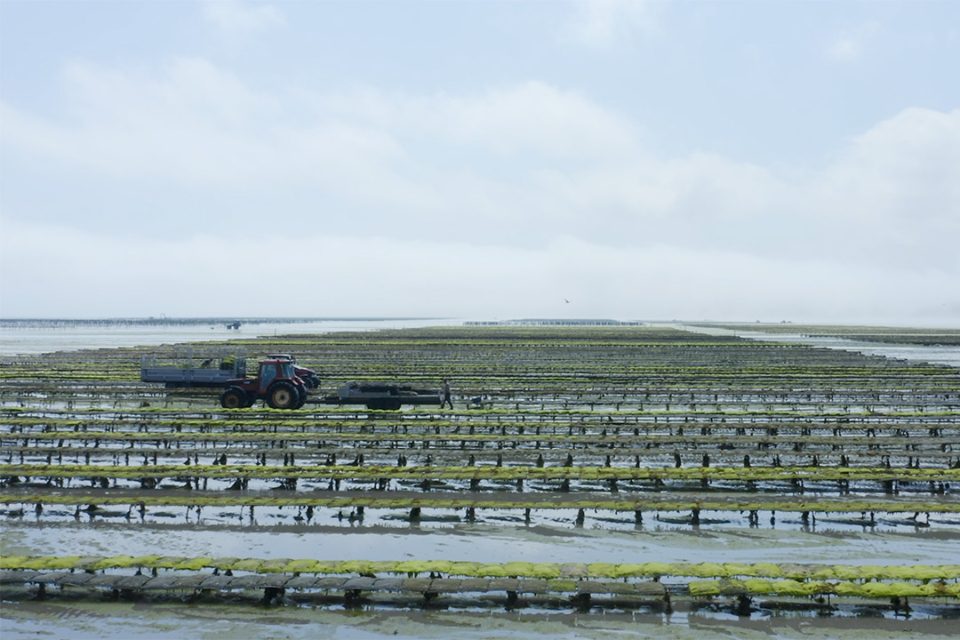
The possibility of turning certain aquaculture systems into climate assets is gaining momentum within the international debate on sustainability, green finance and carbon markets.
However, as interest grows in integrating aquaculture into “blue carbon” strategies, new scientific studies warn that come of the sector’s current climate narratives may be oversimplifying a far more complex reality.
Two recent studies published in Aquaculture International and ICES Journal of Marine Science perfectly illustrate this emerging tension between economic opportunity and scientific validation.
The first explores the potential of different aquaculture systems – particularly seaweed, shellfish and IMTA (Integrated Multi-Trophic Aquaculture) – to participate in voluntary and regulatory carbon markets. The second directly questions whether bivalve farming can genuinely be considered a marine carbon dioxide removal strategy.
From “Blue Carbon” to climate markets
Interest in carbon markets has accelerated in recent years, driven by net-zero targets, ESG regulation, green taxonomy frameworks, sustainable finance, and increasing pressure on food supply chains to reduce emissions.
Within this context, part of the aquaculture industry is attempting to position itself not only as a source of lower-impact protein, but also as an active contributor to climate mitigation.
The study published by Christian Larbi Ayisi and colleagues in Aquaculture International explores precisely this possibility. The authors review how systems such as seaweed farming, shellfish production, integrated multi-trophic aquaculture (IMTA), and certain marine restoration models could potentially function as biological carbon sinks.
The paper also highlights that political and financial interest in “blue carbon” is growing rapidly, particularly in Asia, where several pilot projects are already attempting to quantify the economic value of carbon associated with marine production.
The major challenge: proving it scientifically
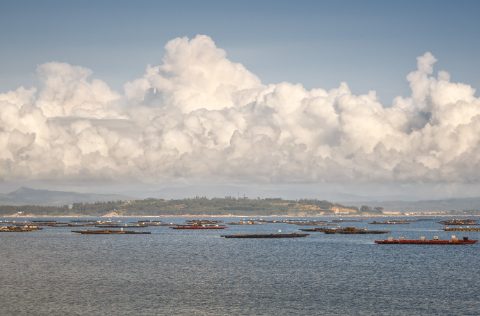
However, the possibility of generating carbon credits does not depend solely on capturing CO2. Systems must demonstrate additionally, permanence, traceability, verifiability, and a net positive carbon balance.
In other words, it is not enough to absorb carbon temporarily. It must be demonstrated that this carbon is effectively removed from the atmosphere over climate-relevant timescales and that the system delivers a measurable climate benefit compared with a baseline scenario.
This is where the second study, published in ICES Journal of Marine Science, adopts a much more critical position regarding the climate role of bivalves.
The authors, led by Fabrice Pernet, argue that shellfish farming cannot currently be considered a valid marine carbon dioxide removal (mCDR) strategy. Their main argument is that bivalve both respire CO2 and release CO2 during shell formation through calcification processes.
The study challenges a widely repeated assumption in parts of the scientific literature and industry communication: that the carbon fixed in shells automatically equates to net atmospheric carbon removal.
According to the authors, this interpretation oversimplifies the real carbon balance and overlooks multiple variables, including biological emissions, ocean-atmosphere CO2 exchange, operational emissions, hydrodynamics, organic matter degradation, and complex ecosystem interactions.
The paper also argues that many positive estimates regarding carbon sequestration in bivalve farming rely on incomplete methodologies or lack robust RMV (Monitoring, Reporting and Verification) systems.
In fact, the authors go as far as stating that it is “highly unlikely” that bivalve aquaculture could ever be scientifically justified as a credible source of carbon credits.
Beyond Carbon: sustainable protein production
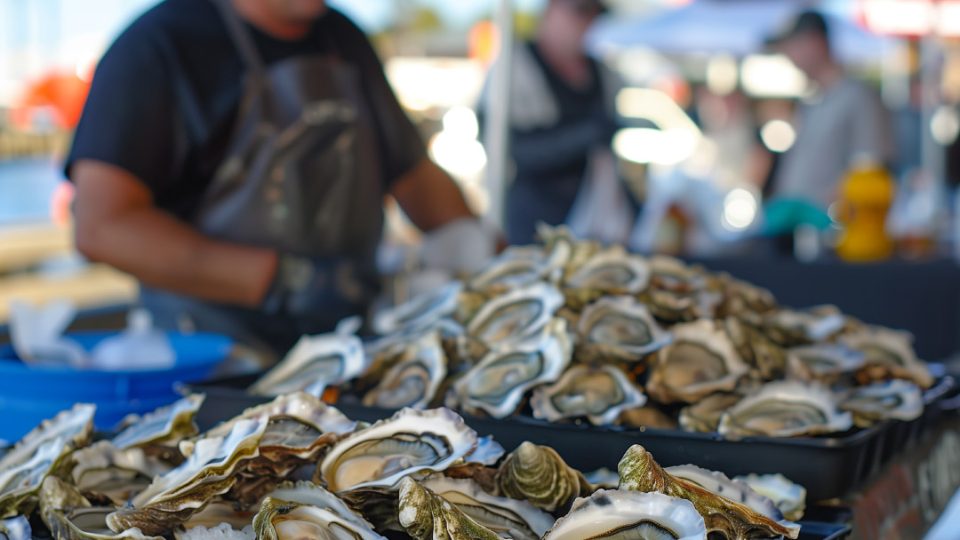
Despite this criticism, the study stresses that shellfish farming remains one of the most sustainable forms of aquatic animal protein production.
Bivalves do not require feed, have comparatively low emissions, can improve certain environmental parameters, and provide high-quality protein with a lower impact than many terrestrial livestock systems.
The question, therefore, is not whether aquaculture can be sustainable, but whether certain activities can scientifically qualify as genuine net carbon removal strategies.
A debate that is only beginning
The debate over aquaculture’s climate role is likely to intensify over the coming years as regulatory pressure increases, voluntary carbon markets expand, and companies seek to monetise environmental attributes.
Yet both studies converge on one essential point that the future credibility of “blue carbon” will depend less on commercial narratives and more on the ability to demonstrate measurable, permanent and verifiable climate benefits.
In other words, aquaculture may ultimately play an important role in the climate transition, but the sector still needs to resolve major scientific uncertainties before that potential can be translated into credible carbon credits.
References
Ayisi, C. L., Osei, S. A., Henewaa, A., & Akolaa, R. A. (2026). Biological carbon sinks in aquaculture: evaluating sequestration potential and integration into carbon markets. Aquaculture International, 34, 151. https://doi.org/10.1007/s10499-026-02551-w
Pernet, F., Williamson, P., & Gazeau, F. (2026). A system-based analysis of carbon fluxes shows that bivalve aquaculture cannot be considered a marine carbon dioxide removal strategy. ICES Journal of Marine Science, 83(5), fsag073. https://doi.org/10.1093/icesjms/fsag073
Related


Latest news
-
Financial model projects a 19.4% internal rate of return for an offshore European seabass farm off France
France, 23 October 2026 | The hypothetical operation would require nearly $40 million investment and produce 5,220 tonnes a year at full capacity. The projected return depends on assumptions that have yet to be tested at commercial scale
-
FEAP calls for binding fish farming production targets in EU's Vision 2040
Brussels, 22/10/2026 | European fish farmers welcome the Commission's plans to simplify aquaculture licensing but call for measurable growth targets, national commitments and a regulatory framework that supports investment
-
A rapid test for tilapia lake virus moves closer to on-farm diagnosis
Thailand, 22 October 2026 | A lateral flow test correctly identifies 60 out of 61 tilapia samples, offering a potential tool for preliminary virus detection, although further validation is needed to establish its ability to identify early-stage infections