
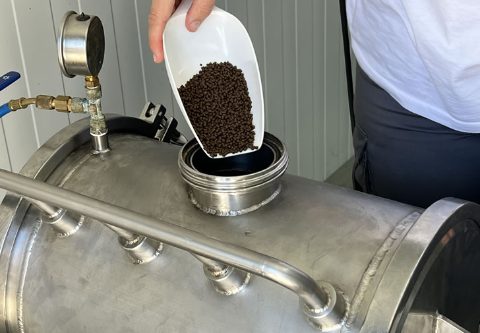
The transition towards more sustainable aquafeed is accelerating, driven by regulatory pressure, the need to reduce dependence on marine raw materials and growing demand for products with a lower environmental impact.
However, recent advances in aquaculture nutrition show that the use of alternative ingredients continues to face a complex balance between sustainability, production performance and climate footprint.
In recent years, the incorporation of plant proteins, processed animal by-products, yeasts, microalgae and other circular economy-derived raw materials has accelerated significantly. The aim is to reduce the use of fishmeal and fish oil, historically considered cornerstones of aquaculture nutrition but increasingly challenged by issues related to availability, price and sustainability.
The challenge is that replacing marine ingredients does not automatically result in an overall environmental improvement. Several recent studies indicate that some alternative formulations may increase carbo footprint due to the high energy consumption associated with processing certain proteins, the international transport of raw materials or the use of highly refined ingredients.
At the same time, fish do not always respond equally to these new formulations. Diets with a high inclusion of plant-based ingredients continue to show limitations linked to palatability and voluntary feed intake.
Trials carried out with Mediterranean species such as gilthead seabream and European seabass showed that fish maintained adequate growth performance, but also recorded lower feed intake and a slight reduction in productive performance compared to more conventional diets.
Digestibility also remains one of the sector’s key technical challenges. Although many alternative raw materials have already reached acceptable levels, some animal by-products and plant proteins may reduce digestive efficiency or partially affect nutrient utilisation.
In parallel, certain anti-nutritional compounds present in plant ingredients continue to raise concerns among nutritionists and producers.
There is also a risk that part of the narrative surrounding the circular economy advances faster under the influence of marketing than through the full validation of its overall environmental benefits.
Nevertheless, the use of poultry by-products, microbial proteins, yeast and algae allows waste streams from other industries to be valorised while improving the overall efficiency of food systems.
In addition, these raw materials offer more stable availability and help reduce pressure on marine resources.
The challenge for the industry now lies in finding the optimal balance between growth, animal health, physiological resilience, costs and emissions. Feed sustainability is increasingly being assessed not only by the origin of its ingredients, but also by the energy used during production, its ability to maintain zootechnical performance and its overall climate impact.
The future is likely to involve hybrid formulations combining different protein and lipid resources in order to minimise productive and environmental trade-offs without compromising the economic stability of fish farms.
The transition towards more sustainable aquaculture is clearly progressing, but current results show that there is still no single solution capable of simultaneously solving all the nutritional, productive and climate-related-challenges facing the industry.

Related

Latest In-depth
-
Clams more resistant to heat and Perkinsus: research paves the way for selective breeding
Padua, Italy, 16/10/2026 | University of Padua researchers explain to misPeces the findings presented at Aquaculture Europe 2026 and the steps needed to transfer them to hatcheries. Initial applications could emerge within the next two or three years, although the relationship between resistance, growth and other production traits still need to be assessed