
Aquaculture is no longer simply looking for fish that grow faster. It is beginning to seek fish that are physiologically more stable, resilient and better adapted to increasingly complex farming environments.
This emerging new stage focuses on the ability of diets to modulate physiology, microbiome composition, stress responses and reproductive processes.
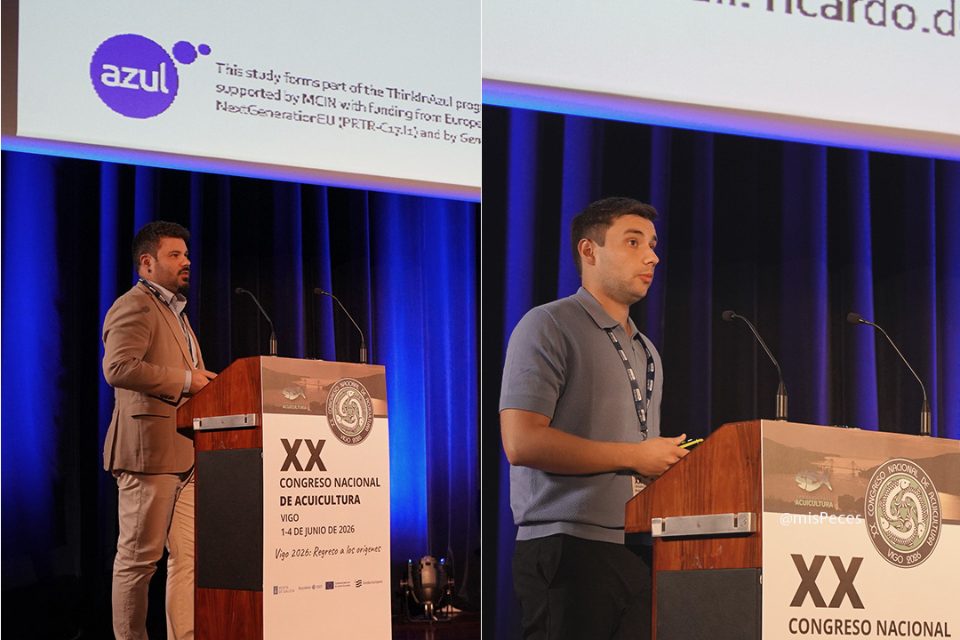
That transition became particularly visible in two presentations delivered by researchers from the Instituto de Acuicultura Torre de la Sal (IATS-CSIC) during the XX National Aquaculture Congress held in Vigo.
The studies by Federico Moroni and Ricardo Domingo-Bretón analysed how different experimental feed formulations modify deep biological responses in gilthead seabream (Sparus aurata), one of the Mediterranean aquaculture industry’s most important species.
Both studies used three differentiated nutritional strategies: a control diet based on current commercial formulations, a PAP diet mainly based on processed animal proteins, and an ALT diet formulated with insect meal and microbial biomass.
“Aquaculture nutrition is beginning to move beyond simply growing fish towards managing physiology, the microbiome and resilience.”
Beyond productive performance
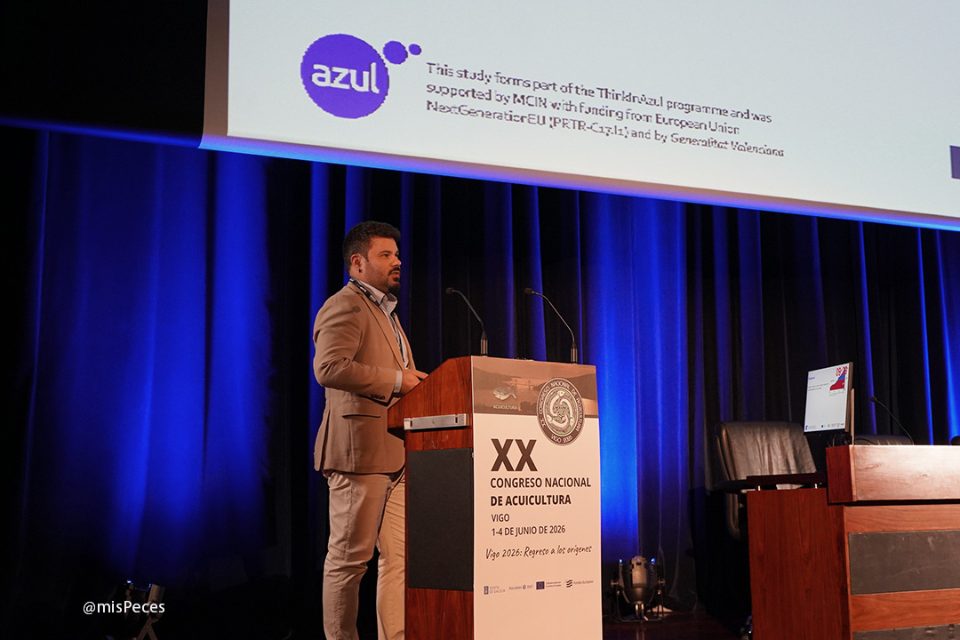
In Moroni’s study, the different diets altered hormonal response, oestrogenic activity, sex reversal and stress response. The PAP diet accelerated the male-to-female transition characteristic of gilthead seabream, whereas ALT slowed the process and reduced the final proportion of females.
Fish fed the ALT diet also showed lower cortisol levels and a different response to acute stress, suggesting differences in environmental perception and metabolic resource allocation.
The study also incorporated transcriptomic and epigenetic markers to evaluate muscular “biological age”, identifying molecular profiles associated with either “younger” or “older” phenotypes depending on the diet used.
“The same diets can alter cortisol levels, oestrogenic activity, stress responses and the rate of sex reversal without compromising growth.”
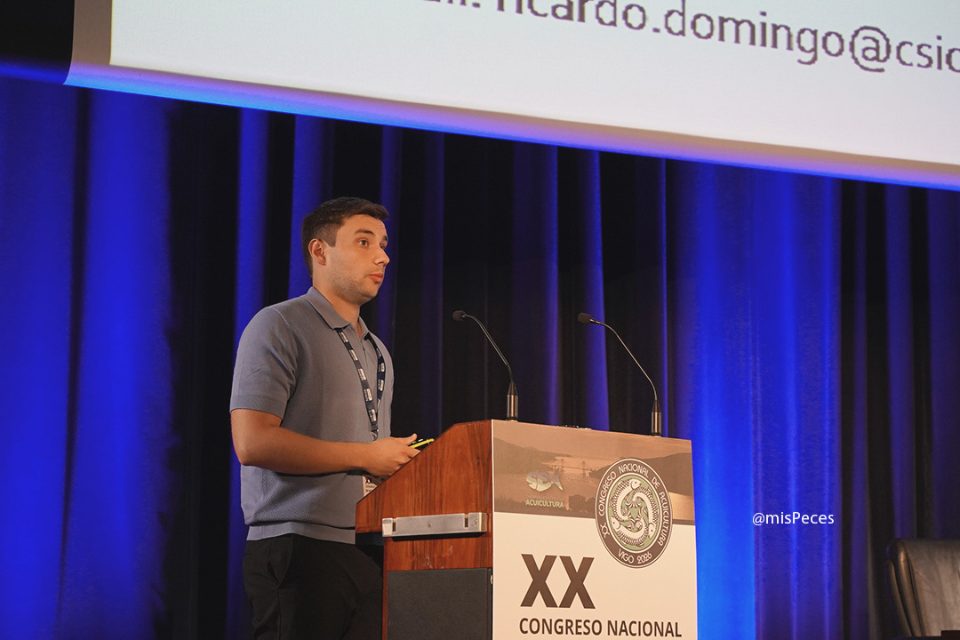
In parallel, Domingo-Bretón’s presentation showed how these same formulations reconfigure the intestinal, skin and environmental microbiome of gilthead seabream.
One of the most relevant findings was that time and seasonality had an even greater effect on microbial structure than diet itself. According to the data presented, temporal variation explained 23% of microbiome reorganisation, compared with 6.6% directly associated with diet.
Even so, the experimental diets generated differentiated microbial responses, particularly after adaptation to the new formulations.
“El microbioma deja de ser solo un objeto de estudio académico y empieza a convertirse en una herramienta de monitorización fisiológica en granja.”
The study also identified a relatively stable “core” microbiota composed of 20 persistent bacterial genera throughout the production cycle, accounting for between 49% and 64% of the total microbiome.
One of the most innovative aspects was the connection between the fish microbiome and the farming environment. The research showed that certain microbial fractions shared between water, skin and intestinal mucus could potentially be used as non-invasive tools to monitor fish physiological status.

Related

Latest In-depth
-
Clams more resistant to heat and Perkinsus: research paves the way for selective breeding
Padua, Italy, 16/10/2026 | University of Padua researchers explain to misPeces the findings presented at Aquaculture Europe 2026 and the steps needed to transfer them to hatcheries. Initial applications could emerge within the next two or three years, although the relationship between resistance, growth and other production traits still need to be assessed