
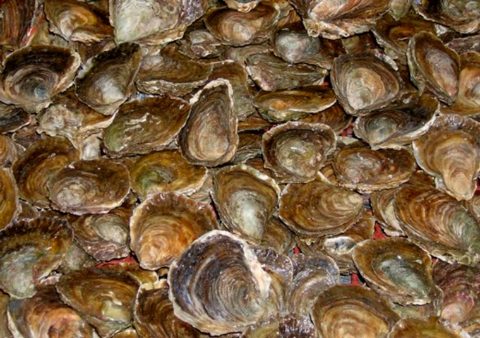
Europe’s ambition to restore and commercially develop the native flat oyster, Ostrea edulis, is facing a critical constraint: the sector still cannot produce hatchery seed at a consistent and predictable scale.
Despite growing interest driven by ecosystem restoration programmes and premium market demand, hatcheries across Europe remain unable to guarantee stable larval production. This limitation is now widely recognised as the main bottleneck preventing the species from transitioning from niche initiatives to a viable industry.
A comprehensive analysis carried out within the European NORA network, with key contributions from researchers at the IEO-CSIC, confirms that larval production collapses are not isolated events but a systemic issue affecting hatcheries across the continent.
At the core of the problem lies the absence of standardised protocols. Each facility operates under its own set of conditions, making successful outcomes difficult to reproduce and highlighting that the technical challenge remains unresolved at a fundamental level.
The biological nature of the species further complicates the situation. Unlike the Pacific oyster, which relies on external fertilisation and allows for high-volume production, the flat oyster has a far more complex reproductive cycle. Fertilisation occurs internally, with larvae developing inside the brooding female, a process that significantly increases bacterial load and vulnerability to pathogens such as Vibrio.
In addition, reproductive output is considerably lower, with females realising only a fraction of the larvae produced by other commercial species. This drastically reduces the margin for error in hatchery conditions, where even minor deviations can lead to large-scale mortality events.
As a result, seed production remains highly erratic. Larval quality depends on a combination of extremely sensitive factors, form parental energy to microbiological control within the rearing environment. When any of these variables fall outside optimal ranges, mortality rates surge, creating a level of uncertainty that prevents long-term planning and discourages investment.
The real barrier to scaling flat oyster production lies inside the hatchery
The implications extend beyond production. Flagship initiatives such as RemediOS-2 in the Mar Menor, which is advancing the deployment of biodegradable reef structures, demonstrate that the main limitation is no longer in the marine environment but within hatchery systems.
The success of large-scale restoration and the emergence of a sustainable flat oyster industry ultimately depend on what happens during the earliest stages of cultivation.
Across the sector, there is growing consensus that progress will require stronger international coordination to develop and standardise protocols for nutrition, biosecurity and larval rearing.
Until hatchery production becomes reliable, Europe’s native oyster will remain a scientific challenge rather than a scalable industry reality.

Related

Latest In-depth
-
Clams more resistant to heat and Perkinsus: research paves the way for selective breeding
Padua, Italy, 16/10/2026 | University of Padua researchers explain to misPeces the findings presented at Aquaculture Europe 2026 and the steps needed to transfer them to hatcheries. Initial applications could emerge within the next two or three years, although the relationship between resistance, growth and other production traits still need to be assessed