
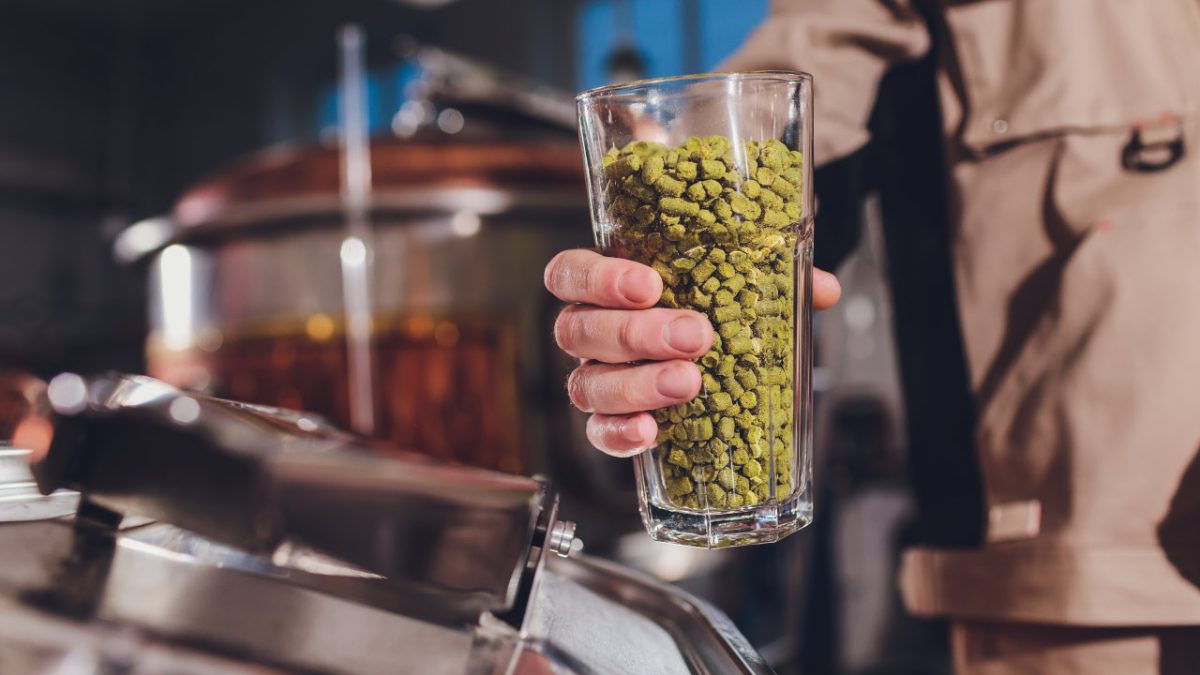
The valorisation of industrial by-products as aquafeed ingredients is beginning to move from circular promise to productive assessment. A study published in Aquaculture Nutrition has analyses the use of the microalga Nannochloropsis oceanica, cultivated using brewery wastewater, in fishmeal-free diets for juvenile gilthead seabream (Sparus aurata).
The work, carried out by researchers from IATS-CSIC, University College Dublin, Swansea University and the company LSAqua within the ALGAEBREW project, proposes a route to transform a residual stream from the brewing industry into microalgal biomass with nutritional value for aquaculture.
The trial lasted 96 days and compared a reference diet similar to a commercial fishmeal-based formulation with three fishmeal-free diets containing increasing levels of Nannochloropsis at 0%, 2% and 14%.
The diet with the highest microalgae inclusion also incorporated DHA-rich microalgae oil instead of fish oil.
According to the authors, the productive performance of fish fed the fishmeal-free diets was very similar across treatments, with only a slight final advantage for the commercial control, below 4%, and small differences in specific growth rate and feed conversion.
What was tested in gilthead sea bream and what Nannochloropsis contributed
| Diet evaluated | Formulation | Productive result | Functional interpretation |
|---|---|---|---|
| Control | Diet similar to a commercial formulation, containing fishmeal and fish oil. | Best final growth result, although with only a slight advantage over the fishmeal-free diets. | Provides the reference point to assess whether alternative diets can maintain performance. |
| Fishmeal-free diet | Fishmeal-free formulation with no inclusion of Nannochloropsis. | Growth remained close to the control, with small differences in specific growth rate and feed conversion. | Shows that removing fishmeal is feasible, but requires careful adjustment of intestinal health and metabolism. |
| 2% Nannochloropsis | Fishmeal-free diet with low inclusion of microalgae cultivated using brewery wastewater. | Maintained performance similar to the other fishmeal-free diets. | Associated with improved antioxidant capacity and changes in the intestinal microbiota. |
| 14% Nannochloropsis + DHA | Fishmeal-free diet with high microalgae inclusion and replacement of fish oil with DHA-rich microalgae oil. | Maintained growth close to the control, although it did not fully match the commercial diet. | Strengthened the antioxidant response, modulated lipid metabolism and showed effects on immunity, intestinal barrier function and water microbiota. |
Beyond growth, the study detected a progressive improvement in antioxidant capacity in fish fed the microalgae-containing diets, together with changes in the expression of genes related to lipid metabolism, immune response and intestinal integrity.
In the formulation with 14% Nannochloropsis and DHA-rich oil, the researchers observed a regulation of lipid metabolism consistent with lower hepatic fatty acid synthesis and greater tissue uptake, a result that reinforces the interest of these raw materials as functional ingredients and not only as partial substitutes for marine ingredients.
The project’s investigator, Jaume Pérez Sánchez, from IATS-CSIC, noted that “innovation in sustainable food systems goes beyond isolated solutions: it requires collaboration and a truly holistic vision”.
In this regard, he emphasised that ALGAEBREW shows how interdisciplinary collaboration and system-level thinking can help drive “the next generation of more sustainable aquaculture”.
This interpretation fits with one of the most novel aspects of the study: the analysis was not limited to growth, but integrated physiology, gene expression, intestinal microbiota and the microbiota of the culture water.
Commercial applications, however, still requires action. The study itself points to several unresolved questions, including the real digestibility of these formulations, the production cost of the biomass, the stability of its composition, industrial-scale availability and the need to distinguish more precisely between the effects of Nannochloropsis and those of DHA-rich microalgae oil.
Although brewery waste is not a universal solution, it can be seen as a circular alternative for producing microalgae under comprehensive productive criteria, taking into account growth, feed conversion, metabolism, intestinal health, immunity, microbiota and effects on the culture waste.
Reference
Naya-Català, F., Domingo-Bretón, R., Ma, Q., Holhorea, P. G., Belenguer, Á., Moroni, F., Calduch-Giner, J., Silkina, A., Van Mullem, D., Halim, R., & Pérez-Sánchez, J. (2026). From Brewery Waste to Sustainable Aquafeed: Harnessing Nannochloropsis Microalgae for Fishmeal-Free Gilthead Sea Bream Diets. Aquaculture Nutrition, 2026, Article 1003936. https://doi.org/10.1155/anu/1003936

Related
Latest In-depth
-
Clams more resistant to heat and Perkinsus: research paves the way for selective breeding
Padua, Italy, 16/10/2026 | University of Padua researchers explain to misPeces the findings presented at Aquaculture Europe 2026 and the steps needed to transfer them to hatcheries. Initial applications could emerge within the next two or three years, although the relationship between resistance, growth and other production traits still need to be assessed