
Innovation in global aquaculture is advancing at two different speeds. While selective breeding programmes and new feed formulations have significantly improved both productive and environmental efficiency, these advances remain concentrated in a limited number of species and regions.
A recent study published in Fish and Fisheries highlights that tool such as selective breeding and high-tech recirculating aquaculture systems (RAS) is predominantly applied in high-income countries and in a small group of high-value species, particularly Atlantic salmon.
The data reveal a structural gap in the adoption of innovation. Despite decades of genetic improvement – enhancing growth rates, disease resistance and environmental tolerance – only around 9% of global aquaculture production in 2010 was based on genetically improved stocks.
At the same time, a large share of the sector continues to operate in extensive or semi-intensive systems with limited technological upgrades.
This technological imbalance has direct implications for the sector’s overall sustainability. The study warns that, although genetic and nutritional innovations can optimise specific production parameters, their aggregate impact remains limited if they are not widely adopted across the industry.
A similar pattern emerges in aquafeed development. Advances have reduced reliance on fishmeal and fish oil through more efficient and tailored diets, but they also introduce new environmental trade-offs. Some alternative ingredients may shift pressure onto terrestrial ecosystems, or even negatively affect fish nutrition and system emissions.
In this context, the authors stress that the key challenge is not only innovation, but scaling innovation. Without policies that improve access to technology, knowledge and genetic improvement in small – and medium-scale farming systems, the sector’s modernisation will remain uneven.
For the authors, aquaculture sustainability depends not only on how production is carried out, but also on which species are farmed. Without diversification towards species with stronger environmental performance, technological progress alone will not be sufficient to align sector growth with climate and biodiversity goals.

Related

Latest In-depth
-
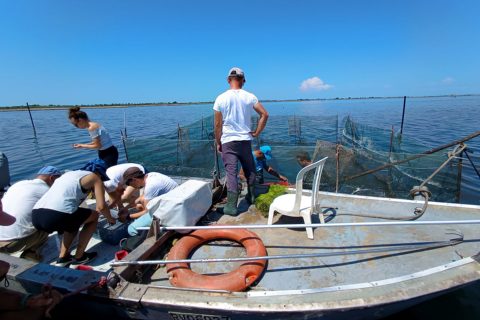
Clams more resistant to heat and Perkinsus: research paves the way for selective breeding
Padua, Italy, 16/10/2026 | University of Padua researchers explain to misPeces the findings presented at Aquaculture Europe 2026 and the steps needed to transfer them to hatcheries. Initial applications could emerge within the next two or three years, although the relationship between resistance, growth and other production traits still need to be assessed