
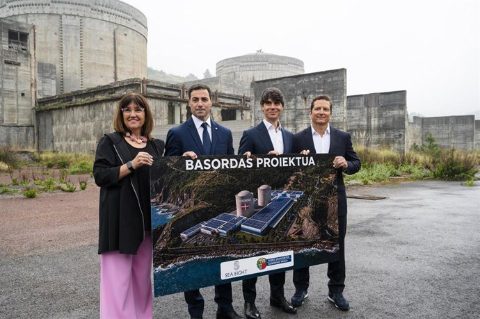
The Basque Country is progressing with the development of a large-scale aquaculture park at the site of the former Lemoiz power plant (Bizkaia), aiming to produce up to 3,000 tonnes of sole annually using recirculating aquaculture systems (RAS). First commercial production is expected by 2030.
The project, named Aquacría Basordas and presented by SEA EIGHT —part of the Atitlan group—, involves an estimated €170 million investment over a ten-year period and is structured in three development phases. Initial construction is expected to begin in 2027, with production activities starting in 2029, in line with the biological cycle of the species.
The facility is designed as an integrated operation covering all stages of the production cycle: hatchery, nursery, ongrowing and processing. The infrastructure will span approximately 46,600 square metres and will rely on RAS technology capable of reusing up to 97% of water.
This approach aims to ensure controlled production conditions, traceability and supply stability—key factors for high-value species such as sole.
One of the project’s distinctive features is the reuse of a decommissioned energy infrastructure with direct access to seawater. This model, already being explored in other European countries, helps reduce barriers related to site availability and water access.
The initiative is aligned with blue economy and food diversification strategies, positioning aquaculture as a tool to increase marine protein production under controlled systems.
The development will be supported by technology centres, particularly in key areas such as reproduction, nutrition, fish health and welfare.
While RAS technology will be central to managing production parameters, it also entails significant technical challenges, particularly for sole, whose intensive farming remains more complex than that of more established species.
According to SEA EIGHT, the project reflects a long-term investment strategy with economic and social impact, and aims to position itself as an international benchmark through the combination of technology, sustainability and resource efficiency.
The initiative is being developed in collaboration with the Basque Government as part of its strategy to promote new production models within the food sector.
In addition to its production capacity, the project is expected to generate around 200 skilled jobs linked to R&D, operations and auxiliary services. It is also anticipated to have a knock-on effect across the value chain, including suppliers, processing and logistics.
Meeting timelines, optimising operating costs and achieving consistent production performance will be critical to positioning Lemoiz as a leading industrial aquaculture hub in Europe.

Related

Latest In-depth
-
Clams more resistant to heat and Perkinsus: research paves the way for selective breeding
Padua, Italy, 16/10/2026 | University of Padua researchers explain to misPeces the findings presented at Aquaculture Europe 2026 and the steps needed to transfer them to hatcheries. Initial applications could emerge within the next two or three years, although the relationship between resistance, growth and other production traits still need to be assessed