
The marine ingredients industry is redefining how it communicates its role. The focus is no longer on justifying the use of fishmeal and fish oil in aquafeeds, but on explaining why they must be better integrated into an increasingly demanding global food system.
This was one of the main conclusions from the IFFO Members’ Meeting 2026, held in Madrid and attended by more than 270 delegates from 35 countries.
For years, the sector responded to regulatory and media pressure with arguments that were often reactive and difficult to compare. That positioning is now shifting towards an approach grounded in science, common metrics and a broader view of aquaculture’s role in global food security.
This shift was particularly evident in the scientific sessions. Global fish stock assessments indicate that, overall, populations remain stable and, in the case of small pelagic species, even above maximum sustainable yield levels. As fisheries expert Ray Hilborn noted during the meeting, these stocks are, on average, “very stable and above maximum sustainable yield levels”, reinforcing the importance of evidence-based management.
However, this relatively stable outlook comes with an important caveat. Climate change is already altering both the productivity and distribution of resources, requiring more adaptive management approaches.
At the same time, the sustainability debate is evolving. There is growing consensus that framing the issue as a complete replacement of marine ingredients with alternatives is overly simplistic and, in some cases, counterproductive. Replacing them with terrestrial sources, for instance, could shift pressure onto other systems with potentially greater environmental impacts.
As experts emphasised, there is no cost-free solution, and resource efficiency in converting inputs into nutritious food is becoming the key metric.
Precision nutrition reshapes formulation
In aquafeed, this shift is translating into a growing focus on precision nutrition. The emphasis is no longer solely on ingredients, but on designing diets tailored to the specific needs of each species, life stage and production condition.
This approach leads to more complex formulations, in which marine ingredients continue to play a central role due to their functionality, beyond their value as sources of protein or lipids.
The structural constraint, however, remains unchanged: availability. The limited supply of fishmeal and fish oil is driving the integration of alternative sources, from animal by-products to single-cell proteins and circular ingredients.
The challenge is that many of these alternatives, while promising, present higher environmental footprints or scaling limitations, raising questions about their viability at industrial level.
Traceability, limits and a new balance

Beyond formulation, one of the most sensitive issues discussed during the meeting was traceability, particularly in complex products such as blended oils.
As Jorge Díaz Salinas of Skretting warned, the increasing use of formulations combining different oils makes it more difficult to track origin, certification and the actual composition of ingredients across the value chain.
This lack of transparency introduces not only technical uncertainty, but also a structural reputational risk. If the presence of marine ingredients in these products is not properly reported, sustainability claims become difficult to verify, potentially eroding trust across the entire system and penalising responsible operators.
In this context, traceability is no longer just a compliance issue, but a strategic one. The ability to demonstrate what is being used — and where it comes from — is becoming as important as the formulation itself.
All of this is unfolding in a context of more moderate aquaculture growth in some regions and increasing market complexity. Against this backdrop, the industry appears to be converging on a new reality: the future lies in managing a dynamic balance between availability, performance and sustainability.
As highlighted during the discussions, sustainability should not be framed as a choice between marine and alternative ingredients, but as a combination of all available resources depending on context and performance.
Ultimately, the message emerging from Madrid is that it is necessary less ideology and more pragmatism. The goal is no longer to defend marine ingredients, but to demonstrate — with data — that they are part of the solution.

Related

Latest In-depth
-
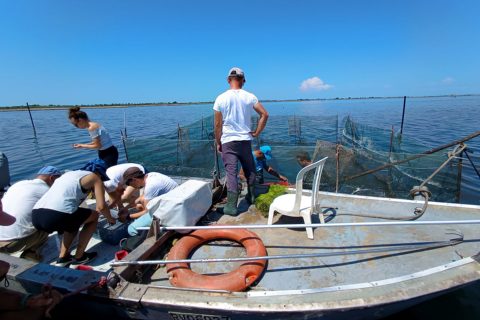
Clams more resistant to heat and Perkinsus: research paves the way for selective breeding
Padua, Italy, 16/10/2026 | University of Padua researchers explain to misPeces the findings presented at Aquaculture Europe 2026 and the steps needed to transfer them to hatcheries. Initial applications could emerge within the next two or three years, although the relationship between resistance, growth and other production traits still need to be assessed