
The idea of combining offshore wind energy with aquaculture has circulated in policy circles for more than a decade. A new European-scale spatial analysis suggests that the concept may now be moving closer to operational reality.
Researchers have identified more than one million square kilometres of European offshore waters that are technically feasible for the cultivation of blue mussels (Mytilus edulis). Strikingly, 420 out of 454 offshore winds farms – operational, approved or planned – overlap wholly or partly with these feasible areas. In spatial terms, the potential for co-location is already embedded in Europe’s marine infrastructure.
The North Sea emerges as the most compromising basin. Large areas in its southern sector, along with parts of the Irish Sea and the Celtic-Biscay shelf, show high biological suitability once environmental parameters such as temperature, salinity and food availability are considered. By contrast, the Mediterranean offers no suitable offshore areas for Mytilus edulis under current conditions, reinforcing a northward concentration of future expansion.
Climate change adds another layer to the picture. Under projected warming scenarios, suitability increases in northern waters, in some areas by up to 9% by mid-century, as temperatures move closer to the species’ optimal growth range. The model, however, does not fully account for extreme marine heatwaves or other cumulative stressors, leaving uncertainty around long-term resilience.
The study stops short of claiming that offshore mussel farming is economically ready for large-scale deployment. It does not model production yields, investment costs or regulatory constraints. Instead, it provides a continental pre-screening tool for marine spatial planning, highlighting where biological and technical conditions align with Europe’s expanding offshore wind footprint.
The study shows that co-locating low-trophic aquaculture with offshore wind is no longer just a conceptual ambition. It is geographically demonstrable. Whether that spatial overlap translates into production will depend less on oceanography than on governance frameworks, risk allocation and the willingness of sectors to share space at sea.
Reference:
Lecordier, E.M., Gernez, P., Mazik, K. et al. Identifying suitable mussel cultivation sites in European offshore waters—an assessment for co-location with the wind industry. npj Ocean Sustain (2026). https://doi.org/10.1038/s44183-026-00187-0

Related

Latest In-depth
-
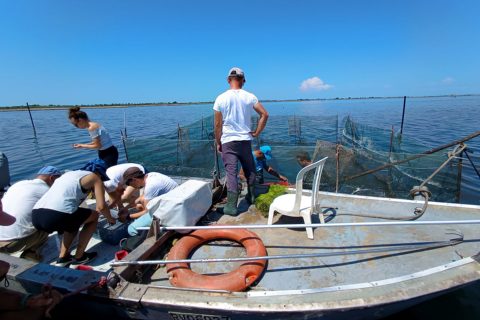
Clams more resistant to heat and Perkinsus: research paves the way for selective breeding
Padua, Italy, 16/10/2026 | University of Padua researchers explain to misPeces the findings presented at Aquaculture Europe 2026 and the steps needed to transfer them to hatcheries. Initial applications could emerge within the next two or three years, although the relationship between resistance, growth and other production traits still need to be assessed