Precision aquaculture is moving into a phase in which simulation tools may help reduce uncertainty around one of the most sensitive decisions in intensive production: how much to feed, when to adjust feeding strategies and how to anticipate growth differences within a stock.
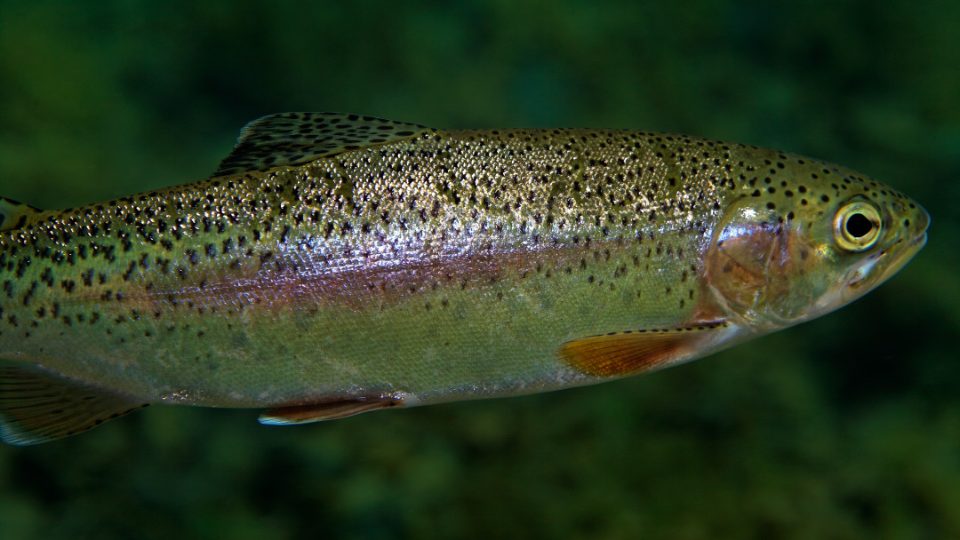
A study published in Scientific Reports has developed a simulator for rainbow trout (Oncorhynchus mykiss) that combines a fish schooling behaviour model, based on the Boids approach, with a dynamic energy budget model. The aim is to predict individual growth trajectories and assess how different feeding levels affect fish growth and feed efficiency.
The model was validated through a live rearing trial with rainbow trout in Japan, carried out in a 500-litre circular tank at 10 ºC over 203 days.
The results show that the simulator reproduced growth trajectories reasonably well during the early stages of rearing, but the gap between simulated and experimental results increased over time.
For body mass, the model tended to overestimate growth, with a final error of 22.7%, while deviations in fork length were lower, with percentage errors ranging from 4% to 10%.
Main findings and cautions from the rainbow trout growth simulator
| Aspect assessed | Observed result | Relevance for intensive aquaculture |
|---|---|---|
| Growth prediction | The model performed better in reproducing growth trajectories during the early stages of rearing. | It may help anticipate growth trends, but it does not yet replace farm-level validation. |
| Body mass | The simulation tended to overestimate weight during longer rearing periods, with a final error of 22.7%. | The tool needs further refinement before being used for long-term commercial decisions. |
| Fish length | Deviations were lower than for body mass, with percentage errors between 4% and 10%. | Morphometric estimation appears more robust than accumulated biomass prediction. |
| Feeding and FCR | The simulation made it possible to compare different feeding levels and their impact on growth and conversion. | It reinforces the interest of predictive models for adjusting rations by production stage. |
| Current limitations | The model does not yet include density effects or dissolved oxygen dynamics. | These are critical variables for RAS, land-based aquaculture and commercial intensive systems. |
The authors note that the current model does not yet incorporate stocking density effects or dissolved oxygen dynamics, two critical variables in intensive systems and especially relevant for land-based aquaculture and RAS.
They also observed that simulated individual variability was greater than that recorded experimentally, probably because some larger virtual fish reached the feed earlier and consumed more than would be realistic under farm conditions.
The sectoral relevance of the study is not that it offers an immediate feeding recipe, but that it points towards future digital twins capable of integrating behaviour, feed intake, individual growth and environmental conditions.
Although the trial was conducted with rainbow trout in Japan, the approach is particularly relevant for intensive systems, RAS and land-based aquaculture, where density, oxygen, feeding and productive efficiency are decisive variables for profitability.

Related

Latest In-depth
-
Clams more resistant to heat and Perkinsus: research paves the way for selective breeding
Padua, Italy, 16/10/2026 | University of Padua researchers explain to misPeces the findings presented at Aquaculture Europe 2026 and the steps needed to transfer them to hatcheries. Initial applications could emerge within the next two or three years, although the relationship between resistance, growth and other production traits still need to be assessed