
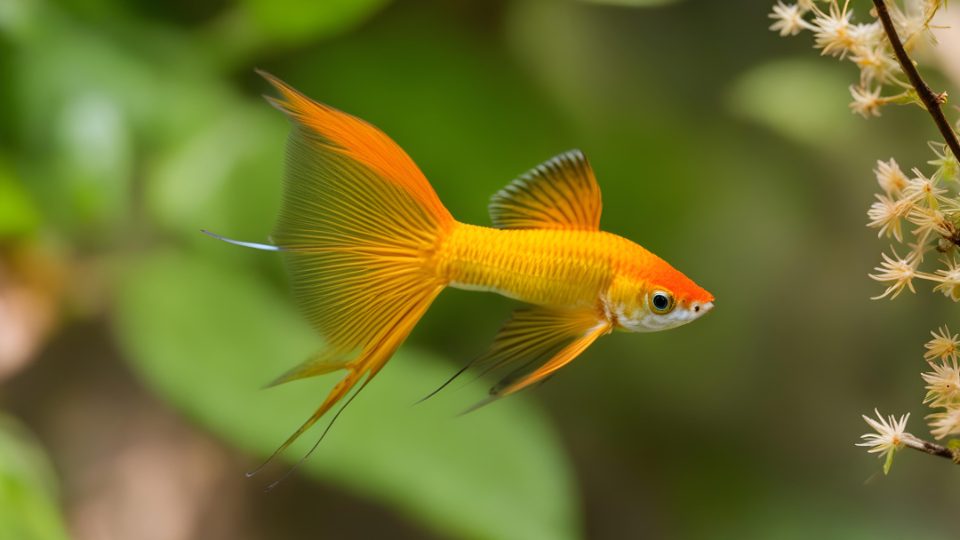
Much of the commercial value of many ornamental species depends on the sex of the fish. Being able to distinguish males from females at an early stage can represent a considerable improvement in business performance. However, telling males and females apart remains difficult, late or unreliable.
In species such as koi, bettas, guppies and cichlids, males may have greater commercial appeal because of their colouration, reproductive behaviour or morphological traits, but these external differences do not always appear early enough to support breeding decisions.
A review published in Metamorfosa: Journal of Biological Sciences analyses this problem and concludes that molecular sexing is becoming an increasingly important tool to improve reproductive efficiency, organise batches and select commercial lines.
The paper recalls that visual methods fail for three main reasons: sexual dimorphism may appear late, the environment can modify sex expression, and domestication has generated strong genetic divergence between ornamental lines.
Why ornamental fish sexing fails and what molecular biology can offer
| Problem | Impact for breeders | Molecular response |
|---|---|---|
| Late sexual dimorphism | Delays the separation of males and females and makes breeding plans more difficult. | Enables earlier identification before external traits become visible. |
| Highly selected lines | A marker may work in one commercial line and fail in another line of the same species. | Requires each test to be validated by species, population or breeding line. |
| Environmental influence | Temperature, stress, social hierarchy or farming conditions can modulate sex expression. | Helps integrate genetic sex, gonadal development and environmental effects. |
| Diverse sex-determination systems | Not all ornamental fish follow simple schemes such as XX/XY or ZZ/ZW. | Requires a combination of tools such as PCR, SNPs, InDel markers, transcriptomics or epigenetics. |
| No universal marker | There is no single test valid for all ornamental fish or for all breeding lines. | The future lies in specific protocols and multi-line, multi-generation validation. |
The underlying problem is that teleost fish do not follow a single sex-determination system. Some species have XX/XY systems, others ZZ/ZW systems, other combine multiple genes, and in many cases the environment also influences the final outcome.
Temperature, social hierarchy, stress or breeding conditions can modulate sexual differentiation. In ornamental fish, this complexity is amplified because artificial selection has prioritised colour, body shape, fins or behaviour, not necessarily genetic stability.
According to the authors of the paper, there is a form of “genetic chaos”, as there is no universal molecular marker that can be used to sex all ornamental fish. What works in one species may not work in another, and what works in one commercial line may fail in another line of the same species.
PCR-based techniques remain the most accessible option for hatcheries, as they can be used at moderate cost and with standard laboratory equipment.
Markers such as SCAR, RAPD, AFLP, or InDel can be useful for identifying sex-associated regions, but their reliability depends on prior validation in the specific population in which they are to be applied.
Faced with these limitations, next-generation sequencing makes it possible to search for genome-wide differences between males and females, identify sex-linked SNPs and detect more robust structural variants. It is a more expensive route and requires bioinformatics, but it can help move from approximate markers to more reproductive genetic diagnostics.
The review also highlights the value of transcriptomic and epigenetic data for understanding how genes such as dmrt1, amh, sox9 or cyp19a1a participate in sexual differentiation. However, these markers still have limitations as standalone commercial tests, because their expression can change depending on the developmental stage or environmental conditions.
Alongside molecular sexing, with its strengths and limitations, the breeder’s experience will continue to play an important role.
Reference:
I Dewa Agung Panji Dwipayana, Ni Luh Putu Kayika Febryanti & I Gusti Ayu Nadia Prasta Unique. A Review of Molecular Approaches for Sex Determination in Ornamental Fish. Metamorfosa: Journal of Biological Sciences, 13(1): 88-101, 2026. DOI: 10.24843/metamorfosa.2026.v13.i01.p8.

Related

Latest In-depth
-

Ocean Aquaculture begins work on Spain hatchery designed to produce eight million greater amberjack juveniles a year
Almería, Spain, 9 September 2026 | The first phase will involve an investment of around €15 million and is expected to begin production in January 2028, supplying both the group’s future offshore farms and other Mediterranean producers