
The recent publication of the evaluation of the Common Fisheries Policy covering the period 2014 – 2024 does not bring major surprises. However, it does confirm with data what the aquaculture sector has experienced for years in practice: Europe does not have a production capacity problem, but an execution problem.
In terms of output, growth has been virtually flat, with an increase of just 2% over the past decade – well below the potential of the European market.
The report highlights a structural disconnect between the strategic objectives of EU policy – growth, sustainability and food security – and their real impact on the ground. Despite the availability of funding, guidelines and planning tools, the factors that truly determine sector development remain largely beyond effective control: licensing, access to space, and decision-making at national level.
The issue is structural. Authorisation processes remain lengthy and unpredictable, while access to suitable sites is becoming increasingly complex in a marine environment under pressure from competing uses. Developing a new farm is no longer primarily a technical challenge, but an administrative one.
This creates a scenario in which projects are delayed, investment cools, and uncertainty becomes the main risk factor. For many producers, the challenge is no longer producing fish, but obtaining permission to do so.
Moreover, the context is far from uniform. Conditions for aquaculture development vary significantly between Member States, creating clear competitive imbalances. Productive efficiency is no longer the sole determining factor; the regulatory environment has become decisive.
Rather than offering a new diagnosis, the report consolidates an existing reality: European aquaculture is viable and profitable, but constrained by a fragmented regulatory framework that limits its expansion.
Looking ahead, the key question is not whether new strategies will be defined, but whether Europe is capable of removing the obstacles it has created itself.
If this does not change, there is a risk of consolidating a model in which aquaculture remains profitable, but marginal. For producers, the challenge is no longer just to produce better, but to understand and anticipate a regulatory environment that ultimately shapes any growth decision.
This evaluation will serve as a basis for future policy decisions, including a possible reform of the CFP and the development of the Vision 2040 for the sector. The real challenge will be to address, one and for all, the structural barriers that have limited its development so far.

Related

Latest In-depth
-
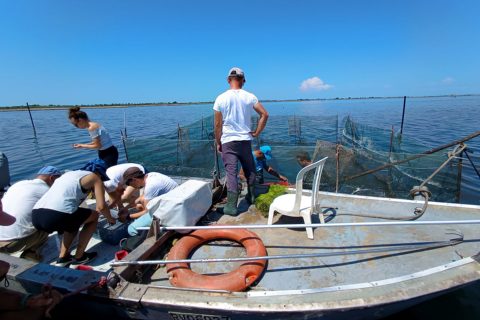
Clams more resistant to heat and Perkinsus: research paves the way for selective breeding
Padua, Italy, 16/10/2026 | University of Padua researchers explain to misPeces the findings presented at Aquaculture Europe 2026 and the steps needed to transfer them to hatcheries. Initial applications could emerge within the next two or three years, although the relationship between resistance, growth and other production traits still need to be assessed