
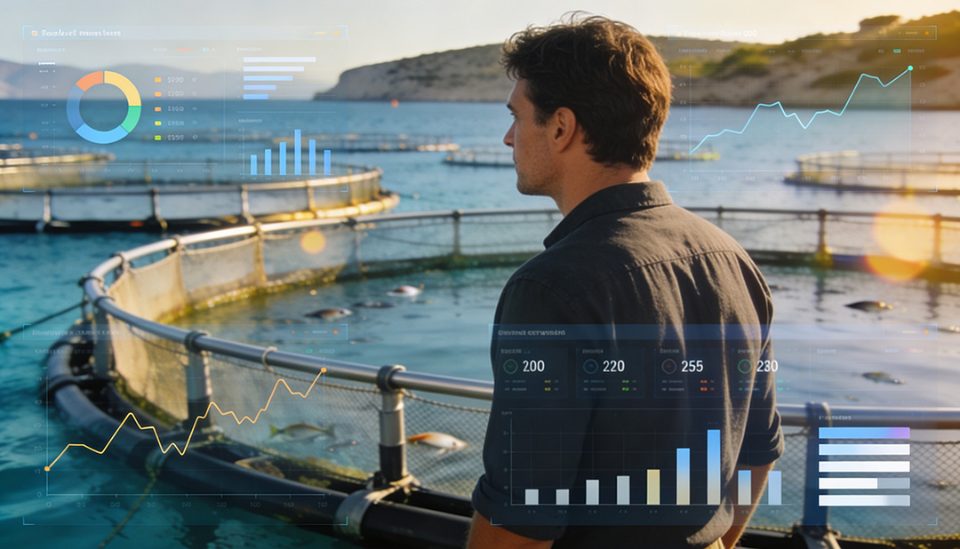
European aquaculture faces a paradox: its farms are becoming increasingly technologically advanced, yet many market, investment and planning decisions still depend on incomplete or outdated information.
In a sector shaped by cost volatility, import pressure and regulatory change, operating with past data has become a competitive problem. The industry is generating more and more information within companies, but it lacks aggregated, comparable and up-to-date indicators.
Data on profitability, biomass in production, installed capacity, hatchery activity, harvest forecasts or the real evolution of costs are barely visible beyond the companies themselves. In small or highly concentrated markets, statistical confidentiality creates further blind spots in order to avoid revealing the activity of a small number of operators.
The problem is not new. In November 2025, the Aquaculture Advisory Council called on the European Commission to carry out an in-depth review of the European statistical framework for fisheries and aquaculture, arguing that more relevant, complete, comparable and timely data are needed. Its demands included reducing the time lag in the publication of production and value data, as well as treating aquaculture as an activity distinct from commercial fishing.
The result is a reduced ability to anticipate change. While producers from third countries adjust prices, volumes and commercial strategies quickly, much of Europe’s analysis still depends on statistical snapshots that arrive only after the market has already moved on.
For key Mediterranean species such as gilthead seabream and European seabass, this lack of visibility has a direct impact on margins. Prices, imports, feed costs, energy, juvenile availability and real production capacity all shape competitiveness, but they are rarely interpreted in an integrated way and within a useful timeframe.
The solution is not simply to publish more statistics, but to transform the way data are collected, cross-referenced and distributed. European and national public sources of sectoral information will need to evolve from administrative and retrospective models towards systems capable of generating more dynamic market intelligence, with clearer definitions, shorter time lags and a specific reading of aquaculture as a productive activity in its own right.
The challenge will be to balance transparency and confidentiality. This is not about exposing sensitive data, but about building aggregated indicators and market signals that make it possible to anticipate risks without compromising competition.
If public institutions do not accelerate this transition, large corporate groups will take the lead with private analysis and forecasting systems, widening the information gap with medium-sized and smaller operators.
In modern aquaculture, those without up-to-date information do not simply arrive late to the market: they negotiate from a weaker position, invest with greater uncertainty and lose the ability to defend their margins.

Related

Latest In-depth
-
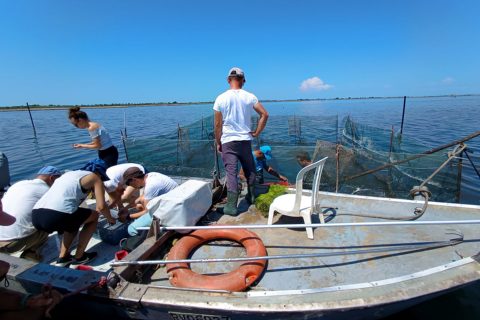
Clams more resistant to heat and Perkinsus: research paves the way for selective breeding
Padua, Italy, 16/10/2026 | University of Padua researchers explain to misPeces the findings presented at Aquaculture Europe 2026 and the steps needed to transfer them to hatcheries. Initial applications could emerge within the next two or three years, although the relationship between resistance, growth and other production traits still need to be assessed