

Reducing energy consumption in aquaculture does not necessarily depend on new technologies. In fact, a significant share of the potential saving can already be achieved through energy audits and improved operational management.
This is highlighted in an analysis by the European Commission, which identifies energy savings of between 2% and 10% simply by detecting inefficiencies and optimising the use of existing systems.
Energy audits provide a clear diagnosis of consumption, identify critical points and define concrete optimisation measures without requiring structural investment. In this context, operational efficiency emerges as one of the most immediate and cost-effective tools available to the sector.
Practical examples already support this approach. In recirculating aquaculture systems (RAS), adjusting water flow rates through simulation models has been shown to reduce energy consumption by around 8% without introducing new technology. Similarly, real-time monitoring of fish behaviour and growth allows producers to optimise processes such as oxygen supply, water pumping and feed distribution, directly lowering energy use.
Feeding strategies also play a key role. Improving the feed conversion ration through precision feeding reduces not only feed use, but also the energy associated with its production, transport and on-farm management.
Alongside these operational improvements, established technologies such as solar energy are already delivering measurable results, with emission reductions ranging from 5% to 14% in farms and up to 43% in hatcheries. However, the analysis makes clear that the greatest immediate potential still lies in optimising existing operations rather than adopting new technologies.
This approach is particularly relevant for small and medium-sized enterprises, which form the backbone of the European aquaculture sector and often face barriers when accessing more advanced solutions.
In this context, the energy transition in aquaculture is not only about innovation, but about execution. Efficiency, rather than disruptive technology, is likely to be the main driver of change in the short term.

Related

Latest In-depth
-
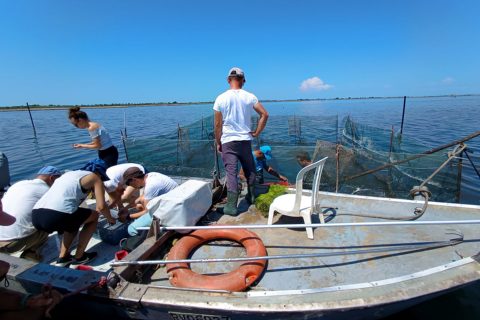
Clams more resistant to heat and Perkinsus: research paves the way for selective breeding
Padua, Italy, 16/10/2026 | University of Padua researchers explain to misPeces the findings presented at Aquaculture Europe 2026 and the steps needed to transfer them to hatcheries. Initial applications could emerge within the next two or three years, although the relationship between resistance, growth and other production traits still need to be assessed