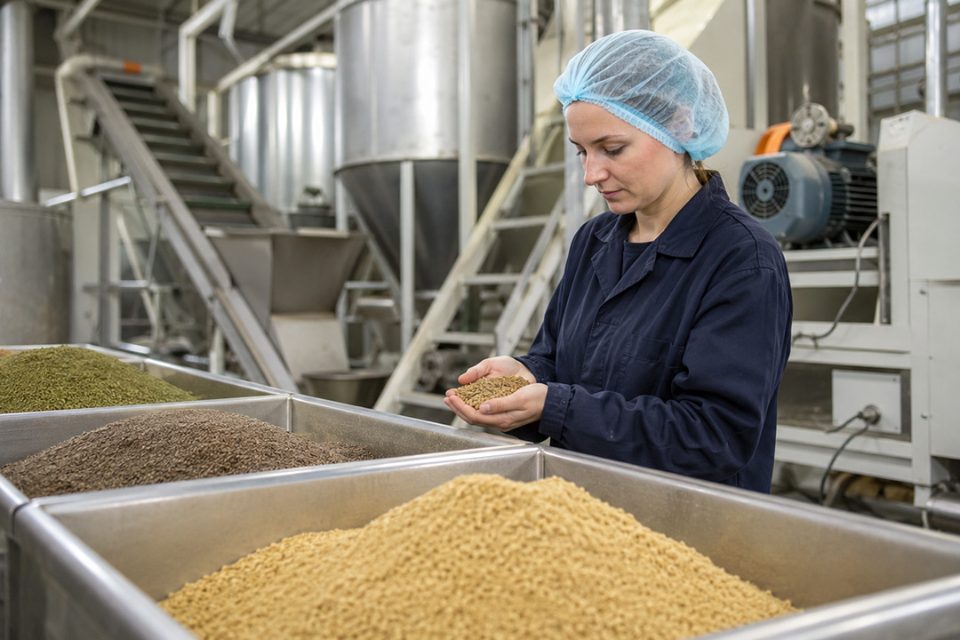
The European Commission wants to reduce the food system’s dependence on external suppliers by increasing plan protein production, expanding processing capacity, diversifying imports and rebuilding European industry capacity for ingredients essential to feed manufacturing.
The Action Plan for the resilience, strategic autonomy and sustainability of the EU protein system, presented on 7 July 2026, sets a benchmark for increasing the share of protein from EU-grown oilseeds and protein crops used in animal feed from 25.8% in 2025 to 35% by 2035.
Although the document recognises that fisheries and aquaculture are both sources and users of protein, the two sectors are explicitly excluded from the plan’s main scope. This does not prevent the proposed measures from having direct consequences for the availability, price and origin of ingredients used by aquafeed manufacturers.
More European protein, but not necessarily at a lower price
The European strategy aims to increase the cultivation of soya beans, peas, field beans, lupins, rapeseed, sunflower and other legumes through agricultural support, risk-reduction instruments and new investment in storage and processing.
For aquaculture, the most viable consequence could be greater availability of meals, concentrates and protein fractions derived from European crops. These ingredients could help biodiversity formulations that are currently exposed to international fluctuations in soya and other raw material market.
The actual impact will, however, depend on the industrial quality of the ingredients produced. Aquaculture species require raw materials with high digestibility, low levels of antinutritional factors, consistent composition and suitable amino acid profiles.
Increasing the cultivated area will therefore not be enough. Capacity will also be needed to dehull, concentrate, ferment, fractionate and characterise these new proteins before they can be incorporated at meaningful levels into diets for gilthead seabream, European seabass, trout, salmon or shrimp.
The Commission also acknowledges that replacing imported raw materials with European alternatives could increase production costs. It also wants to diversify the origin of soya, which currently comes mainly from the Americas, by strengthening supplies from Ukraine.
For feed manufacturers, the main benefit may therefore lie in greater security of supply and lower geopolitical risks rather than an immediate reduction in price. Quality, traceability, composition and the nutritional sustainability of each ingredient will still need to be carefully controlled.
Vitamins and amino acids present the most immediate risk
The most direct implication for aquaculture appears in the section covering vitamins, amino acids and other feed additives.
The Commission acknowledges that Europe’s feed, livestock and aquaculture sectors depend heavily on suppliers in East Asia, particularly China, which holds a dominant on near-monopolistic position in some substances.
This dependence affects essential ingredients such as methionine, lysine and certain vitamins. A disruption in supply could force manufacturers to reformulate diets, increase costs or limit their ability to use plant proteins.
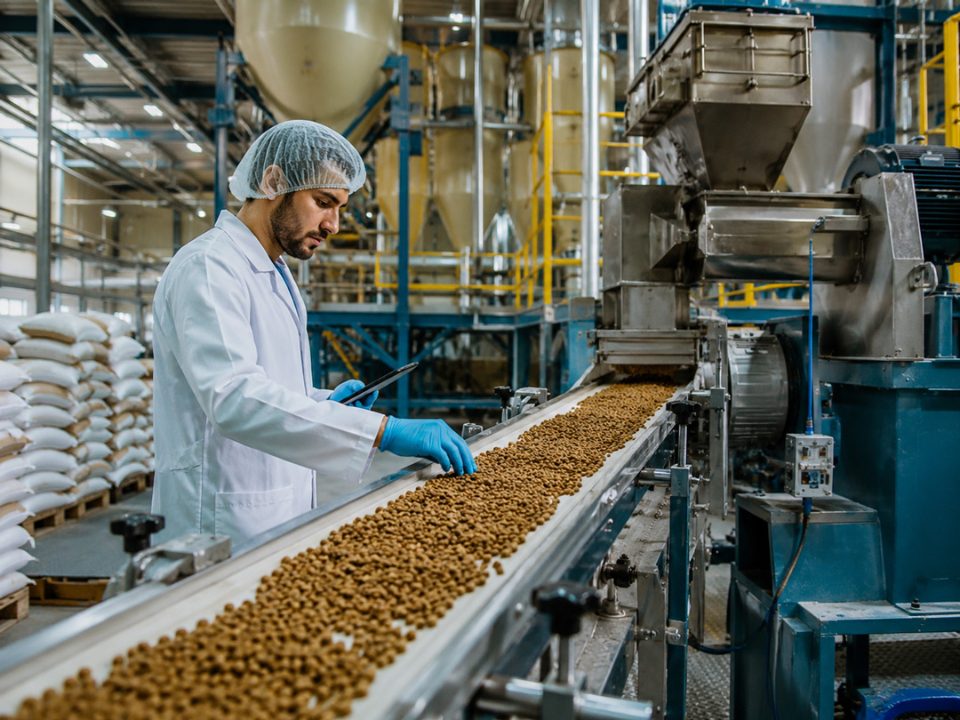
The issue is particularly important for aquaculture. As the proportion of fishmeal declines and the inclusion of plant raw materials, single-cell proteins and by-products increases, formulations require more precise correction of amino acid and micronutrient profiles.
The plan proposes assessing these vulnerabilities, supporting European industrial capacity, simplifying the rules applying to feed additives and examining tools such as strategic reserves, joint procurement and market-monitoring systems.
In practice, strengthening European production of amino acids and vitamins could prove just as important for aquafeeds as increasing the cultivation of soya beans and legumes.
More room for fermentation, algae and circular ingredients
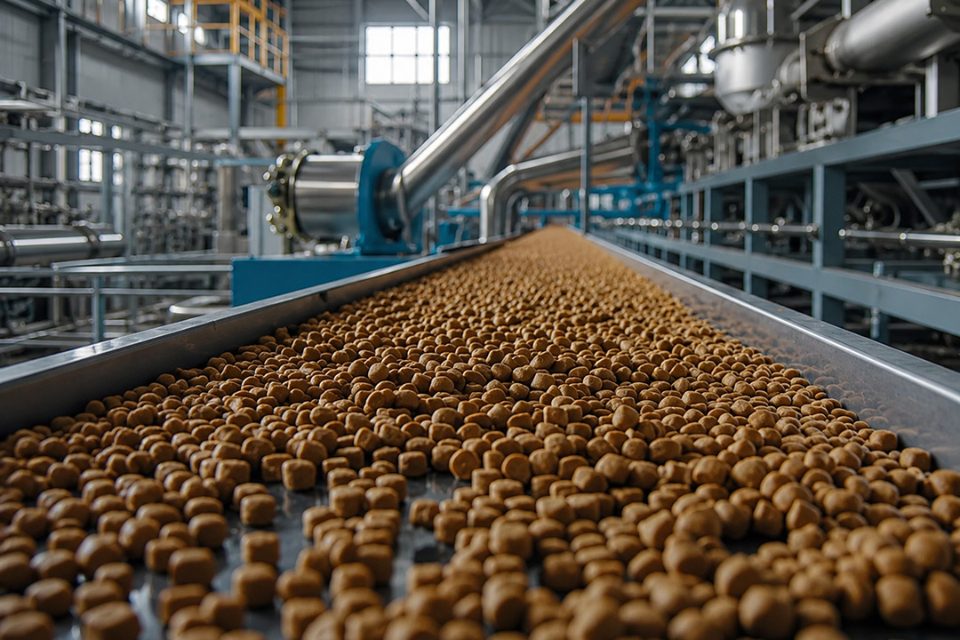
The strategy also supports the development of proteins obtained through biomass fermentation, precision fermentation algae, insects and the valorisation of agri-food by-products.
However, the Commission includes a warning that reflects one of the main limitations currently observed in aquaculture nutrition: several alternative proteins remain energy-intensive, costly or difficult to produce at sufficient scale.
The plan expects their impact on conventional agriculture to remain limited in the medium term.
For aquaculture, this means political support should not be confused with immediate commercial availability or competitiveness against soya, fishmeal and other established ingredients.
Competition for the best protein fractions
An increase in European production does not guarantee that the highest-quality proteins will be used in aquafeeds.
Aquaculture will compete with poultry, pig production, human food, the food industry and the wider bioeconomy for fractions with higher protein concentrations, lower fibre content and better digestibility.
This competition could increase the value of ingredients most suitable for fish and crustaceans. Aquafeed manufacturers represent a smaller market than the livestock sector, but generally require stricter nutritional specifications.
The result could therefore be a broader range of available raw materials, but also a more segmented market in which aquaculture-grade ingredients command higher prices.
Related

Latest news
-

Alternative diets maintain gilthead seabream acceptance in consumer trial
Castellón, Spain, 15 October 2026 | A study by IATS-CSIC and Miguel Hernández University assesses how formulations containing alternative proteins affect fish texture, flavour and consumer ratings
-
Authorisation barriers hinder access to biocides in European aquaculture
Brussels, 15 October 2026 | Administrative delays and a small market complicate the availability of products for disinfecting facilities and controlling biofouling
-
Italian fish farming rebounds in 2025 but remains almost 15% below 2019 levels
Verona, Italy, 14 October 2026 | Trout drives the annual recovery, while sea bass output remains a third below 2019 and hatchery production of both sea bass and seabream expands