
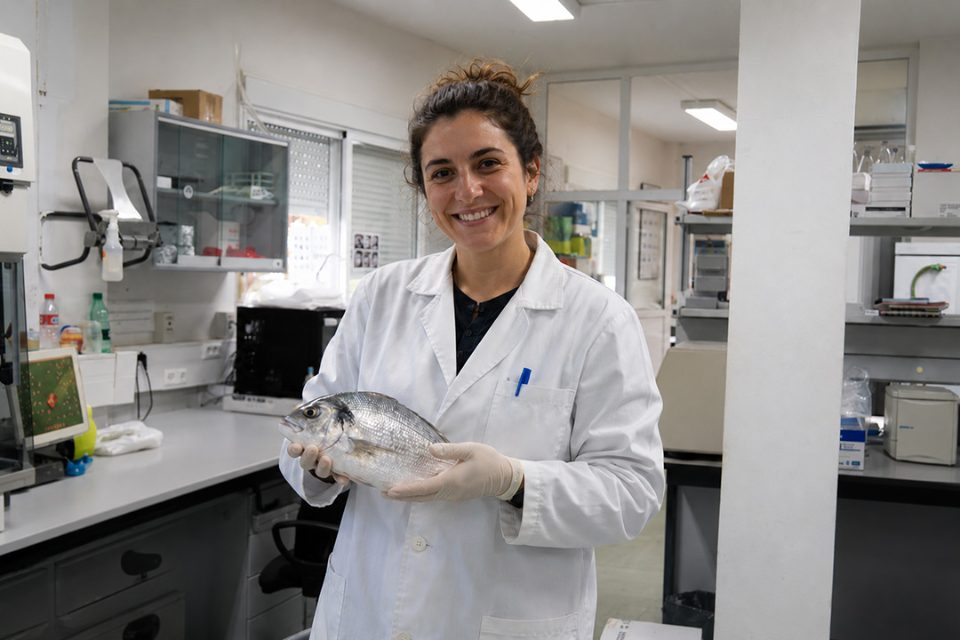
Two studies involving gilthead seabream weighing around 1,000 grams from the second generation of the PROGENSA programme show that several traits related to body conformation, carcass quality and fillet yield display exploitable genetic variation.
The findings broaden the focus of selective breeding beyond growth and raise the possibility of selecting fish for traits linked to commercial yield.
The first study analysed lateral photographs using IMAFISH_ML, a tool that automatically identifies different anatomical points without sacrificing the animal.
Maximum body depth showed an estimated heritability of 0.78, while another depth measurement taken in the anterior region reached 0.88. The strong correlations among several depth-related traits indicate that body shape could respond to genetic selection.
The second study directly assessed carcass traits, fillets, visceral fat and muscle composition. Fillet weight showed the highest heritability, at 0.83, while fillet percentage had a more moderate heritability of 0.25. Eviscerated carcass weight reached 0.40, compared with the low value of 0.11 estimated for dressing percentage.
The results also point to the possibility of modifying fat deposition through selection. Visceral fat weight and visceral fat percentage showed heritability of 0.48 and 0.51, respectively.
Flesh composition, by contrast, showed more limited genetic control, with values of 0.17 for protein and 0.27 for lipids, suggesting that the expected response to selection would be slower.
Taken together, the studies suggest a complementary strategy: using image analysis to record the body conformation of potential broodstock rapidly and non-invasively, and combining this information with direct carcass and fillet data obtained from their relatives.
This could support the development of selection indices more closely aligned with the final commercial value of the fish.
However, the studies do not directly demonstrate that a deeper-bodied gilthead seabream produces a higher fillet percentage, as they do not jointly estimate the genetic correlation between the two groups of traits.
In addition, some correlations have large standard errors. Commercial application will require these associations to be validated in other populations and farming systems, and their effects on edible yield, feed efficiency and final product quality to be assessed.

Related

Latest In-depth
-
Clams more resistant to heat and Perkinsus: research paves the way for selective breeding
Padua, Italy, 16/10/2026 | University of Padua researchers explain to misPeces the findings presented at Aquaculture Europe 2026 and the steps needed to transfer them to hatcheries. Initial applications could emerge within the next two or three years, although the relationship between resistance, growth and other production traits still need to be assessed