
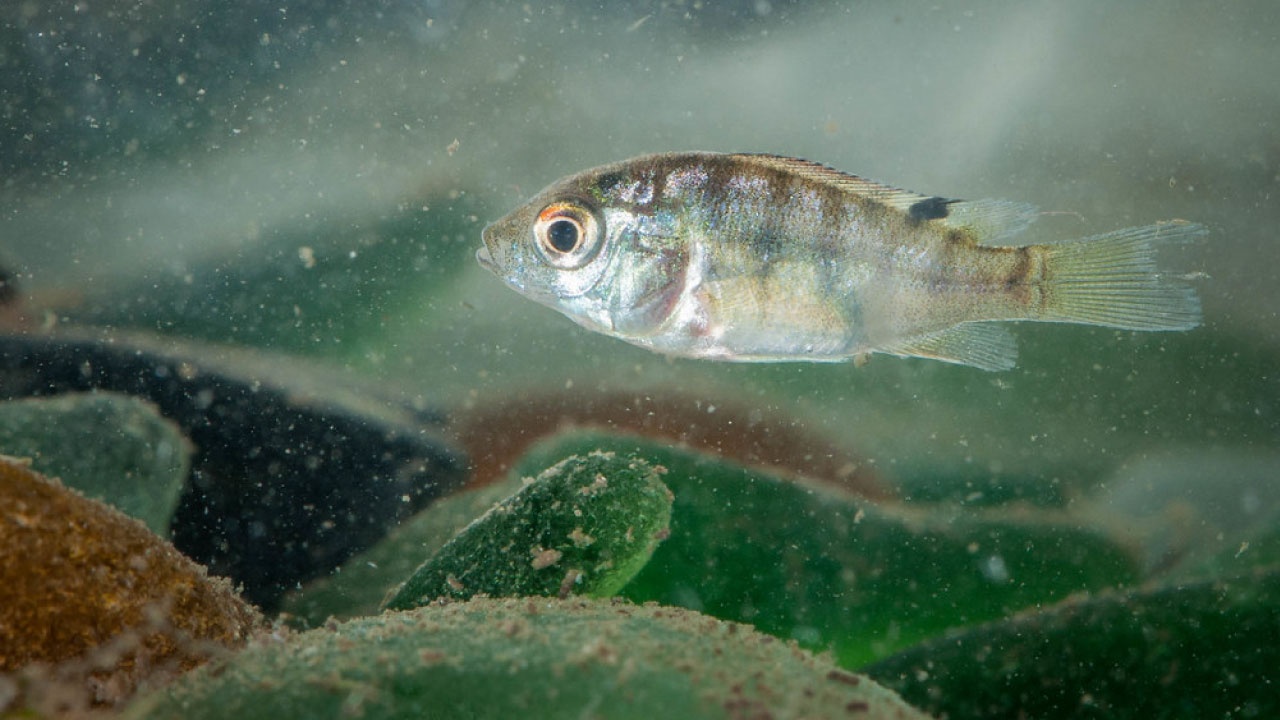
The search for more selective tools to control bacterial infections in aquaculture has gained a new experimental advance. Researchers at Hunan Normal University in China have identified and characterised a bacteriophage capable of infecting Aeromonas veronii, a bacterial pathogen associated with mortality and economic losses in intensive farming systems.
The study, published in Applied and Environmental Microbiology, describes the isolation of virulent phage named Avs-1 from wastewater samples. Under laboratory conditions, the bacteriophage showed specific activity against A. veronii and strong in vitro antibacterial capacity, without affecting other bacteria analysed in the study.
The most significant finding emerged from the tilapia challenge tirals. Fish infected only with A. veronii recorded a final survival rate of 20%. However, when Avs-1 was administered after infection, survival increased to 70%, accompanied by a significant reduction in lesions observed in the intestine, liver and spleen.
From a technical perspective, Avs-1 possesses a genome of 44,364 base pairs and a lytic cycle compatible with its potential with its potential use as a biocontrol agent. The researchers also identified bacterial resistance mechanisms linked to the manB gene, involved in phage absorption onto the bacterial surface, a key aspect for understanding future limitations of phage therapy under farming conditions.
The importance of the study lies not only in the improved survival rates, but also in the possibility of developing more targeted treatments against specific pathogens helping to reduce antibiotic use in aquaculture.
However, the authors stress that Avs-1 remains at an experimental stage. Befor any commercial application, further work will be needed to validate its effectiveness under real production conditions, optimise dosage and delivery methods, assess environmental stability and evaluate the emergence of bacterial resistance to the phage.
At a time of growing concern over antimicrobial resistance, this type of research strengthen the role of phage therapy within a broader health management strategy based on prevention, early diagnosis, biosecurity and more selective biocontrol tools.

Latest news
-
A bacteriophage raises survival of tilapia infected with Aeromonas veronii
China, 29/05/2026 | The phage Avs-1 increased survival from 20% to 70% in experimental trials, reinforcing interest in phage therapy as a biocontrol alternative to antibiotics
-

BioMar debuts on the Copenhagen Stock Exchange with Schouw & Co. retaining control
Copenhagen, 28 May 2026 | BioMar Group enters the public market at a time when aquaculture is seeking to scale production, reduce environmental impacts and attract long-term capital
-
Report questions the role of insect meal in aquafeeds
Stockholm, 28 May 2026 | The document published by the Stockholm Environment Institute does not rule out its use in aquaculture, but warns that its environmental benefits depend on very specific conditions that are rarely met at commercial scale in temperate countries