
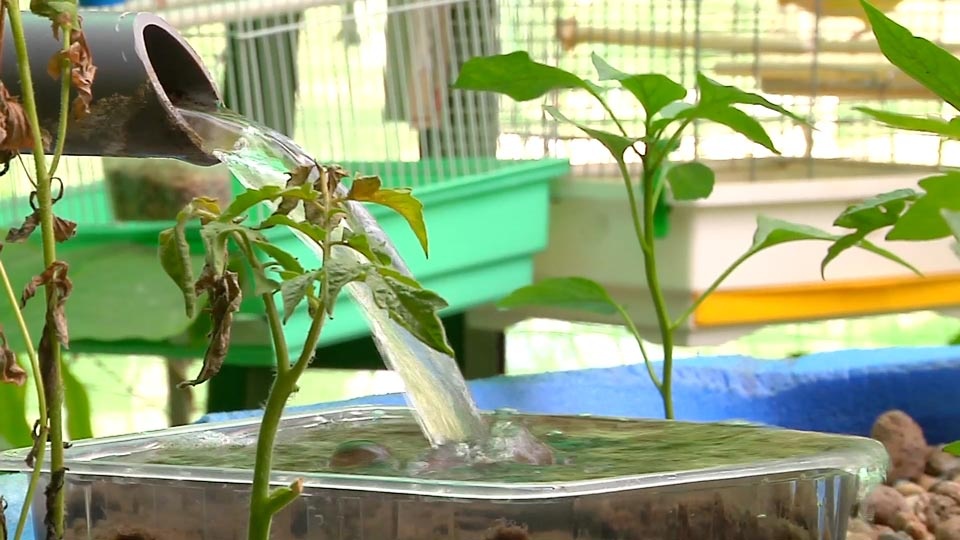
Aquaponics has long been positioned as one of the most promising solutions for producing protein and vegetables with a lower environmental footprint, particularly in limited space and under water-constrained conditions. However, beyond the sustainability narrative, there has been a lack of tools capable of assessing in an integrated way whether it truly outperforms conventional systems.
A recent study by researchers at the Autonomous University of Querétaro in Mexico, published in Scientific Reports, takes a step in that direction by developing a bioeconomic index that enables a like-for-like comparison between an intensive aquaponic system combining tilapia and tomato production and standalone aquaculture and hydroponic systems.
The study goes beyond measuring growth or output, instead combining productive, environmental and economic variables into a single indicator: the Bioeconomic Performance Index (BPI). This approach captures what is often overlooked in traditional analyses: the balance between efficiency, costs and sustainability. Within this framework, the intensive aquaponic system emerged as the most efficient overall, offsetting higher resource consumption with greater combined output of fish and vegetables.
From a production standpoint, the results show that tilapia reared in aquaponics grow as well as, or slightly better than, in conventional aquaculture, with improvements in feed conversion and protein efficiency. The key differentiator lies in water quality: integration with plants reduces the accumulation of nitrogenous compounds, stabilises the system and lowers physiological stress in fish. This translates into slightly higher growth rates and improved survival. At the same time, tomato production in aquaponics achieves meaningful yields without synthetic fertilisers, although it remains below hydroponic performance, where nutrient supply is fully optimised.
Where the integrated system clearly stands out is in resource-use efficiency. The study shows that aquaponics achieves significantly higher efficiencies in the use of nitrogen, phosphorus and potassium, as well as improved water-use efficiency. In a context of increasing pressure on water and fertiliser resources, this reinforces the strategic relevance of closed-loop and circular production systems. The ability to convert aquaculture waste into agricultural inputs not only reduces losses but also enhances overall system productivity.
However, the analysis also challenges one of the most common implicit assumptions: that greater efficiency necessarily implies lower cost. The aquaponic system proved to be the most expensive to operate, mainly due to the energy required for continuous recirculation, filtration and system management. This factor becomes the critical constraint of the model. Sensitivity analysis confirms that variations in energy consumption have the greatest impact on overall performance, far outweighing changes in fish or feed prices.
Despite this, intensive aquaponics was the only system to achieve clearly higher profitability, thanks to dual production. Revenue generated from both fish and tomatoes compensated for higher operating costs, resulting in a net profit above that of the standalone systems. This is a key finding: it is not environmental efficiency alone that sustains the model, but its capacity to generate more value per unit of resource consumed.
The bioeconomic index encapsulates this reality clearly. While aquaponics achieves the highest score, reflecting that its benefits significantly outweigh the resources used, conventional aquaculture lags far behind, and hydroponics occupies an intermediate position. However, the authors themselves warn that these results are highly context-dependent, particularly in relation to energy costs. In regions with high electricity prices, the economic advantage may diminish or even disappear.
The study therefore offers a more nuanced interpretation of the potential of intensive aquaponics. It is not a universally superior solution, but rather a system that optimises water and nutrient use at the expense of higher energy dependence and operational complexity. In other words, it produces more with fewer losses, but not necessarily at lower cost.
This shift in perspective is highly relevant for the sector. Moving beyond a sustainability-driven narrative, the bioeconomic approach introduces a decisive variable: real system efficiency under operational conditions. In this respect, aquaponics demonstrates that its viability depends not only on closing resource loops, but on how effectively it manages its primary bottleneck: energy.
Reference:
León-Ramírez, J. J., Félix-Cuencas, L., López-Tejeida, S., García-Trejo, J. F., & Sosa-Ferreyra, C. F. (2026). A bioeconomic performance index for comparison of an experimental intensive aquaponic system with tilapia and tomato versus aquaculture and hydroponics. Scientific Reports. https://doi.org/10.1038/s41598-026-49597-7

Latest news
-
A bioeconomic index reveals the true cost of intensive aquaponics
Mexico, 27 April 2026 |
-
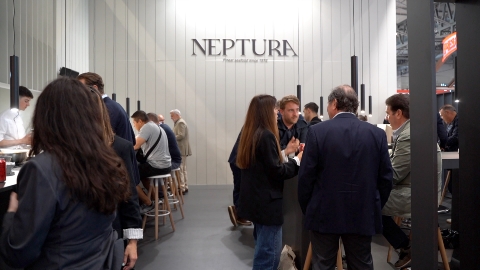
Stolt Sea Farm launches Neptura as flagship brand for its premium turbot and sole
Barcelona, 27 April 2026 | The company will progressively replace its existing brands with a single international identity targeting chefs and premium retail
-

Seafood Expo Global breaks records in Barcelona and reinforces the growing role of retail and aquaculture in the sector’s agenda
Barcelona, Spain, 24 April 2026 | The exhibition highlights the growing prominence of aquaculture with each edition