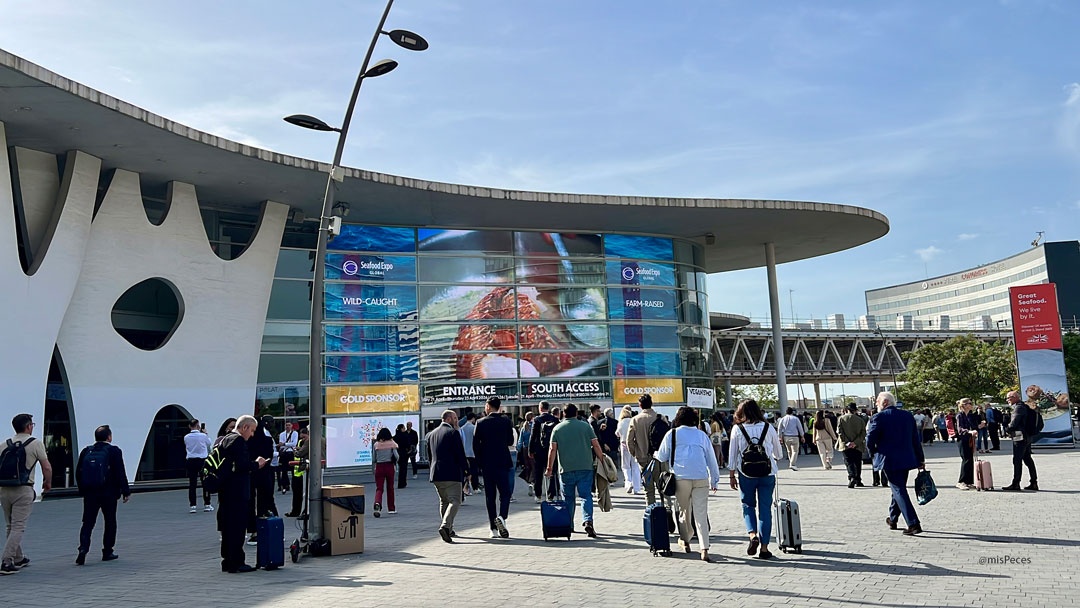
 SEG 2026 | @misPeces
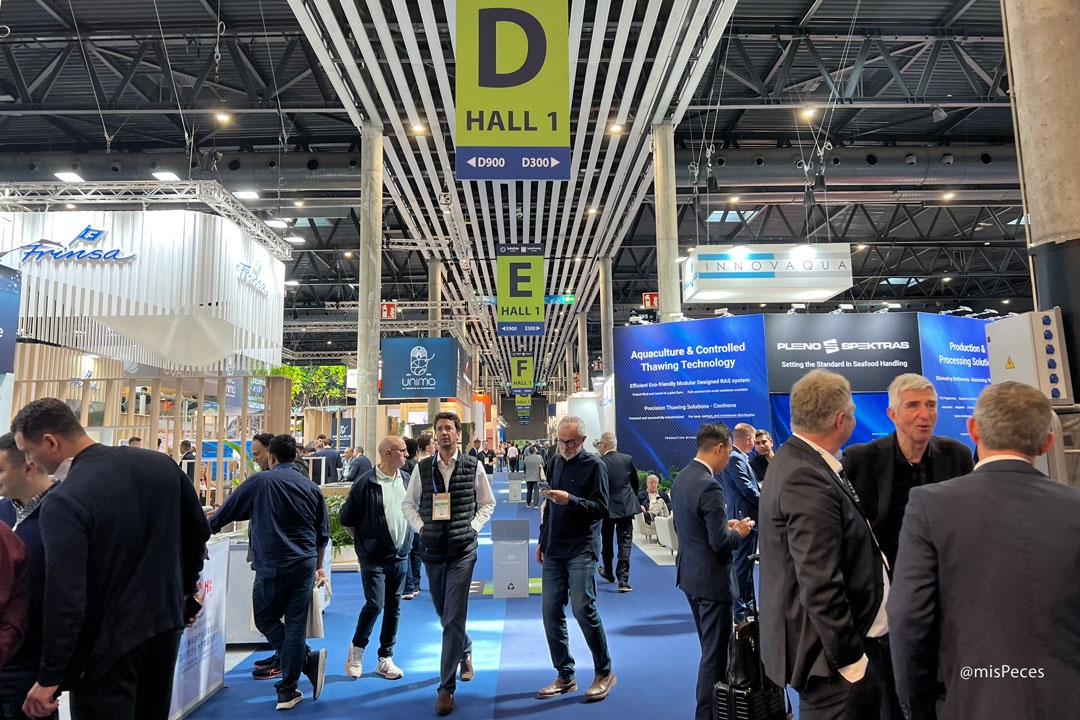
Seafood Expo Global has closed its 32nd edition in Barcelona, Spain, with record figures that reinforce its position as the world’s leading meeting point for the seafood industry. More than 35,000 professionals attended the event, which, held at Fira de Barcelona Gran Via, also reached an all-time high in exhibition space, with nearly 53,000 square metres and the participation of 2,290 companies from 85 countries.
Beyond the quantitative growth, the 2026 edition offers a more relevant takeway for the sector: the consolidation of Europe, and particularly Barcelona, as a strategic hub within the global seafood value chain.
The high level of international participation, together with an estimated economic impact exceeding €161 million for the city, highlights not only the scale of the event but also its ability to attract decision-making at a global commercial level.
In this context, the strong presence of international buyers once again underlined the growing influence of retail and distribution in shaping the market. Groups such as Carrefour, Lidl and Mercadona, alongside foodservice and distribution operators, actively engaged in sourcing suppliers and solutions, reinforcing a clear trend towards more integrated supply chains focused on volume, efficiency and product differentiation.
 @misPeces
At the same time, one of the most significant developments at this year’s edition was the introduction of a dedicated aquaculture innovation zone, signalling a gradual shift in the sector’s balance.
The presence of technology companies, start-ups and researchers working on areas such as fish health, water quality monitoring and artificial intelligence reflects the growing role of aquaculture production in addressing challenges related to sustainability, supply and operational efficiency.
However, despite the prominence of concepts such as sustainability, ESG criteria and digitalisation, the exhibition once again exposed a recurring gap typical of these events: an abundance of strategic discourse contrasted with a limited showcase of solutions delivering immediate production impact. The lack of concrete case studies, measurable results or clearly scalable applications somewhat reduces the practical value of some of the trends presented.
The conference programme addressed key issues including responsible sourcing, supply chain transparency and the evolution of international trade, against a backdrop of economic and geopolitical uncertainty.
In this regard, the intervention of economist Nomi Prins highlighted the need for companies to adapt to new trade dynamics and increasing pressure on costs and markets.
Overall, Seafood Expo Global not only confirms its convening power but also points to the sector’s direction of travel, with aquaculture steadily gaining prominence with each edition.

Latest news
-
Seafood Expo Global breaks records in Barcelona and reinforces the growing role of retail and aquaculture in the sector’s agenda
Barcelona, Spain, 24 April 2026 | The exhibition highlights the growing prominence of aquaculture with each edition
-
-
Aquafeed rebounds in 2025, with Latin America emerging as a structural growth driver
USA, 22 April 2026 | Global aquafeed production rises 4.7% after years of stagnation, but growth increasingly reflects structural shifts rather than pure output expansion