


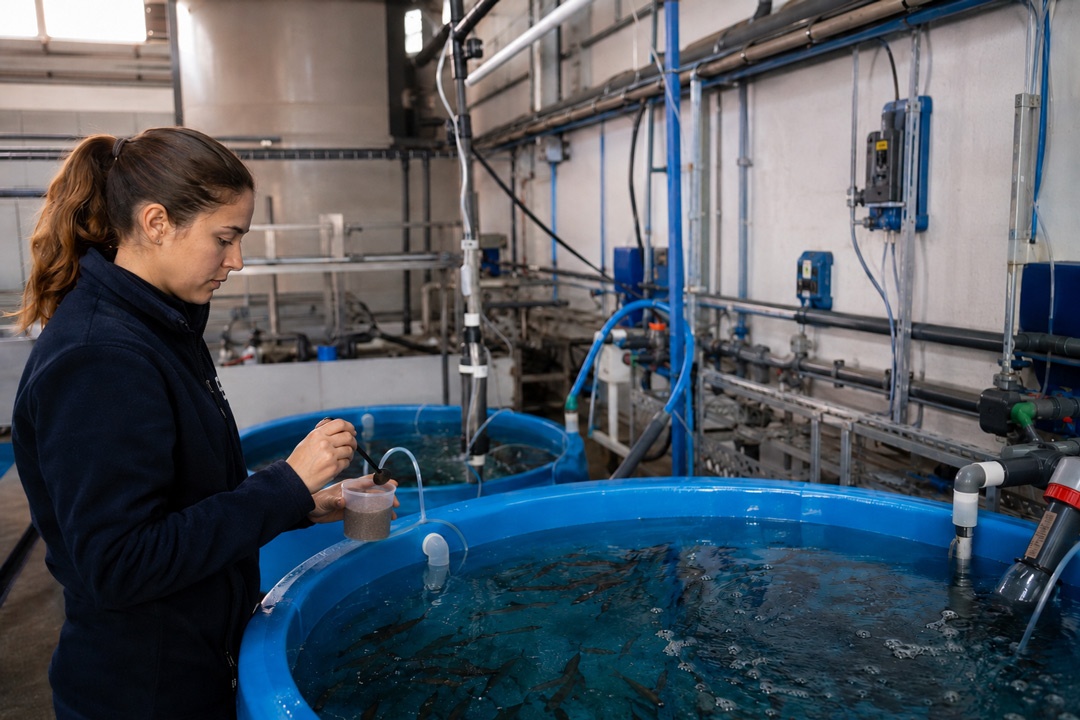
The European AlFunFeed project is preparing to produce its first batch of fungal single-cell protein obtained through the fermentation of macroalgae waste. The resulting ingredient will be used to formulate experimental diets for juvenile European seabass (Dicentrarchus labrax).
The first controlled feeding trials are scheduled to begin in July and will assess whether these ingredients can partially replace plant proteins without compromising production performance or fish robustness.
The research will compare proteins produced from three filamentous fungi: Neurospora crassa, Rhizopus oryzae and Fusarium venenatum. Galician company ODS Protein is leading the ingredient production and characterisation stage, examining variables including temperature, pH, oxygenation and the composition of the fermentation medium.
The aim is to obtain a protein with a nutritional profile and digestibility suitable for inclusion in feeds for carnivorous fish.
During the first experimental phase, three diets will be formulated, one for each fungal protein, with an initial replacement of 15% of plant protein sources. Following this pilot trial, the most promising alternative will undergo a second validation stage using replacement levels ranging from 15% to 25%, in line with the applicable recommendations of the European Food Safety Authority, EFSA.
The assessment will extend beyond growth performance. The consortium will examine feed efficiency and the nutritional quality of the diets, as well as feed intake regulation, digestive function, immune status, intestinal histology, enzyme activity, microbiota composition and a range of welfare indicators.
This approach will help determine whether the inclusion of the new ingredient maintains feed palatability and the ability of the fish to utilise the available nutrients.
The Marine Research Centre of the University of Vigo, CIM-UVigo, is coordinating the project through the PhysToFish research group, led by José Luis Soengas. The group’s expertise in physiology, appetite regulation, metabolism and welfare will enable the researchers to study not only the production performance of the sea bass, but also the physiological responses associated with introducing a protein source that has not yet been validated under these conditions.
ODS Protein will play a central role in converting macroalgae waste into a feed ingredient. The company develops alternative proteins through fermentation using filamentous fungi and, within AlFunFeed, is leading work on strain selection, process optimisation, nutritional characterisation, digestibility, cost modelling and life-cycle assessment.
These aspects will be critical in determining whether the solution can be scaled up and compete with conventional ingredients beyond laboratory conditions.
The environmental assessment will cover both the production of the fungal protein and the manufacture of the complete aquafeed. Although the project anticipates a potential reduction in carbon footprint and less dependence on seasonal, extractive or land-use-intensive raw materials, these benefits will need to be demonstrated through the feeding trials and the corresponding life-cycle assessment.
At this stage, they remain expected impacts rather than confirmed results.
AlFunFeed has a budget of €1.23 million and will run until December 2028 under the Sustainable Blue Economy Partnership, linked to Horizon Europe.
Alongside CIM-UVigo and ODS Protein, the consortium includes Università Politecnica delle Marche, Portugal’s CIIMAR research centre and the University of Thessaly, bringing together partners from Spain, Portugal, Italy and Greece.
In recognition of its contribution to the marine circular economy and the development of more sustainable aquatic food systems, UNESCO has endorsed AlFunFeed as an action under the United Nations Decade of Ocean Science for Sustainable Development.
This institutional recognition strengthens the project’s international profile, although its relevance to the aquaculture sector will ultimately depend on whether the forthcoming trials demonstrate nutritional, productive, environmental and economic viability.

Latest news
-
Morocco raises number of active aquaculture projects to 244, but actual production remains far below 90,000-tonne target
Rabat, 17/07/2026 | ANDA reports a target production capacity of nearly 90,000 tonnes, while the World Bank estimates actual output at around 3,600 tonnes and identifies gaps in hatcheries, feed production, cold storage and processing
-
AlFunFeed prepares first validation in European seabass of fungal proteins produced from macroalgae waste
Vigo, 16 July 2026 | The project will compare three filamentous fungi and assess growth, feed efficiency, immunity, microbiota, welfare, costs and carbon footprint
-
When two tanks under identical conditions produce different larval survival rates, look at the microbiota
Global, 16 July 2026 | Scientific evidence points to continuous microbiota management during the larval stage as a key factor in achieving stable juvenile production