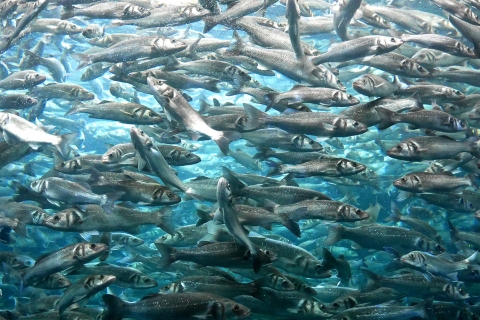
Animal welfare is rapidly emerging as one of the next major transformation drivers for aquaculture. An international scientific review published in the Journal of Fish Biology, involving 17 researchers from nine countries, examines two decades of advances in neurobiology, cognition, technology, aquaculture and fisheries, concluding that fish welfare is no longer a secondary issue but an increasingly strategic component of modern production systems.
The paper describes a shift in perspective that goes beyond simply preventing suffering, stress or mortality. Researchers argue for a move towards “positive welfare”, where fish welfare also includes behavioural expression, social interaction, exploration and adaptive capacity.
According to the review, “current frameworks for understanding animal welfare seem to converge towards mental and/or affective components in their welfare considerations”, highlighting how welfare science is increasingly incorporating cognitive and emotional dimensions into aquaculture discussions.
This approach has direct implications for production systems because it expands welfare considerations far beyond transport or slaughter. Welfare increasingly affects the entire production cycle, including system design, stocking densities, feeding practices, environmental conditions and handling protocols.
The review also notes that “enhancing animal welfare often improves production and this can be a win-win situation for farmers”, reinforcing the idea that welfare is becoming both an operational and economic issue for the sector.
Technology is identified as one of the major drivers behind this transformation
The development of underwater cameras, environmental sensors, automated behavioural analysis and artificial intelligence is enabling continuous and less invasive welfare monitoring.
According to the paper, “rapid development of automatic image analysis and artificial intelligence means that many of these measurements are now being included in camera systems, assessing thousands of fish 24/7”, opening the door to a new generation of welfare management tools within aquaculture.
The authors also connect fish welfare with sustainability, production resilience and social acceptance
The review frames welfare within the broader concepts of One Health and One Welfare, linking animal welfare, environmental sustainability and human wellbeing at a time when regulatory pressure and market expectations are likely to intensify.
Climate change is also identified as a growing challenge, with rising temperatures, hypoxia, harmful algal blooms and extreme weather events increasingly affecting fish health and adaptive capacity.
Overall, the review illustrates how fish welfare is evolving from a secondary ethical consideration into a strategic pillar of modern aquaculture. As the paper itself states, “fish welfare is important and there are many practical things that can be done to advance fish welfare” across aquaculture, fisheries and research sectors.
Referencia
Rey Planellas, S., Saraiva, J. L., Gonçalves-de-Freitas, E., Arechavala-Lopez, P., Bovenkerk, B., Breen, M., Cooke, S. J., Føre, M., Northwood, L., Stien, L. H., Kadri, S., Noble, C., Nilsson, J., Rodriguez, F., Salas, C., Sandøe, P., & van de Vis, H. (2026). Fish welfare in a changing world: New developments and current challenges. Journal of Fish Biology. https://doi.org/10.1111/jfb.70423

Latest news
-
Artificial vision can now detect when fish are feeding — and when feed starts being wasted
China, 21 May 2026 | Artificial intelligence systems connected to cameras, sensors and automated feeding are beginning to provide farmers with practical information to fine-tune feed delivery, reduce waste and improve FCR control
-
-

A plant-based biochar opens a low-cost route to buffer ammonium peaks in RAS
Iran, 20 May 2026 | A evaluates the use of coarse Prunus spinosa biochar as a post-nitrification polishing medium, with selective ammonium removal, hydraulic stability and regeneration capacity using a mild saline solution