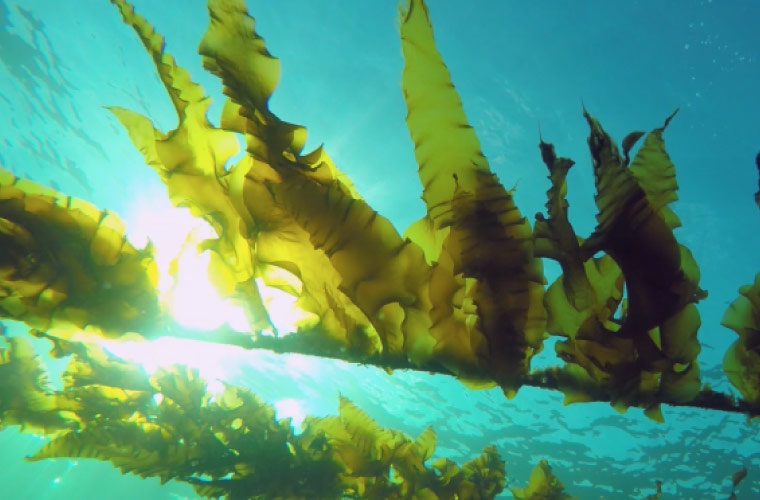
The timing of seeding can make the difference between marginal cultivation and commercially viable production of Ulva fenestrate. A study by researchers from the University of Gothenburg and Chalmers University of Technology found that autumn seeding can generate up to eight times more biomass than employments carried out in late winter or early spring.
Published in the European Journal of Phycology, the study analysed how seeding deployment timing and harvest date affect both production performance and the biochemical composition of this green macroalga cultivated in open-water temperature conditions.
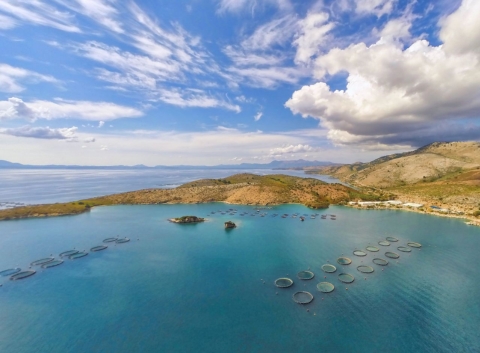
The trials were conducted at a long-line marine cultivation site located in the Koster archipelago on Sweden’s west coast, where researchers evaluated seven deployment windows between September and March and nine harvests between March and July.
The results showed that seedling deployed between September and November maintained slow but steady growth throughout winter and achieved the highest yields at the beginning of summer.
By contrast, seedling deployed in February and March failed to compensate for the delayed start despite improved environmental conditions during spring. Biomass obtained from late deployments remained consistently lower throughout the cultivation cycle.
The best performance was achieved with November deployments, which clearly outperformance all other treatments and reached peak values exceeding 3 kg fresh weight per metre of cultivation line. According to the authors, this demonstrates that even cold months with low irradiance are critical for biomass accumulation in temperate marine cultivation systems.
| Seeding / Harvest timing | Production outcome | Biochemical quality | Cultivation insight |
|---|---|---|---|
| September–November | Highest biomass accumulation; up to eight times more biomass than late deployments. | Best starting point to maintain protein, pigments and PUFA levels before the spring nutrient decline. | Optimal deployment window for food-oriented cultivation in temperate waters. |
| November | Best performance observed, exceeding 3 kg fresh weight per metre of cultivation line. | Strong balance between biomass accumulation and nutritional quality before nitrate depletion. | Particularly favourable timing within the autumn deployment window. |
| February–March | Consistently lower production throughout the cultivation cycle. | Reduced ability to compensate for delayed early growth despite improved spring conditions. | Less suitable if maximising biomass is the primary objective. |
| Late winter–early spring harvest | Lower biomass than later harvests. | Peak protein, pigment and polyunsaturated fatty acid levels coinciding with high nitrate availability. | Most suitable for premium food or functional ingredient applications. |
| Harvests from May onwards | Higher biomass growth driven by increasing light and temperature. | Progressive decline in protein, nitrogen, pigments and PUFA due to nutrient limitation. | Better suited for bulk biomass applications than for maximum nutritional quality. |
Strong link between productivity and nutritional quality
Although increasing temperature and light availability during spring promoted biomass growth, they also caused a significant decline in protein, pigments, nitrogen and polyunsaturated fatty acid (PUFA) content.
The highest protein concentrations, ranging from 21% to 25% of dry weight, were recorded between late winter and early spring, coinciding with peak nitrate levels in seawater.
From May onwards, declining nutrient availability combined with rising temperatures accelerated growth, but progressively reduced the biochemical quality of the biomass.
According to the researchers, this trade-off means cultivation strategies must be adapted to the target market. “Maximising biomass and maintaining high nutritional quality are mutually difficult goals to achieve under natural conditions,” the authors stated.
The study further reinforces growing interest in Ulva as a raw material for food, functional ingredients, biomaterials and regenerative aquaculture.

Latest news
-
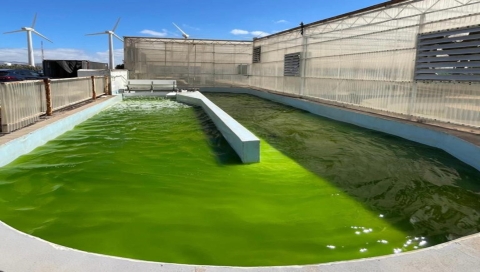
Microalgae aquaculture moves towards full recirculation models
Canary Island, Spain, 14 May 2026 | An industrial-scale trial with Tetraselmis striata shows it is possible to drastically reduce effluents and energy consumption without compromising biomass quality
-
Autumn seeding can increase Ulva production eightfold in sea-based cultivation
Sweden, 14 May 2026 | A new study shows that seeding and harvesting schedules determine not only biomass yield, but also the nutritional quality of cultivated seaweed
-