Industrial microalgae production may be entering a new phase based on near-complete recirculation of water and nutrients within cultivation systems. A study conducted in the Canary Island and published in the scientific journal Aquaculture demonstrates the technical feasibility of continuously reusing the entire supernatant generated after microalgae harvesting while maintaining stable productivity and biomass nutritional quality.
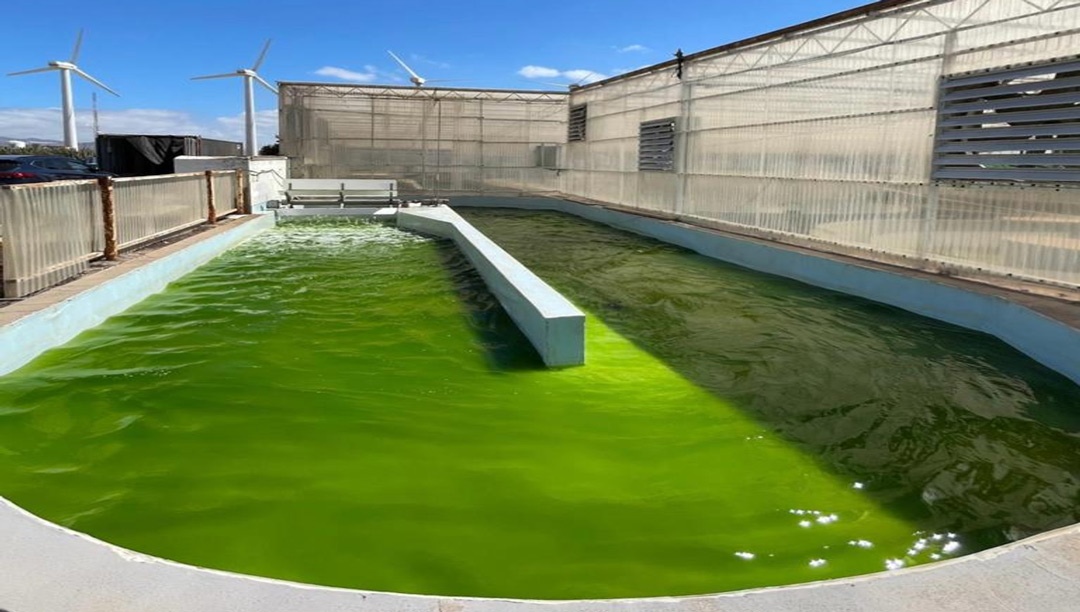
The research, led by the Instituto Tecnológico de Canarias (ITC) in collaboration with the University of Las Palmas de Gran Canaria (ULPGC) and the University of La Laguna (ULL), focused on the marine microalgae Tetraselmis striata cultivated in outdoor raceway systems of up to 10,000 litres operated under semi-continuous conditions.
The most significant aspect of the study is that researchers successfully recirculated 100% of the cultivation medium for two months without applying additional water treatment steps, directly reusing the supernatant generated after biomass centrifugation.
According to the authors, no significant differences were observed in productivity, biochemical composition or microbiological quality compared with cultures using fesh seawater.
From an industrial perspective, the findings are particularly relevant for the development of more resource-efficient production systems.
The recirculation strategy reduced effluent volumes by 84% and cut the energy required for seawater pumping by 51%, equivalent to a 7.5% reduction in the total energy consumption of the cultivation process.
Outdoor productivity reached 43.7 tonnes per hectare per year while maintaining protein levels above 50% on an ash-free basis, a profile considered especially attractive for aquafeed applications.
| Indicator | Result | Relevance for aquaculture |
|---|---|---|
| Culture medium recirculation | 100% of the supernatant reused without additional treatment for two months | Reduces dependency on fresh water inputs and simplifies industrial operations |
| Effluent reduction | 84% lower discharge volume | Improves sustainability and facilitates environmental compliance |
| Energy savings | 51% lower pumping energy demand and 7.5% lower total cultivation energy use | Reduces operational costs at industrial scale |
| Productivity | 43.7 tonnes per hectare per year | Maintains industrial productivity despite medium recirculation |
| Protein content | More than 50% on an ash-free basis | Biomass suitable for aquafeed ingredient applications |
| Nutrient savings | Up to 3 tonnes of nitrate and 1 tonne of phosphate saved annually in a 10-hectare facility | Reduces fertiliser losses and environmental impact |
The study also confirmed that the resulting biomass complied the European safety standards regarding heavy metals and microbiological quality of animal feed and potentially human food applications.
Beyond water and energy saving, the authors emphasise that medium recirculation significantly reduces nutrient losses. In a hypothetical 10-hectare production facility, the system could prevent the annual discharge of at least 3 tonnes of nitrate and 1 tonne of phosphate.
Another strategic outcome of the work is the ability to modulate the biochemical composition of the microalga depending on the target application. Under balanced nutrient conditions, Tetraselmis striata produced protein-rich biomass suitable for aquaculture and feed markets. Under nutrient limitation, however, carbohydrate and lipid accumulation increased significantly, opening opportunities for bioenergy and biofuel applications.
The researchers also highlight that the system was validated under real outdoor operational conditions, including exposure to atmospheric dust, environmental fluctuations and biological contamination risks, factors that often represent major bottlenecks for industrial-scale microalgae production.
According to the authors, the Canary Island offer one of the Europe’s most favourable environments for industrial microalgae biotechnology due to their high solar irradiation, stable climate and access to seawater resources.
Reference:
Begoña Bustamante, Monserrat Alemán, Diana B. Reis, José A. Pérez, Marianna Venuleo, Juan Luis Gómez-Pinchetti, Eduardo Portillo, Flavio Guidi. “Revalorization of microalgae cultivation effluent: a circular strategy for long-term sustainable production of Tetraselmis striata”. Aquaculture, Volume 613, 2026, 743297. https://doi.org/10.1016/j.aquaculture.2025.743297

Latest news
-
Microalgae aquaculture moves towards full recirculation models
Canary Island, Spain, 14 May 2026 | An industrial-scale trial with Tetraselmis striata shows it is possible to drastically reduce effluents and energy consumption without compromising biomass quality
-
Autumn seeding can increase Ulva production eightfold in sea-based cultivation
Sweden, 14 May 2026 | A new study shows that seeding and harvesting schedules determine not only biomass yield, but also the nutritional quality of cultivated seaweed
-