


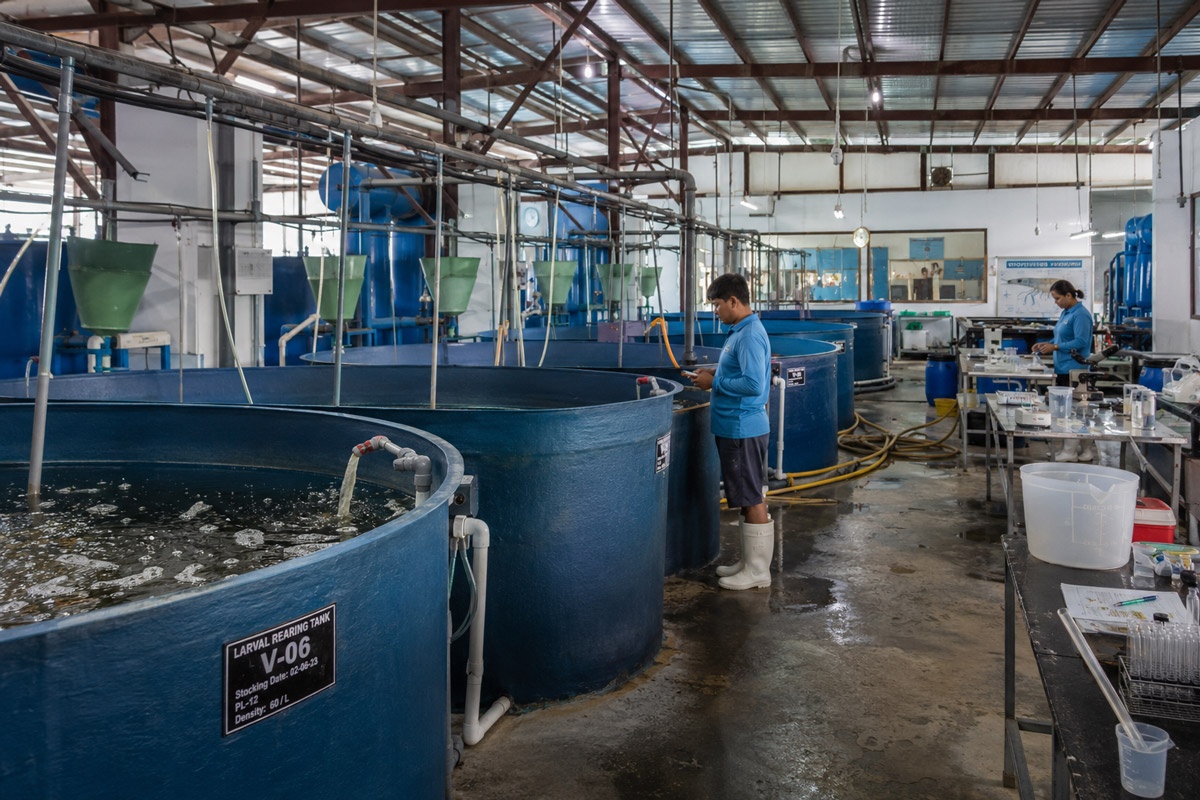
Biosecurity has emerged as the top priority for reducing the health impact on crustacean aquaculture. This is reflected in the international consultation carried out by the World Organisation for Animal Health (WOAH) and STAR IDAZ IRC among 42 specialists, which ranks the prevention of pathogen entry and spread among the tools with the greatest immediate potential to protect production.
This need is particularly significant given that seven of the ten diseases considered priorities are viral, led by white spot syndrome (WSSV). AHPND, infection by Enterocytozoon hepatopenaei (EHP) and vibriosis round out the top positions on a list dominated by pathologies with still-limited treatment options.
Among short-term prophylaxis priorities, good aquaculture practice and biosecurity rank first, ahead of microbiota and probiotics, vaccines, and nutrition and functional feeds. The report highlights quarantine, pond-bottom management, water-quality control, general biosecurity measures, and the use of specific pathogen-free (SPF), specific pathogen-tolerant (SPT) or specific pathogen-resistant (SPR) lines among the most highly valued measures.
This same trend is confirmed when experts assess control strategies: strengthening and harmonising biosecurity obtained the highest scores, compared with epidemiology and modelling, and surveillance, diagnosis and early warning.
Proposed actions include standardised protocols, zoning, compartmentalisation and improved quarantine and water control systems.
The report adds an important economic dimension: several specialists believe that implementing biosecurity measures can be more effective and less costly than relying on therapeutic treatments.
They also link numerous outbreaks to problems with water quality, management and nutrition, broadening the concept of prevention beyond the simple detection of a pathogen.
In the medium and long term, this preventive approach is expected to combine with rapid diagnostics, environmental surveillance, epidemiology, artificial intelligence and genetic selection.
However, while many new therapies remain under development, strengthening health barriers, management and environmental control remains one of the most direct routes to reducing mortality and safeguarding production continuity.

Latest news
-
Biosecurity established as the most cost-effective health investment in crustacean aquaculture
Global, 31/08/2026 | Global consultation by WOAH and STAR IDAZ ranks prevention, water management and good practice ahead of vaccines, probiotics and treatments as priorities for reducing the impact of disease
-

RAS salmon starts to reveal its real production costs in China
China, 28 August 2026 | Nordi Aqua lowers the cost of salmon produced in recirculating aquaculture systems to EUR 6.05/kg, but has yet to achieve a positive margin
-
Farming system shapes probiotic efficacy in tilapia
28 August 2026 | A meta-analysis of 141 studies identifies probiotics as the most consistent strategy for improving growth and feed conversion, but warns that production-environment stability influences the reproducibility of results