
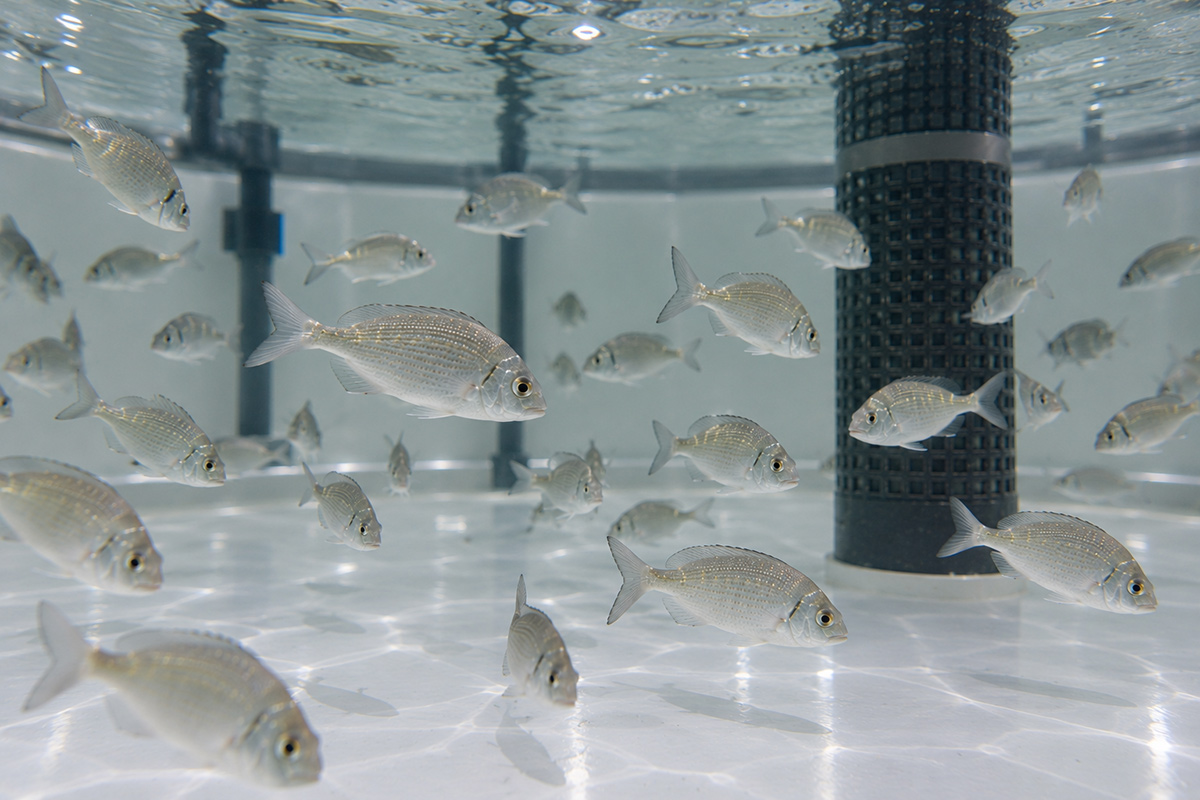
The time of year may affect how the microbial response of gilthead seabream (Sparus aurata) to feed is interpreted. A nine-month study by researchers at the Torre de la Sal Institute of Aquaculture (IATS-CSIC) found that the stage of the production cycle had a greater influence than diet on the bacterial communities of the skin and intestine.
The trial compared three diets: a reference formulation; one containing processed animal proteins and salmon by-products; and a third incorporating alternative ingredients such as insect meal, microbial biomass and microalgal oil.
The fish were kept in an open-flow system under natural conditions and sampled at four points between May and February. During the trial, mean daily water temperature ranged from 11.07 to 29.24°C.
In the intestinal mucosa microbiome, the researchers found no significant differences between diets at individual sampling points. By contrast, sampling time explained more variation than diet. The analysis also identified a core of 20 bacterial genera present throughout the production cycle and across the dietary groups, although the abundance of many of them changed over time.
The skin showed a more context-dependent response. Bacterial communities differed between diets in summer; those differences were no longer significant in autumn and reappeared in winter, mainly between the reference diet and the two alternative formulations.
The authors interpret these findings as temporary dietary modulation shaped by seasonal progression.
The study also tracked bacteria in the inlet water over two years and compared these samples with water from the fish tanks. The presence of fish was associated with changes in the water microbial community, and some bacteria followed parallel seasonal patterns in the rearing water and on the skin.
The research team suggests that water sampling could eventually help track microbial changes in fish without sampling the animals directly, although this potential application has yet to be validated.
For producers, the findings underline the importance of considering season and temperature when comparing studies on feed and the microbiome. The study did not measure nutrient absorption or digestibility, so it cannot show that the time of year affects how fish use feed. Nor does it conclude that feed formulations should be changed: the three diets had supported comparable growth in earlier production assessments.
Scientific reference
Domingo-Bretón, R., Moroni, F., Belenguer, Á., Calduch-Giner, J. A., Naya-Català, F. and Pérez-Sánchez, J. (2026). “Diet and seasonal dynamics shape microbiome structure across host and environmental compartments in gilthead seabream (Sparus aurata): a longitudinal multicompartment study”. Animal Microbiome. https://doi.org/10.1186/s42523-026-00649-3
Latest news
-
Can the time of year alter gilthead seabream’s response to feed?
Castellón, Spain, 30 October 2026 | A study by IATS-CSIC found that seasonal timing had a greater influence than diet on the composition of gilthead seabream microbiomes. Dietary effects were temporary and differed between the skin and intestinal mucosa
-
CTAQUA identifies virulence differences among strains of three bacteria relevant to aquaculture
El Puerto de Santa María, 29 October 2026 | The centre has characterised 13 strains of Aeromonas veronii, Lactococcus garvieae and Vibrio harveyi. Differences in mortality observed under controlled conditions highlight the importance of strain selection when assessing treatments, vaccines and preventive measures
-
Falling salmon prices drive a 46% decline in Norwegian aquaculture profitability
Norway, 30 October 2026 | Higher salmon supply, following a year of improved production conditions, helped put downward pressure on prices as pre-tax profits fell to NOK 7.7 billion