
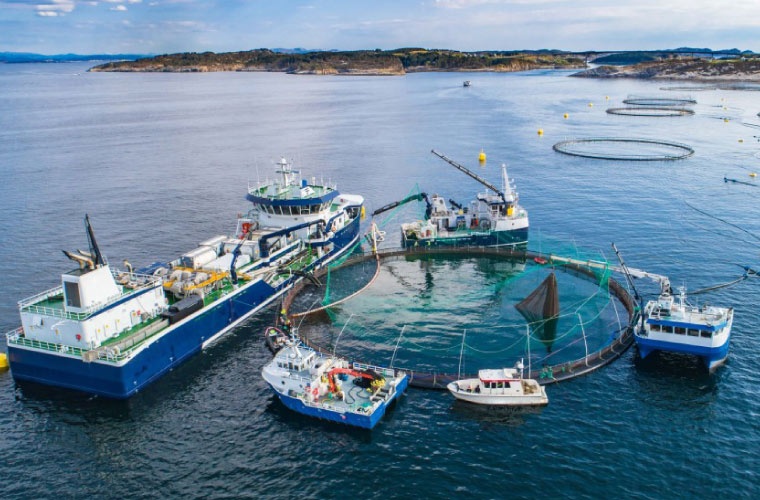
European aquaculture may be entering a new phase defined not only by its ability to produce fish and seafood, but also by its capacity to attract private investment. This is the conclusion of a new paper published by the Aquaculture Advisory Council (AAC), an advisory body to the European Commission, which identifies the main barriers currently limiting capital inflows into the European aquaculture sector.
According to the report, many investors still perceive aquaculture as a complex and difficult sector to assess due to the diversity of species and production technologies, the lack of comparable economic data, and the absence of harmonised sustainability and animal welfare metrics. This is compounded by regulatory and administrative uncertainty across several Member States, making risk assessment and project profitability more difficult to evaluate.
Although aquaculture is often presented in Europe as a strategic sector with significant growth potential, the AAC acknowledges that in practice the industry continues to experience limited expansion and a strong dependence on imports to meet European seafood demand.
In this context, the document argues that a shift in perspective may become increasingly important, with the sector’s future competitiveness depending more heavily on its ability to provide regulatory predictability, legal certainty and financially assessable business models.
How investors assess risk in aquaculture
| Investability factor | Why it matters to investors | Potential impact on aquaculture |
|---|---|---|
| Regulatory uncertainty | Makes timelines, costs and profitability harder to predict. | Reduces the attractiveness of new investments. |
| Licence duration | Increases risk for long-term investment projects. | Makes expansion and financing more difficult. |
| ESG data availability | Supports sustainability, risk and performance assessment. | Facilitates access to sustainable finance. |
| Animal welfare metrics | Provide measurable evidence of operational and reputational performance. | Strengthens confidence among investors, customers and certification schemes. |
| Comparable economic data | Helps assess projects and compare risks. | Reduces perceived sector uncertainty. |
| Market-oriented financing | Prioritises economically viable projects. | Supports a more professional and investment-ready industry. |
Factor such as licence duration, stability of concessions and the availability of ESG-related data are beginning to emerge as a critical elements for projects characterised by long production cycles and high capital requirements.
The AAC also warns that the lack of robust indicators on environmental sustainability and animal welfare is limiting access to sustainable finance. It further notes that the absence of specific references to aquaculture within the EU Green Taxonomy could be interpreted by some capital providers as a sign that the sector lacks sufficient environmental alignment.
The report also highlights growing interest in more market-oriented financing models. According to the AAC, instruments such as loans, guarantees and equity investments may prove more effective than certain traditional subsidies, as the support economically viable projects while helping to build financial track records and investor confidence in the sector.
Despite these challenges, the document points to a broader conceptual shift in which aquaculture is increasingly being viewed as strategic infrastructure for food security, supply resilience and European production autonomy.
In this scenario, the AAC argues that the ability to attract private capital could become one of the decisive factors determining which technologies and production models will lead the next phase of European aquaculture development.

Latest news
-
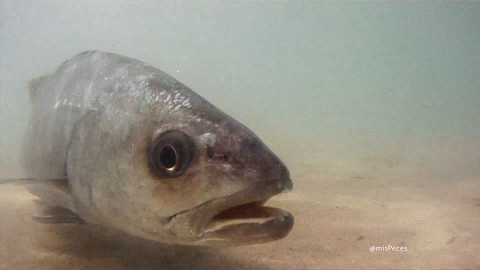
Life cycle analysis identifies energy and feed design as the main challenges for meagre RAS
Peniche, Portugal, 18 May 2026 | The production of meagre in RAS is beginning to generate more precise environmental data to assess its viability as a low-impact production model
-
European aquaculture enters the era of “investibility”
Brussels, 18 May 2026 | Aquaculture Advisory Council warns that the sector’s future growth will increasingly depend on its ability to attract capital through regulatory stability, ESG metrics and legal certainty
-

Single-cell proteins gain ground in aquafeed strategy
Global, 15 May 2026 | An international report concludes that single-cell proteins are beginning to establish themselves as a strategic tool to strengthen supply resilience and reduce dependence on limited marine resources