
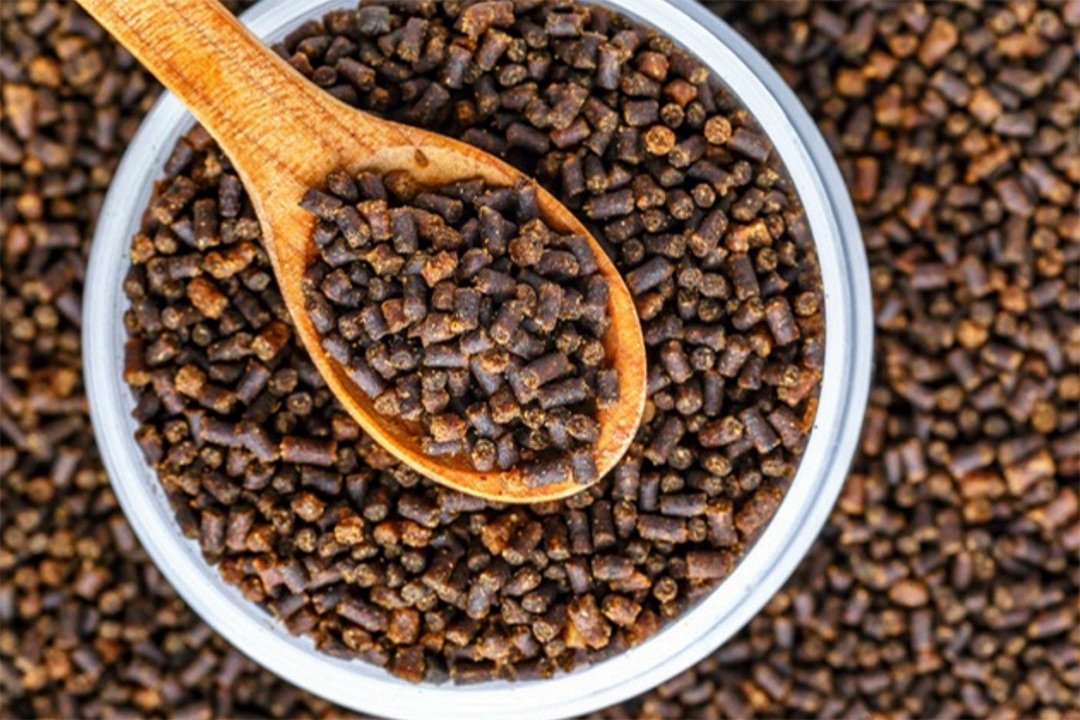
Aquaculture may be entering a new phase of feed diversification. This is the conclusion of the 2026 State of the Industry Report – SCPs, published by the Centre for Feed Innovation (CFI), which examines the current status and future potential of single-cell proteins as partial alternative to fishmeal and fish oil in aquaculture.
The report links the future of aquafeeds not only to sustainability, but also to supply resilience in the face of climate events, price volatility and growing pressure on forage fisheries.
Currently between 15 and 25 million tonnes of forage fish are used annually to produce fishmeal and fish oil.
While these ingredients remain essential for carnivorous species such as salmonids, marine finfish and shrimp, the report warns that the future availability of marine resources could become one of the main limiting factors for the growth of global aquaculture.
In this context, single-cell proteins are beginning to gain relevance as complementary ingredients within feed diversification strategies.
According to the report, current global single-cell proteins production for aquaculture is estimated between 30,000 and 40,000 tonnes per year, still a modest figure compared to the overall aquafeed ingredient market.
However, the document projects that production capacity could increase to 150,000 – 500,000 tonnes annually before 2030, driven by new industrial facilities, technological advances and production models integrated with energy infrastructure and industrial residual streams.
| Indicator | Current situation | Industry outlook |
|---|---|---|
| Global SCP production | 30,000–40,000 tonnes/year | Potentially reaching 150,000–500,000 tonnes/year before 2030 |
| Cost competitiveness | Some methanotrophic bacteria products are approaching USD 1,500/MT | Greater competitiveness expected as scale increases and energy costs decline |
| Industrial investment (CapEx) | USD 80–330 million for large-scale facilities | Expansion likely to depend on industrial partnerships and long-term investment |
| Role in aquafeeds | Complementary ingredient in early commercial adoption stages | Progressive growth expected in salmon, marine fish and shrimp feeds |
| Main barriers | Energy costs, industrial scaling and access to feedstocks | Expansion will depend on low-cost energy and circular production systems |
| Strategic objective | Reducing dependence on limited marine resources | Strengthening resilience and long-term aquafeed supply stability |
Industrial scaling and competitiveness

The analysis indicates that some methanotrophic bacteria-based technologies are beginning to approach competitiveness levels comparable to premium fishmeal, reaching prices of around EUR 1,500 per tonne.
However, the sector still faces significant barriers linked to high energy consumption, access to low-cost feedstocks and the substantial investment required to develop industrial-scale facilities, which may require between USD 80 million and USD 330 million for capacities close to 100,000 tonnes annually.
The report argues that the future expansion of single-cell proteins will depend heavily on access to low-cost energy, the development of circular production models an integration with industries capable of supplying residual gases, biogas or other industrial by-products as feedstocks.
From a nutritional perspective, the report considers that single-cell proteins have already moved beyond the purely experimental stage. Several trials show that they can replace a significant share of fishmeal while maintaining growth performance, feed efficiency and health parameters, while also delivering benefits related to survival, gut health and immune response.
Nevertheless, the document also warns that inclusion levels remain constrained by factors such as digestibility, nutritional balance and final product quality. Under certain conditions, high inclusion rates may alter texture or some sensory characteristics of seafood products, reinforcing the idea that these proteins are not expected, at least in the short term, to fully replace fishmeal.
Beyond the technical dimension, the report reflects a broader shift in how the aquaculture industry approaches the future of aquafeeds. Single-cell proteins are increasingly being viewed less as an experimental promise and more as a strategic tool to strengthen supply security, reduce dependence on marine raw materials and build more resilient feeding systems for the aquaculture industry of the coming decades.

Latest news
-
Single-cell proteins gain ground in aquafeed strategy
Global, 15 May 2026 | An international report concludes that single-cell proteins are beginning to establish themselves as a strategic tool to strengthen supply resilience and reduce dependence on limited marine resources
-
A European report proposes auditable metrics to assess welfare in aquaculture
Brussels, 15 May 2026 | NGO’s report suggests that dissolved oxygen, injuries and mortality could become key metrics for future audits, public funding and aquaculture certification schemes
-
Study highlights both the potential and the risks of cultivated seaweeds for food and aquaculture
Australia, 15 May 2026 | An Australian study has identified promising nutritional profiles in Ecklonia radiata and Cladophora sp., while also warning about microbiological risks and heavy metal accumulation in cultivated biomass