
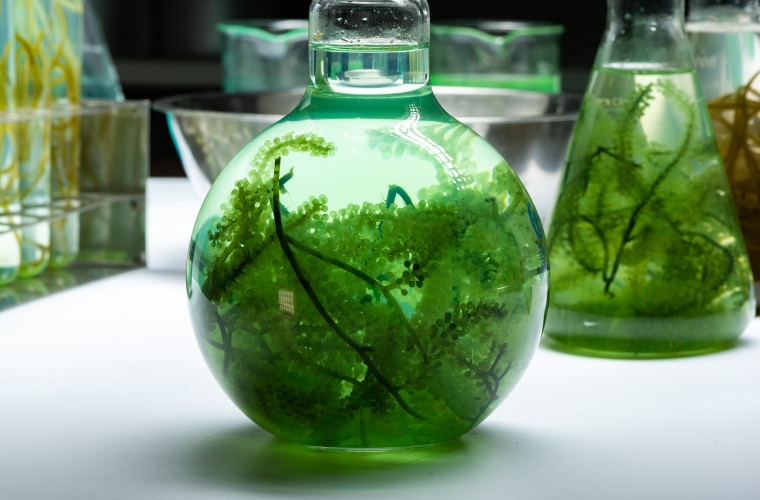
The expansion of seaweed aquaculture is opening new opportunities for the development of functional ingredients for both human and aquaculture applications. However, a new scientific study warns that the future growth of the sector will depend not only on increasing production volumes, but also on ensuring the chemical and microbiological safety of cultivated biomass.
The research, published in the journal Ciencias Marinas, evaluated the nutritional profile, fatty acid composition, microbiological safety and heavy metal accumulation of two seaweeds cultivated in Australia: the brown seaweed Ecklonia radiata and the green seaweed Cladophora sp.
The authors highlight that both species display complementary characteristics with potential applications in functional foods, nutritional supplements and aquafeeds, although they also identified important limitations that could affect their industrial scalability.
Among the most notable findings, Ecklonia radiata showed a high carbohydrate content (62.48%) and a profile rich in essential amino acids such as lysine, leucine and threonine. It also stood out for its concentration of omega-3 fatty acids, particularly EPA, which is associated with anti-inflammatory and cardioprotective properties.
Meanwhile, Cladophora sp. showed a high mineral concentration and higher levels of β-carotene and arginine, compounds associated with functional and metabolic applications. According to the researchers, these nutritional differences could support the development of blended biomass formulations with more balanced profiles for food and aquaculture applications.
| Parameter | Ecklonia radiata | Cladophora sp. |
|---|---|---|
| Seaweed type | Brown seaweed | Green seaweed |
| Main strength | Omega-3 and essential amino acids | Minerals, β-carotene and arginine |
| Carbohydrates | 62.48% | 20% |
| Protein | 10.16% | 11.1% |
| EPA omega-3 | 9.3% | 1% |
| β-carotene | <5 µg/100 g | 180 µg/100 g |
| Key amino acid | Lysine | Arginine |
| Microbiological quality | More favourable | More limited |
| Main risk identified | Elevated lead concentration | Elevated cadmium concentration |
| Potential applications | Functional ingredients and aquafeeds | Nutritional and functional ingredient subject to quality control |
Source: own elaboration based on the scientific study published in Ciencias Marinas.
The study also notes that cultivated seaweeds represent one of the fastest-growing areas within the blue bioeconomy, particularly because of their ability to produce biomass with a low environmental footprint and without directly competing for agricultural land or freshwater resources.
The food safety challenge
However, the research also identified significant challenges for the sector. Cladophora sp. showed elevated levels of cadmium, zinc and copper, while Ecklonia radiata contained significant concentrations of lead.
In addition, the microbiological loads detected in Cladophora sp. were considerably higher than those found in Ecklonia radiata, including higher levels of anaerobic bacteria, yeast and mesophilic spores.
According to the authors, these results demonstrate that the development of seaweed aquaculture will require far more rigorous environmental monitoring systems, cultivation protocols and post-harvest processing practices if this biomass is to be used in food and nutraceutical applications.
Beyond sustainability
The study underlines that the future of cultivated seaweeds will depend not only on their environmental sustainability, but also on the industry’s ability to consistently demonstrate nutritional quality, microbiological safety and contaminant control.
In this context, the researchers suggest that species such as Ecklonia radiata could emerge as promising raw materials for next-generation functional ingredients and aquafeeds, while other species will require improvements in handling and quality control before reaching large-scale commercial applications.
The study was carried out by researchers linked to institutions in Australia and Brazil as part of initiatives focused on marine bioeconomy and sustainable aquatic biomass production.

Latest news
-
Single-cell proteins gain ground in aquafeed strategy
Global, 15 May 2026 | An international report concludes that single-cell proteins are beginning to establish themselves as a strategic tool to strengthen supply resilience and reduce dependence on limited marine resources
-
A European report proposes auditable metrics to assess welfare in aquaculture
Brussels, 15 May 2026 | NGO’s report suggests that dissolved oxygen, injuries and mortality could become key metrics for future audits, public funding and aquaculture certification schemes
-
Study highlights both the potential and the risks of cultivated seaweeds for food and aquaculture
Australia, 15 May 2026 | An Australian study has identified promising nutritional profiles in Ecklonia radiata and Cladophora sp., while also warning about microbiological risks and heavy metal accumulation in cultivated biomass