



In European marine aquaculture, producing more does not necessarily mean being more competitive. A new study published in Marine Policy proposes a more economic and less volume-based reading of the sector: it is not enough to measure tonnes produced; it is also necessary to assess how much value is generated, with what margins, at what level of productivity and with what balance between costs, labour and business structure.
The study, authored by Paolo Pariso and Alfonso Marino, from the University of Campania “Luigi Vanvitelli”, together with Maria Cozzolino, from NISEA, analyses the economic performance of marine finfish aquaculture in ten European Union Member States over the 2017–2022 period: Croatia, Denmark, Finland, Greece, Ireland, Italy, Malta, Portugal, Slovenia and Spain.
The research uses harmonised data from the European Commission’s Scientific, Technical and Economic Committee for Fisheries, STECF, specifically from the STECF 24-14 report. This allows the countries to be compared on a common basis, combining indicators of profitability, operating efficiency and internal economic sustainability, understood as the balance between value added, costs, labour remuneration and production structure.
The main conclusion is that production scale alone is not enough to explain competitiveness. Some countries with significant output may show weaknesses in margins, efficiency or cost structure, while smaller systems may record comparatively solid results in productivity or profitability.
The competitiveness of European aquaculture is not measured only in tonnes, but in the ability to convert production into margins, productivity and lasting economic value.
The authors group the countries through a cluster analysis, but these groups should not be interpreted as a ranking between better- and worse-performing countries.
“The real risk is adopting the wrong policies,” study co-author Maria Cozzolino told misPeces. “Each cluster represents a different economic configuration, with its own strengths and weaknesses. The objective is not to identify winners and losers, but to show that different structural conditions require different policy responses.”
The first group includes Greece, Croatia, Spain and Portugal. This configuration does not mean that the four countries have the same performance profile. Spain and Portugal, for example, show positive signals in several profitability indicators, but the multidimensional analysis also identifies vulnerabilities in efficiency and in the internal balance of costs.
The correct interpretation, therefore, is that strong profitability does not automatically guarantee an economically robust structure across all dimensions. For Spain and Portugal, the challenge will be to preserve margins while improving production organisation, factor use and the resilience of cost structures.
Greece shows greater pressure across several economic indicators. This is particularly relevant given its strategic role in Mediterranean gilthead seabream and European seabass production. However, the result should be interpreted as a relative structural profile, rather than as a negative judgement on the Greek sector.
Slovenia emerges as a distinct, intermediate configuration. It combines some positive profitability signals with weaker results in operating efficiency and internal economic sustainability. The authors recommend caution when interpreting this case, also because of the limited sample size.
The third group includes Denmark, Finland, Ireland, Italy and Malta. Within it, some countries show comparatively stronger profiles in productivity and economic structure, although significant differences remain between them.
 Maria Cozzolino, co-author
Italy stands out for its relative position in labour productivity and operating efficiency. According to Cozzolino, these results indicate “an effective capacity to generate value from production factors”, but they should be interpreted carefully because they may be influenced by labour organisation and by the incidence of seasonal or part-time employment.
Italy therefore shows an important strength, but not an economic system without weaknesses. Some indicators of internal economic sustainability are more moderate, and the relationship between labour costs and the value generated is not the strongest in absolute terms.
For Italian aquaculture companies, the priority will be to maintain high productivity while increasing value added. Long-term competitiveness will depend less on simply producing more and increasingly on the ability to generate greater value through quality, organisation, market positioning and more effective use of capital.
Malta shows comparatively solid profitability signals, confirming that a smaller production scale does not automatically imply lower competitiveness. Even so, strong results in profitability or productivity do not necessarily mean there is an optimal balance between costs, wages and value added.
The policy message of the study is also clear
“The right policy is not the same policy for everyone, but the policy that fits each production system,” Cozzolino said. “There is no one-size-fits-all solution for European aquaculture: diversity is not a problem to eliminate, but a reality to manage.”
For European marine aquaculture, the strategic challenge is not simply to increase production, but to combine profitability and productivity with resilient cost structures and greater value creation across very different national systems.
This means supporting innovation, workforce skills and value creation in the more efficient systems, while those facing greater vulnerabilities require targeted measures on costs, productivity, access to capital and the modernisation of productive assets.
The value of the study therefore lies not in identifying who wins or loses, but in providing an economic benchmarking tool to understand why national systems operating within the same European market can deliver very different results.

Latest news
-

The competitiveness of European marine aquaculture does not depend on production volume alone
Salerno, Italy, 8 July 2026 | A study published in Marine Policy, based on STECF indicators, identifies markedly different economic configurations across EU countries
-
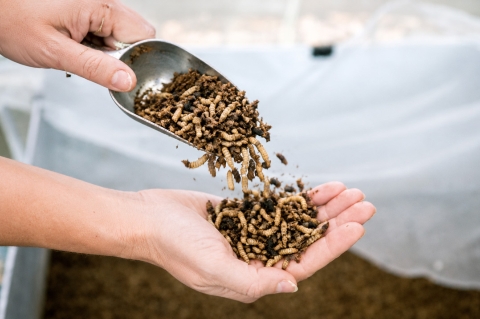
Antibacterial insect extracts for aquaculture: beyond protein
Anavyssos, Greece, 7 July 2026 | A study with Mediterranean aquaculture pathogens shows that some insect extracts have antibacterial activity, although their most realistic application is not to replace antibiotics, but to support the design of functional aquafeeds
-
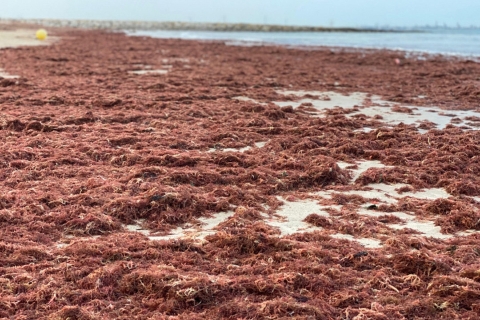
Seaweed beach-cast: when coastal waste can become a valuable raw material
Global, 7 July 2026 |