
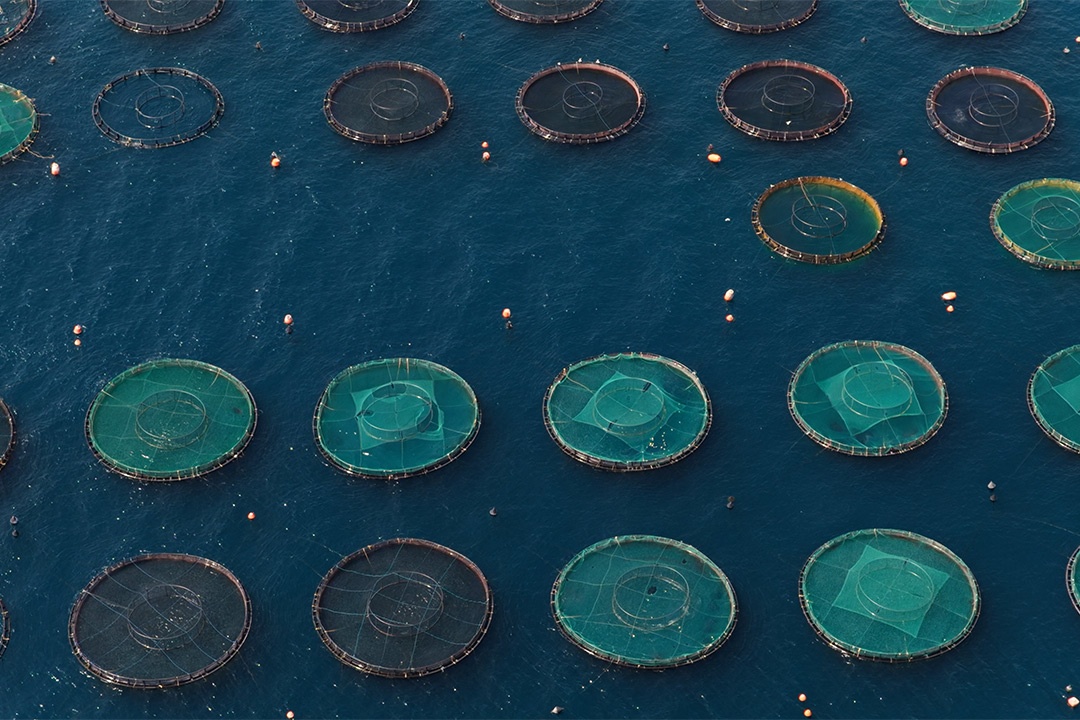
Türkiye closed 2025 with the highest fisheries production in its history, surpassing the one-million-tonne threshold for the first time. According to Agriculture and Forestry Minister Ibrahim Yumaklı, total fish production reached 1.02 million tonnes, setting a new national record and highlighting the growing importance of aquaculture within the country’s seafood sector.
Speaking during a meeting with fisheries in Sariyer, Yumaklı also noted that fisheries and aquaculture exports approached USD 2 billion, reinforcing Türkiye’s position as one of the Mediterranean region’s leading seafood producers and exporters.
Although the final figures will be officially released by the Turkish Statistical Institute TÜIK), the minister stated that approximately 400,000 tonnes came from capture fisheries and 600,000 tonnes from aquaculture, attributing part of the sector’s performance to the production planning and quota system implemented by the government.
Aquaculture now accounts for more than 60% of total production
Subsequent statistical data indicate that aquaculture production reached 626,591 tonnes in 2025, representing a 3.7% increase compared with the previous year. Of this volume, 440,817 tonnes were produced in marine farms, while 185,774 tonnes originated from inland aquaculture operations.
Aquaculture now represents nearly 61% of Türkiye’s total aquatic food production, confirming a long-term growth trend that contrast with the more variable performance of capture fisheries.
| Species | Production 2025 |
|---|---|
| Trout | 185,310 t |
| European seabass | 174,859 t |
| Gilthead seabream | 164,643 t |
These figures position Türkiye among the world’s leading producers of European seabass and gilthead seabream and reinforce its role as the main competitor to Mediterranean producers within the European Union. Together, these three species account for more than 524,000 tonnes, equivalent to approximately 84% of total Turkish aquaculture output.
Minister Yumaklı also reported that anchovy production reached 245,000 tonnes, exceeding initial expectation, and stressed the importance of maintaining a balance between resource conservation and sustainable exportation to support future sector growth.

Latest news
-
Türkiye consolidates its aquaculture leadership with 626,000 tonnes in 2025
Ankara, 8 June 2026 | Total fisheries production reached 1.02 million tonnes in 2025, with more than 626,000 tonnes coming from aquaculture, driven mainly by trout, European seabass and gilthead seabream
-
Study identifies how to optimise dietary lipid levels and temperature to improve grey mullet growth
Bologna, Italy 8 June 2026 | The combination of a diet containing 15% lipids and a rearing temperature of 28ºC delivered the most favourable results in Mugil cephalus
-
Diet is no longer just feeding fish: it is starting to reconfigure microbiome, stress response and sexual development
Vigo, 4/06/2026 | Two IATS-CSIC studies presented at the XX CNA show how new aquafeed formulations are beginning to modulate complex physiological processes far beyond growth performance