 Evgenia Gourzioti, IRIDA |@misPeces
A pathogen widely known for causing streptococcosis in freshwater fish, including tilapia, has for the first time been associated with disease in farmed European seabass (Dicentrarchus labrax) in eastern Greece.
Streptococcus iniae is not, however, exclusively a freshwater bacterium. It has been documented internationally in numerous freshwater and marine fish species.
Fish affected by the disease can show anorexia, lethargy, erratic swimming, ocular opacity and exophthalmia, among other clinical signs.
The new case was presented at Aquaculture Europe 2026 by Evgenia Gourzioti, a researcher at IRIDA. Speaking to misPeces, she explained that the initial outbreaks occurred during summer 2025 at two sea-cage farms in south-eastern Greece, where mortality reached between 8% and 10% and affected European seabass weighing between 90 and 500 grams.
Although the cases remain highly localised, they now warrant further monitoring because of their potential relevance to Mediterranean aquaculture and because they involve one of the region's major farmed fish species.
Bacteriological analysis, PCR, 16S gene sequencing and genomic analysis confirmed the presence of the bacterium, while the outbreaks coincided with water temperatures of between 25 and 27°C.
Gourzioti also confirmed that the bacterium was detected again during summer 2026, at one of the two farms affected the previous year and, this time, limited to two cages.
The difference on this occasion was the speed of the response. “We were better prepared,” she explained. Once the samples were received, the same strain was identified and treatment was initiated, bringing the episode under control with, according to Gourzioti, no mortality.
Temperature could be one of the factors favouring the development of the disease. The 2025 episode occurred between mid-August and mid-September, and Gourzioti believes high temperatures may have played a role, although she cautions that other variables should also be considered.
Among them, she raises the hypothesis that the spread of non-native fish species into the eastern Mediterranean through the Suez Canal could be involved, noting that analysis found the bacterial lineage to be related to Asian strains. This possible route of introduction has not been demonstrated and requires further investigation.
Research that raises a new surveillance question for a major farming sector
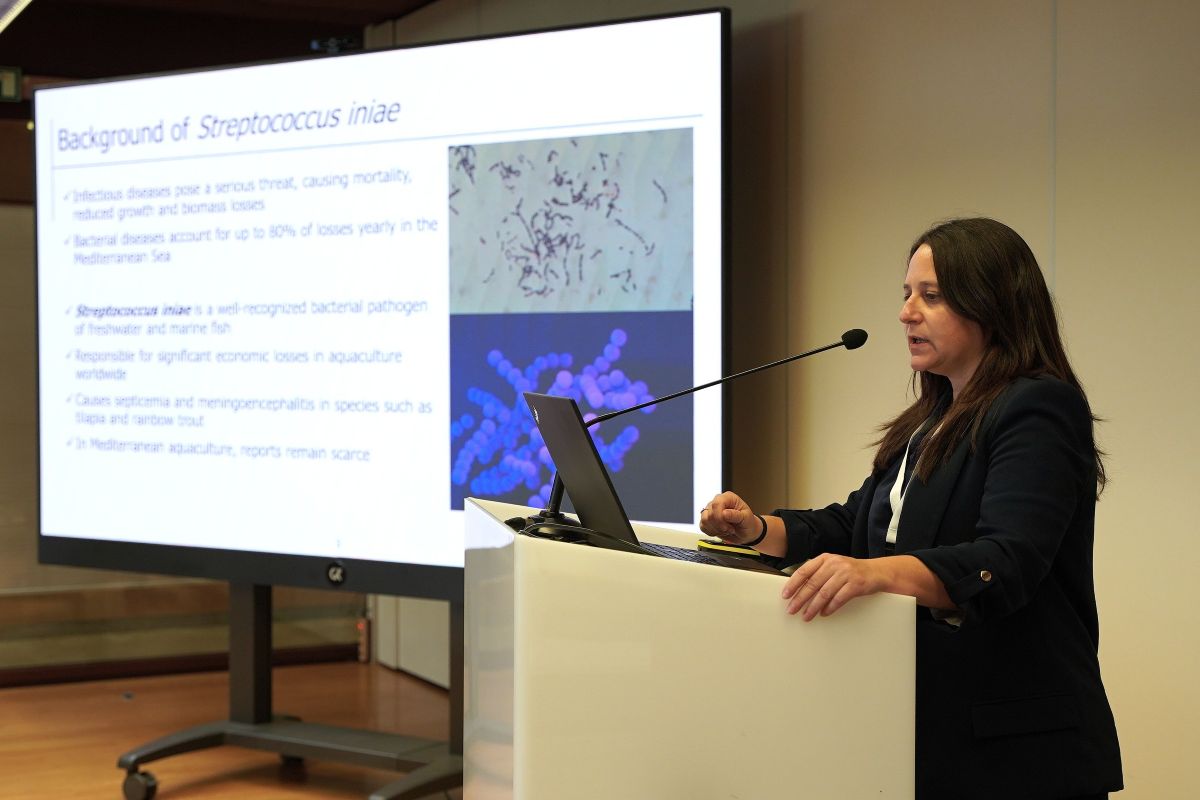
The research provides useful evidence for considering broader surveillance. The bacterium has a considerable host range, and scientific literature has documented infections in both freshwater and marine fish for decades, particularly in warm-water regions.
One scientific review identified at least 27 susceptible species and highlighted the pathogen's economic significance for aquaculture, while more recent studies have reported more than 80 identified strains.
The Greek case therefore does not demonstrate a new transition between freshwater and marine environments, but rather the emergence of the pathogen in a host and production setting of particular relevance to Mediterranean aquaculture.
Prevention will now be one of the issues to follow. Gourzioti says there is currently no commercial vaccine specifically targeting this pathogen for Mediterranean farmed species and confirms that discussions have already taken place with two farms over the possibility of vaccination.
IRIDA and Aquatic Biologicals have the isolates available and, should the farms decide to proceed, could develop autogenous vaccines.
The recurrence observed over two consecutive summers will provide an opportunity over the coming production seasons to determine whether these remain localised episodes or represent a fish-health risk requiring specific surveillance in Mediterranean European seabass farming.

Related

Latest In-depth
-
Ocean Aquaculture begins work on Spain hatchery designed to produce eight million greater amberjack juveniles a year
Almería, Spain, 9 September 2026 | The first phase will involve an investment of around €15 million and is expected to begin production in January 2028, supplying both the group’s future offshore farms and other Mediterranean producers