
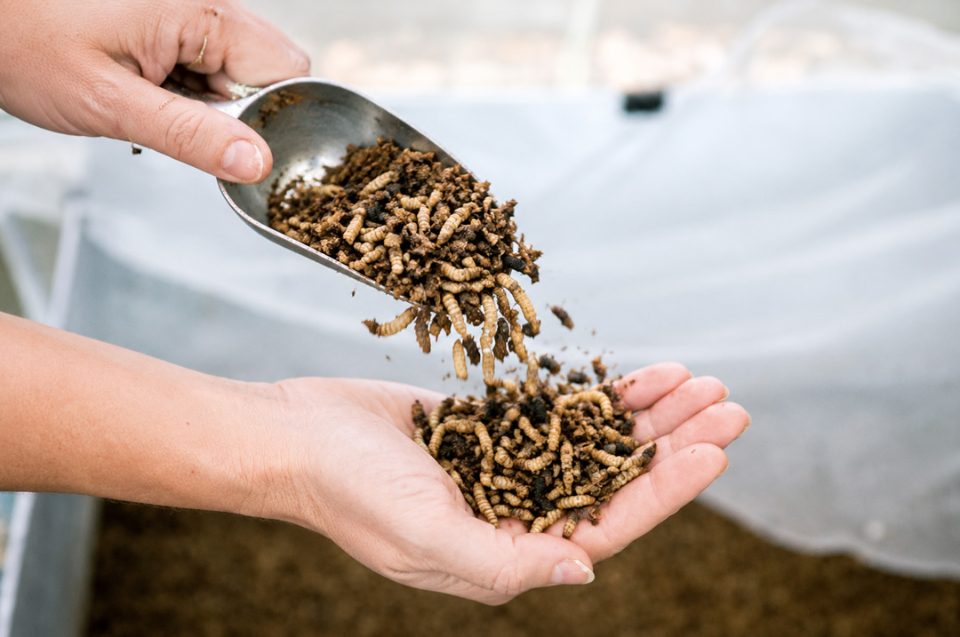
Insect meal has mainly been considered as a protein substitute in aquafeeds. However, a recent study published in Fishes introduces a complementary approach, focusing on the potential interest of certain bioactive compounds found in specific insect species for fish health and feed stability.
These compounds include antimicrobial peptides, medium-chain fatty acids, chitin, chitosan, polysaccharides and other metabolites capable of interacting with bacteria, immunity or the microbiota.
The idea is not present insect extracts as a direct alternative to veterinary treatments. Their possible interest lies in their inclusion in functional diets that may help improve fish resistance, support the immune response or reduce certain health risks on farm.
The study, carried out by researchers from the Hellenic Centre for Marine Research and other institutions, evaluated extracts from seven insect against bacteria associated with disease outbreaks in Mediterranean marine aquaculture.
The species analysed included some already known for their use or potential interest in animal nutrition, such as black soldier fly (Hermetia illucens), yellow mealworm (Tenebrio molitor), silkworm (Bombyx mori), and house cricket (Acheta domesticus), together with other species of emerging interest, such as Gryllus bimaculatus, Zophobas morio and the weaver ant Oecophylla smaragdina.
The extracts were tested against bacteria relevant to Mediterranean aquaculture, including Vibrio, Photobacterium, Aeromonas and Pseudomonas, among others.
The authors compared different extraction methods – water, methanol and isopropanol – and measured the ability of the extracts to inhibit bacterial growth and the metabolic activity of the microorganisms.
The results show important differences between insect species and extract types. Not all insects behaved in the same way, and not all extraction methods were able to recover compounds with antibacterial activity.
Aqueous extracts of Gryllus bimaculatus, methanolic and isopropanolic extracts of Hermetia illucens, and isoproanolic extracts of Oecophylla smaragdina stood out for their activity against several bacterial strains.
In some cases, the extracts showed activity against bacteria with lower sensitivity to reference antibiotics such as bacitracin, oxolinic acid or streptomycin.
The most relevant aspect of the work is the shift in perspective. Insect meal should not be analysed only for its value as a protein source, but also for the functional fractions it can provide and for its possible role in gut health, immune response and the reduction of certain bacterial risks.
The authors themselves stress that crude extracts are not a direct therapeutic alternative to conventional antibiotics. Their most realistic application would be in the development of functional aquafeeds, support diets during risk periods, or formulation designed to reduce fish vulnerability before a health problem emerges.
In this context, small inclusion of ingredients containing bioactive compounds could be of interest, provided their efficacy is demonstrated in fish trials and not only in in vivo tests.
For now, the results should be interpreted with caution and as a basis for future, more applied research. The fact that an extract inhibits bacteria in the laboratory does not mean that the same effect will automatically occur in a marine farm.
Between laboratory results and farm application, there are multiple technical and biological factors, as well as economic viability. Digestibility, feed processing, compound stability, effective dose, gut microbiota, the immune status of the fish water temperature and the real pressure of the pathogen all play a role.
For insects to gain ground in aquaculture, they must be integrated into commercial aquafeeds without negatively affecting performance or cost, while providing clear value beyond protein. That value may lie in their nutritional profile, but also in functional compounds with potential benefits for fish health.
The next challenge is to move from laboratory screening to feeding trials with clear production indicators: growth, feed conversion, survival, microbiota, immune response, resistance to bacterial challenges and economic return for the farm.

Related

Latest In-depth
-
Clams more resistant to heat and Perkinsus: research paves the way for selective breeding
Padua, Italy, 16/10/2026 | University of Padua researchers explain to misPeces the findings presented at Aquaculture Europe 2026 and the steps needed to transfer them to hatcheries. Initial applications could emerge within the next two or three years, although the relationship between resistance, growth and other production traits still need to be assessed