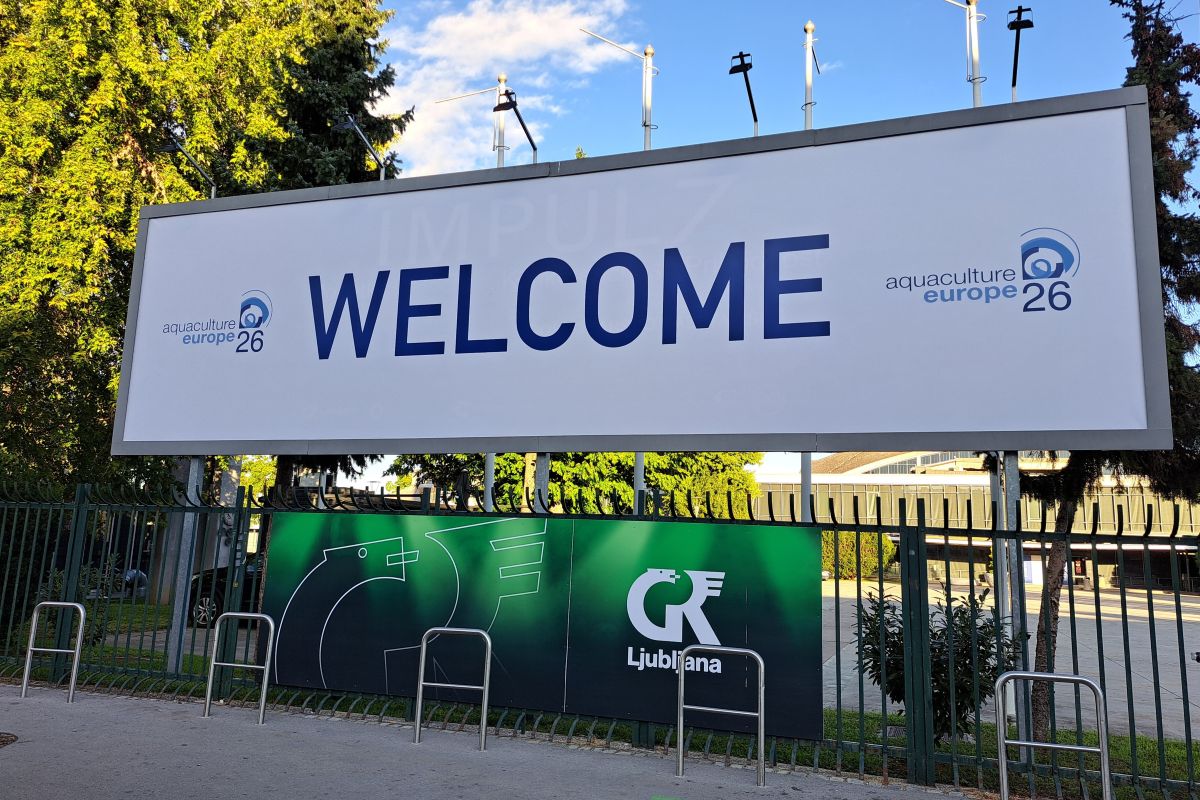
Aquaculture Europe 2026 begins today, Monday, in Ljubljana with an edition that is particularly symbolic for the European Aquaculture Society (EAS), which is celebrating its 50th anniversary, but also with a scientific programme that reflects how far the priorities of European aquaculture are shifting from sustainability as a broad objective towards an increasingly concrete question: how to maintain and develop production in a context of climate change, pressure on resources, competition for space and technological transformation.
“Welcome to Ljubljana and welcome to Aquaculture Europe 2026. The sun is with us, it’s going to be a fantastic week,” Alistair Lane, Executive Director of the EAS, told misPeces in an interview.
Lane explained that the event begins with technical tours and includes the Climate in Action workshop this afternoon, ahead of the official opening ceremony scheduled for 18:00. The ceremony will also mark the Society’s anniversary with a commemorative film and recognition of former presidents and award recipients for their contribution to the EAS over the past five decades.
Beyond the celebrations, an analysis of the scientific presentations, posters and scheduled sessions identifies five questions running through much of Aquaculture Europe 2026: how feeds should be reformulated as their ingredients change; how fish, shellfish and production systems can adapt to warming and other extreme environmental events; how the identification of suitable areas can be translated into space that is actually available for production; to what extent consumers will accept the changes being introduced by the sector; and how far digitalisation can turn information into better production decisions.
In nutrition, for example, the debate goes beyond finding substitutes for fishmeal and fish oil. Several studies highlight the need for a better understanding of net energy and the protein actually available to fish when new ingredients are incorporated, while others explore alternatives such as oils derived from Schizochytrium.
The question emerging from the programme is particularly relevant for producers and feed manufacturers: diversifying raw materials may also require a reassessment of how diets are formulated and nutritionally evaluated.
Climate adaptation will be another of the main threads running through the congress.
The programme includes studies on clam selection to cope with the combined effects of heatwaves and pathogens, functional feeding for European seabass exposed to thermal stress, gilthead seabream responses to diet and hypoxia, mussel mortality, harmful algal blooms, salmon physiology, and models incorporating the effects of climate on parasites. Taken together, the research points towards a shift from diagnosing climate change towards making decisions on genetics, nutrition, health, site selection and farm management.
Space also remains an unresolved issue. Projects such as MEDIGREEN will address the integration of Allocated Zones for Aquaculture (AZAs) with maritime spatial planning, conservation, competing uses and climate adaptation. The tools for determining where new aquaculture could be developed are becoming increasingly sophisticated, but an essential question for the sector remains: how can an area identified as suitable be translated into authorised hectares, commercial projects and, ultimately, production?
The programme will also provide an opportunity to test a recurring assumption surrounding new ingredients: that consumers may represent a barrier to their introduction. A study by the Earthworm Foundation, based on surveys of 1,000 French and 1,000 British consumers, nevertheless shows high levels of acceptance for certain ingredients, including microalgae oil, accepted by 87% of French respondents and 83% of British respondents. Differences between ingredients and between the two markets suggest that the answer is more complex, and that some of the barriers perceived within the value chain may not come directly from consumers.
Digitalisation completes this map of issues. Sensors, environmental monitoring, feeding models, computer vision, artificial intelligence, parasite and lesion detection, and planning and logistics tools feature across numerous sessions. Here, the question will be less about which technologies are available and more about which are mature enough to improve feeding, welfare, costs or planning under real production conditions.
Lane also highlighted two specific additions to this year’s programme. One session will focus on Aquaculture and Tourism, while another, Communicating Science, will showcase different experiences and approaches to communicating scientific knowledge.
“They’re two highlights, I think, of the week that I would choose,” the EAS Executive Director said.
Over the coming days, therefore, Ljubljana will offer more than a succession of scientific results. For European aquaculture, the interest will lie in identifying which of those results are beginning to provide applicable answers to problems that are already affecting production.
With this approach, misPeces will follow Aquaculture Europe 2026 looking precisely for that connection: what lies behind the scientific results and what they could mean for fish and shellfish farmers, companies and aquaculture professionals across Europe.
Climate Action in Aquaculture
The Climate Action in Aquaculture workshop, organised by teams from the University of Stirling and Nofima, has particular relevance for Mediterranean aquaculture.
The workshop compares the situation and adaptation needs of different European regions, from the Atlantic and Mediterranean to Central Europe and the Baltic, seeking to identify both vulnerabilities and potential production responses.
The policy dimension will be represented, among others, by Lorella de la Cruz Iglesias, Deputy Head of Unit for Blue Economy Sectors at DG MARE, who will address European policy related to climate action in aquaculture. The programme also includes representatives from industry, research and organisations including the Aquaculture Stewardship Council (ASC).
The workshop is not intended to stop at diagnosis. An interactive session will be used to identify priority needs, before the event concludes with a Call for Climate Action in Aquaculture, presented by Elisabeth Ytteborg of Nofima and Lynne Falconer of the University of Stirling.

Related

Latest In-depth
-
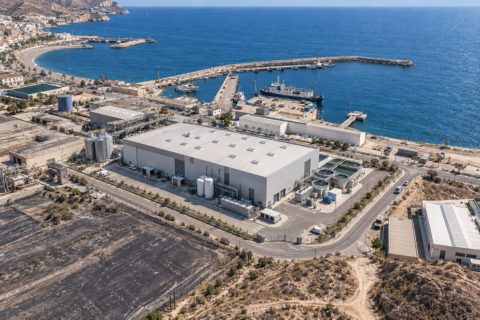
Ocean Aquaculture begins work on Spain hatchery designed to produce eight million greater amberjack juveniles a year
Almería, Spain, 9 September 2026 | The first phase will involve an investment of around €15 million and is expected to begin production in January 2028, supplying both the group’s future offshore farms and other Mediterranean producers