Aquaculture Europe 2026 closed with 2,522 attendees from 80 countries, highlighting the international reach of an event that, fifty years after the creation of the European Aquaculture Society, brings together much of the scientific and technological knowledge shaping the future direction of European aquaculture.
The overarching conclusion drawn by misPeces after attending this year's event is that European aquaculture has a growing range of tools available, but the next step is less about proving that these tools exist and more about integrating them into production in an economically viable way.
| Figures | |
|---|---|
| Attendees | 2,522 |
| Countries represented | 80 |
| Students | 255 |
| Abstracts | 921 |
| Oral presentations | 518 |
| ePosters | 305 |
| Sessions | 54 |
| Exhibition booths | 169 |
In aquafeeds, the answer does not appear to lie simply in replacing a given percentage of fishmeal or fish oil with another raw material. The research presented points towards more precise formulation approaches capable of determining how much of the energy and nutrients supplied by each ingredient can actually be used by each species.
The findings highlighted an important point that farmers and feed manufacturers should not overlook: two feeds with apparently similar nutritional values may not necessarily provide the same amount of usable nutrients or deliver the same production performance.
The second answer came from the consumer, and it was probably one of the most revealing. A survey of 2,000 consumers in France and the UK showed that willingness to buy fish fed with alternative raw materials may be higher than the industry itself anticipates.
Differences become greater with more controversial raw materials and between countries, but the findings challenge the assumption that consumers can be cited generically as a barrier to diversification. Part of the bottleneck may instead lie within the value chain itself, including costs, availability, commercial specifications and anticipated perceptions of risk among feed manufacturers, farmers, processors and retailers.
On space for aquaculture, the conference showed a Europe increasingly well equipped to determine where aquaculture could technically be developed, particularly through Maritime Spatial Planning and Allocated Zones for Aquaculture (AZAs).
But identifying a suitable area is not the same as creating new production capacity. Between the map and the farm lie spatial planning, environmental assessments, competing uses, concessions, licensing and, ultimately, investment.
The missing indicator is therefore no longer simply how many hectares are considered suitable, but how many progress from identified areas to licensed space, financed projects and additional tonnes of production.
Climate change perhaps showed the clearest shift compared with previous years. The discussion is no longer limited to establishing that rising temperatures, hypoxia, disease and extreme events pose a threat to production.
The work presented in Ljubljana is beginning to translate adaptation into practical decisions, and resilience is increasingly becoming a production variable affecting genetics, nutrition, health management, site selection and husbandry, although many of these solutions still need to demonstrate their effectiveness at commercial scale.
A similar transition is taking place in digitalisation. Sensors, computer vision, feeding models, behavioural monitoring, predictive tools and artificial intelligence are progressively increasing the industry's ability to observe what is happening within production systems and anticipate decisions.
Now, digitalisation is beginning to move beyond demonstrating what is technically possible and into a more demanding phase: proving what is actually worth deploying on a commercial farm.
After Ljubljana, the question is therefore no longer so much what European aquaculture can do, but how much of it can actually be brought onto farms without sacrificing competitiveness.
Next year, Aquaculture Europe 2027 will take place from 18 to 21 October 2027 at the Megaron Athens International Conference Centre in Athens. Under the theme “Smart and Resilient Aquaculture”, misPeces will be there again to assess how much progress has been made in turning knowledge into practice on the farm.

Related

Latest In-depth
-
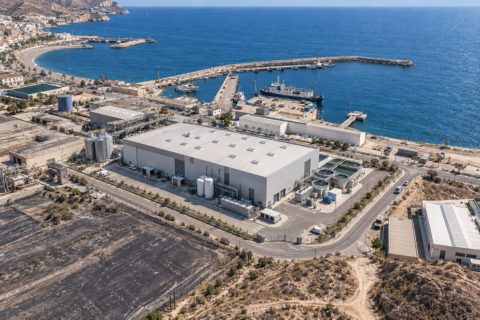
Ocean Aquaculture begins work on Spain hatchery designed to produce eight million greater amberjack juveniles a year
Almería, Spain, 9 September 2026 | The first phase will involve an investment of around €15 million and is expected to begin production in January 2028, supplying both the group’s future offshore farms and other Mediterranean producers