
Spanish aquaculture produced 274,111 tonnes in 2025, up 3.02% on the previous year, and achieved an estimated first-sale value of €883.5 million, a record, according to Aquaculture in Spain 2026, a report produced by APROMAR in collaboration with CTAQUA.
Although molluscs, mainly mussels, account for a large share of production by volume, marine and freshwater finfish generated €734.26 million, just over 83% of the total value. Marine fish farming accounted for €676 million and freshwater fish farming for €58.26 million.
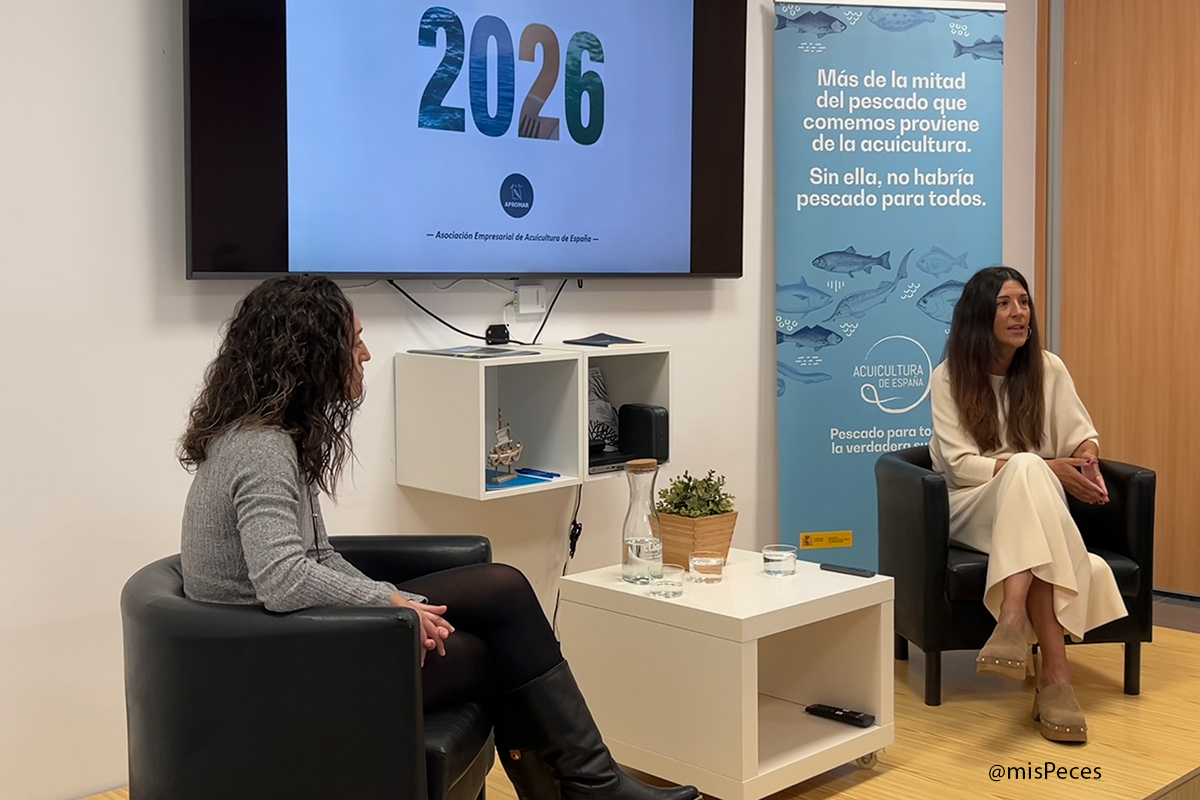
APROMAR presented the report on 27 October at CTAQUA’s facilities. Garazi Rodríguez, APROMAR’s production and marketing plan lead and REMA coordinator, said this was a special year for the association as it celebrates its 40th anniversary. She also recalled that the report has been published since 2004 and, through successive editions, has become a national and international reference. This year’s edition addresses the sector’s challenges and development plans.
María del Mar Agraso, CTAQUA’s director general, highlighted the reliability of the data, which draw on Spanish aquaculture producers and sources including the FAO, Spain’s Ministry of Agriculture, Fisheries and Food, and the Federation of European Aquaculture Producers (FEAP). She also noted that the report identifies bottlenecks across the sector.
Gonzalo Fernández, a project officer at CTAQUA, presented the data shown in the charts on production by species and region, trade and consumption.
The figures point to five key features of Spanish fish farming.
1. Fish account for more value than their share of volume

The total volume of aquaculture production and the value generated by fish reveal two different aspects of the sector. Mussels stand out by volume, while species such as seabass, turbot and bluefin tuna contribute substantially to the economic value of production.
2. Seabass leads marine fish production, while turbot also stands out for its value
APROMAR puts seabass production at 30,397 tonnes in 2025, ahead of gilthead seabream, at 12,765 tonnes; bluefin tuna, at 10,167 tonnes; turbot, at 9,328 tonnes; and meagre, at 4,889 tonnes.
Seabass generated an estimated first-sale value of €266.2 million, compared with €92.9 million for gilthead seabream. Turbot, despite its lower volume, reached €94.4 million. Bluefin tuna generated €160.6 million from a smaller production volume.
3. Production is concentrated in specific regions
The report’s maps show the geographical concentration of several species. Seabass is farmed in a number of regions, with significant volumes in the Valencian Community, Andalusia, the Canary Islands and Murcia. Gilthead seabream production is concentrated particularly in the Valencian Community, while Galicia leads turbot farming.
Sole, with 1,171 tonnes and a value of €19.9 million, is another smaller-volume segment with more localised production. This regional distribution reflects the specialisation of farms and the production conditions in each area.
4. Rainbow trout leads freshwater fish farming
Rainbow trout is the main species in freshwater fish farming, with 17,848 tonnes in 2025, according to APROMAR. Castile and León, Catalonia and Galicia are among the leading producing regions.
The report’s trade chart gives trout a self-sufficiency ratio of 251%. The ratio is also above 100% for turbot, at 106.2%; by contrast, it stands at 85.5% for seabass and 60.2% for gilthead seabream. The figures show how the relationship between domestic production and the market varies by species.
5. Farming systems and market conditions create different challenges
Spanish fish farming combines floating sea cages, land-based farms using seawater or freshwater, rafts and longlines, as well as production in intertidal areas and saltwater ponds. The constraints also vary by species: bluefin tuna fattening depends on the availability of wild-caught fish and quotas, while the development of new facilities depends on access to sites, permits and finance.
International trade is part of this wider context. APROMAR’s chart puts imports of aquatic products at €9,647.2 million and exports at €5,943.8 million; exports amount to 61.6% of import value. These figures cover aquatic products as a whole, not fish farming alone.
The presentation also reports apparent consumption of 40.68 kg per person and a 27% fall in household consumption since 2015. The chart shows a sharper decline among under-35s than among over-50s, and indicates that supermarkets account for 63.06% of the volume purchased. These figures relate to fishery products in general, rather than aquaculture products alone. For fish farming, the challenge is to respond to those changes with more convenient formats and products that fit consumers’ shopping habits.
APROMAR also identifies administrative barriers, the cost and availability of feed ingredients, social acceptance and the transfer of innovation to farms as challenges for the sector. The future of fish farming will depend both on its ability to sustain high-value species and on the conditions that allow production to be maintained and expanded.

Related

Latest In-depth
-
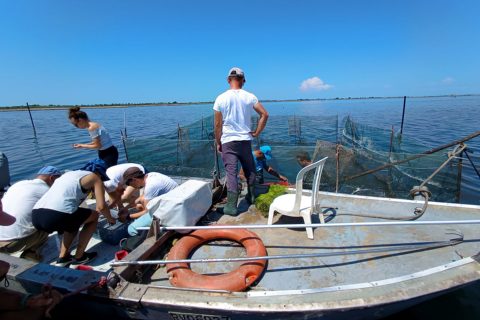
Clams more resistant to heat and Perkinsus: research paves the way for selective breeding
Padua, Italy, 16/10/2026 | University of Padua researchers explain to misPeces the findings presented at Aquaculture Europe 2026 and the steps needed to transfer them to hatcheries. Initial applications could emerge within the next two or three years, although the relationship between resistance, growth and other production traits still need to be assessed