
 Venice Lagoon | University of Padua
Producing Manila clam seed with greater tolerance to heatwaves and greater resistance to the parasite Perkinsus is a goal that selective breeding could help achieve. This is the message emerging from misPeces’ conversation with Luca Peruzza, Luca Bargelloni and Massimo Milan, researchers at the Universty of Padua who are developing tools to improve the resilience of shellfish farming.
The starting point is research carried out under the ShellFishBoost project, which Peruzza presented at Aquaculture Europe 2026 in Ljubljana.
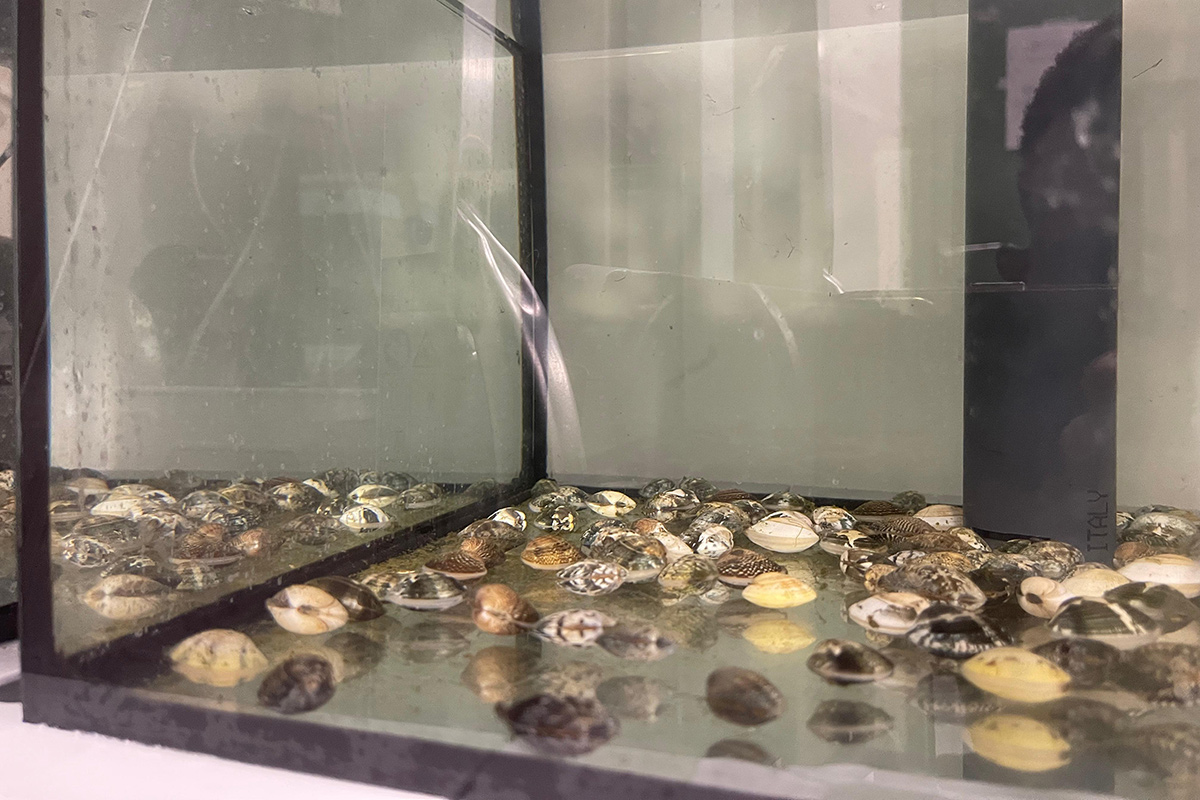
The experiment described by Peruzza used a generation produced through controlled crosses between 20 females and 20 males. Around 1,000 juveniles’ clams were distributed across ten aquaria and exposed for 21 days to temperatures fluctuating between 31 and 35ºC, followed by a further eight days of observation at 25ºC. Cumulative mortality reached 55%.
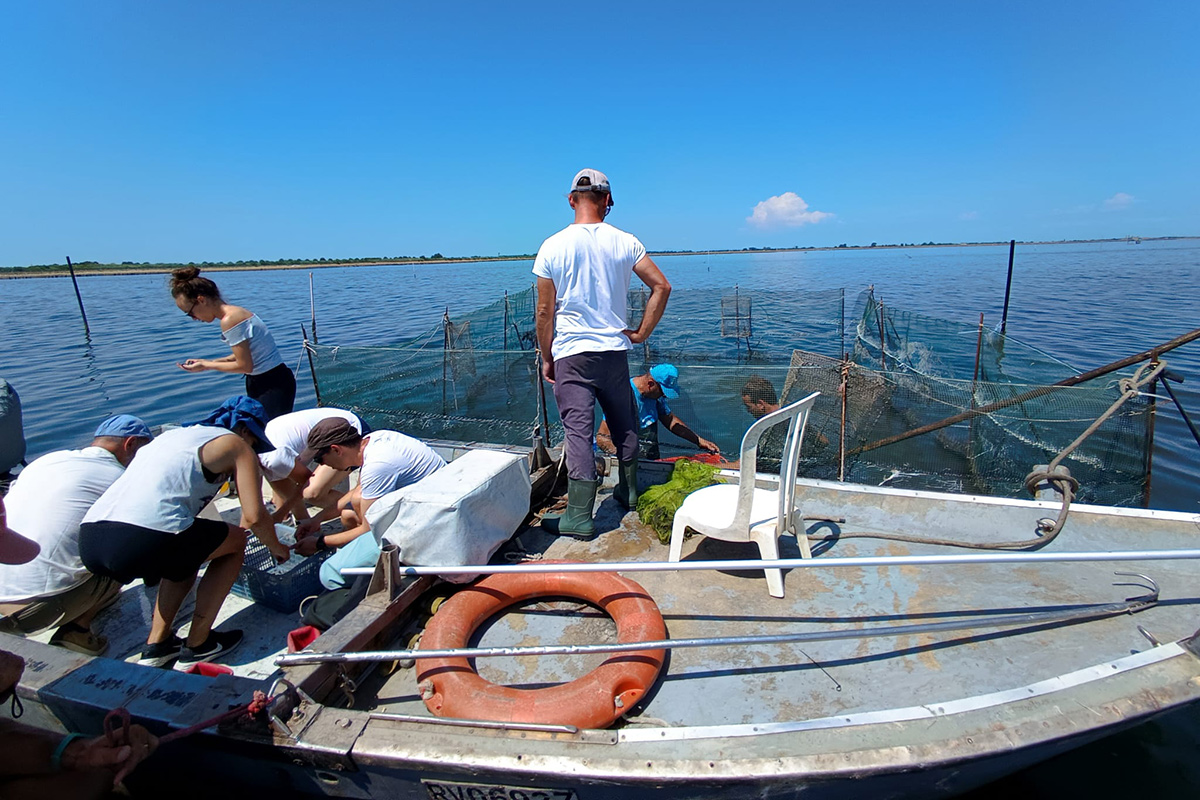
A second trial involved transferring around 10,000 individuals to the Venice Lagoon to monitor natural infection with Perkinsus.
Once prevalence reached approximately 50%, 1,000 animals were sampled to quantify parasite load. The data were combined with genotyping using a new SNP marker platform.
The update provided during the interview mainly concerns the heritability of both traits. Speaking to misPeces, the researchers explained that the results show a genetic component that can be passed on to subsequent generations for both heat tolerance and parasite resistance.
This provides a basis for launching breeding programmes, although it does not mean that seed with performance already validated under farming conditions is immediately available.
The two traits, however, appear to have different genetic architectures. For resistance to Perkinsus, the researchers identified signals of association with specific genomic regions. These findings remain preliminary and require verification before a causal relationship can be established.
For heatwaves tolerance, the pattern appears to be polygenic: numerous genomic regions would each contribute a small effect. No single marker has therefore been identified that can explain the ability to survive heat on its own.
From research findings to hatcheries: measuring resistance and growth
 Manila clam | University of Padua
For hatcheries, the value of the research also lies in the protocols needed to measure these traits. Bargelloni stressed that selective breeding requires both accessible genomic tools and reliable measurement of differences between animals.
For heat tolerance, trials must be sufficiently challenging to distinguish the more tolerant individuals, while avoiding conditions in which all animals die. For the parasite, the team used natural exposure in a controlled area and molecular methods to measure infection intensity.
The aim is to bring these tools and procedures together into practical guidance for producers.
One unresolved production question is how to combine resistance and growth. The experiments also include size measurements to assess potential genetic correlations: selecting faster-growth animals could improve, reduce or leave their tolerance to stress unchanged.
The researchers do not yet have all the results needed to establish these relationships. A breeding programme will therefore need to consider several traits and assess potential trade-offs between them, rather than focusing solely on survival or growth rates.
Selectively bred seed: a possible two- to three-year timeframe
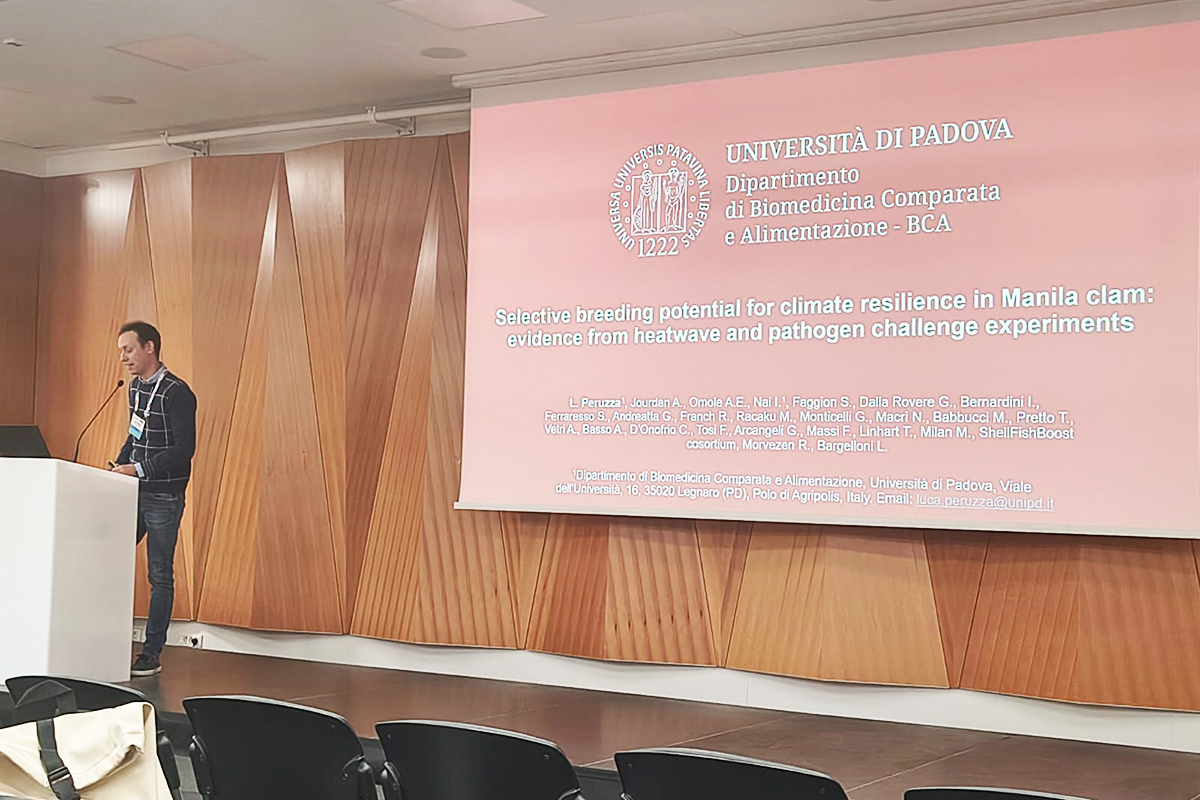 Luca Peruzza during AE2026
Asked when a farmer might be able to buy seed selected for these traits, Bargelloni suggested a possible timeframe of two or three years, supported in part by the projects’ collaboration with hatcheries.
This is a prospective timeframe for transferring the research into practice, rather than a confirmed commercial launch date. Improvement will also be gradual: gains will need to be measured and consolidated over successive generations.
Alongside genetics, the team is investigating complementary strategies such as thermal printing: prior exposure to sublethal thermal stress that induces physiological and molecular adjustments and may improve the response to a subsequent, more severe episode.
How long this effect lasts remains unclear, and it should not be confused with heritable genetic improvement.
Peruzza, Bargelloni and Milan explained that the European ShellFishBoost and IGNITION projects have contributed to developing the tools used in this research.
For producers, the decisive step will be to establish how far these advances can translate into more reliable seed, with measurable benefits throughout the production cycle.
Related

Latest news
-
Alternative diets maintain gilthead seabream acceptance in consumer trial
Castellón, Spain, 15 October 2026 | A study by IATS-CSIC and Miguel Hernández University assesses how formulations containing alternative proteins affect fish texture, flavour and consumer ratings
-
Authorisation barriers hinder access to biocides in European aquaculture
Brussels, 15 October 2026 | Administrative delays and a small market complicate the availability of products for disinfecting facilities and controlling biofouling
-
Ozone or peracetic acid: how to disinfect a RAS without compromising biofilter performance
Norway, 16 October 2026 | A study involving Atlantic salmon compares two disinfection strategies against Yersinia ruckeri, highlighting the need to balance bacterial control, fish health and nitrification stability